

 GMA Brandtalk
 Tracking
 Archives

Public school teachers seek help over mounting debts
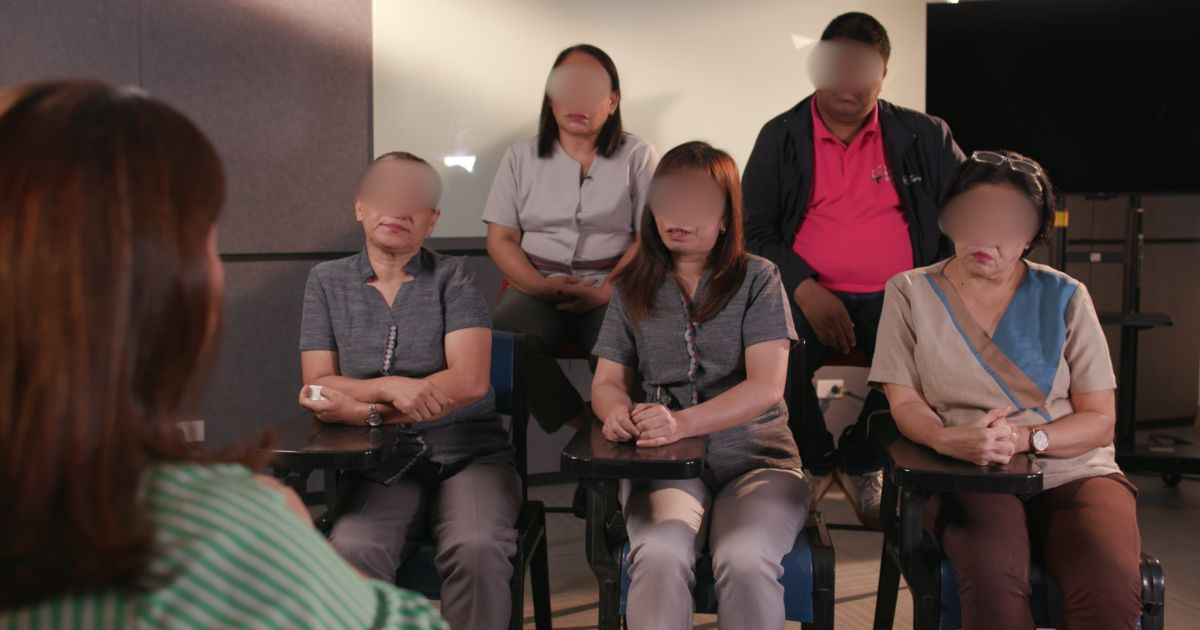
A group of public school teachers is seeking help as many struggle under heavy debt, with some claiming that lending companies are taking their salaries and benefits in full.
In a letter sent to "Kapuso Mo, Jessica Soho," the group expressed their desperate plea for help.
Jessica Soho personally interviewed some of the teachers. Several teachers shared that after loan deductions, nothing is left in their accounts.
"Right now, they take everything. Our salary and all our benefits are fully deducted. We go to the ATM and there is zero balance. How can we eat? How can we survive?" the letter read.
The group, which has around 50 to 100 members, was formed through online conversations among teachers across the country who share similar plights. Some of them have sought help from government offices, and have plans to bring their concerns to Malacañang.
One of the teachers, Mayse from Dasmariñas, Cavite, said her debt started in 2005 with an initial loan of around P40,000. Over time, due to repeated borrowing and high interest, her debt grew.
"Lumalaki nang lumalaki ang computation sa kanila gawa nga po ng malaki po ang kanilang tubo," she said.
["The balance continuously increases because of their high interest rates."]
In 2018, she took out a P195,000 loan with a 3.5% monthly interest rate. However, she said she only received P18,000 in cash as the rest was used to pay previous debts. Despite making payments, penalties and interest continued to increase her balance.
By 2022, after her husband died, Mayse said she struggled more as a single mother of five.
"Pero kung tutuusin, bayad na po ako eh. Tapos binalik po nila sa P418,000 kasama na po doon 'yung P42,000 cost of suit," she said, referring to her total obligations including legal costs.
["I have already settled the balance. However, they reinstated the amount to P418,000, including the P42,000 in legal fees."]
Another teacher, Christina, said she borrowed P130,000 in 2024 due to her husband's medical expenses. The amount later grew to P350,000 due to interest and penalties.
"Ngayon po, na-garnish po ang aking account. So wala po ako nakukuhang sahod kahit piso," she said.
["Now, my account has been garnished. So, I'm not receiving even a single peso of my salary."]
She added that even her bonuses and benefits were included in the deductions.
"Pati po 'yung aming mga benefits, GSIS, 'pag-nag loan kami hindi namin makukuha 'yun, kasi naka-hold po sa Landbank. Pati 'yung mga clothing namin, mga midyear, pati 'yung 13th month, wala po talaga," she said, recalling that they had no food prepared during the holidays.
["Even our benefits and GSIS loan proceeds are inaccessible because they are being held by Landbank. This includes our clothing allowance, mid-year bonuses, and 13th-month pay. We don't receive anything.]
Christina said she has also pawned personal items to cope with daily expenses, while dealing with health concerns due to stress.
Teacher Hilda, who has been in service for nearly 30 years, went through a similar experience. Her initial loan of P75,000 eventually ballooned to over P200,000, and later increased further due to refinancing and deductions.
"Ang sahod ko lang po ay 5,000 pesos. Kaya nag-deficit po nang nag-deficit," she said, referring to the amount left after deductions.
["My salary is only 5,000 pesos. That's why my account has fallen into a continuous and growing deficit."]
Meanwhile, Teacher Chona said she was affected even as a co-maker or guarantor for another borrower. She said her account was garnished following a court order tied to the borrower's unpaid loan.
"Simula noong November, until now, kahit po pamasahe 'pag pumapasok, naghahagilap po ako kung saan ako makakahiram," she said.
["Since November until now, I've had to search for ways just to have fare money for work."]
The teachers also raised concerns about ATM cards being used as collateral and not fully understanding the documents they signed.
According to the Teachers' Dignity Coalition, such cases are not new. Some teachers have even faced administrative complaints filed with the Professional Regulation Commission (PRC), leading to suspensions.
"'Yung iba po diyan ay sinuspend pa ng PRC dahil 'yung lending companies po, dinadala nila sa PRC 'yung case," a representative said.
["Others have faced PRC license suspensions because these lending companies are taking the cases directly to them."]
A legal expert said that while pledging ATM cards may not be illegal under Bangko Sentral ng Pilipinas (BSP) policies, it is prohibited by the Department of Education (DepEd) as a form of collateral.
Data from the Alliance of Concerned Teachers estimate that around 75% or about 800,000 public school teachers are in debt, with total obligations reaching P319 billion from both government and private lenders.
In a separate interview with Jessica Soho, DepEd Undersecretary for Finance Atty. Edson Byron Sy said the agency has an Automatic Payroll Deduction System (APDS) that accredits private lending institutions and sets interest caps.
"Under the APDS, ina-accredit po natin ang mga private lending institution… 'yung interest nila, may cap din," he said, saying that rates are usually between 7.5% to 9.6%.
["Under the APDS, we accredit private lending institutions… their interest rates also have a cap," he said, noting that rates are usually between 7.5% and 9.6%"]
He said that many of the teachers involved borrowed from non-accredited lenders, which are outside DepEd's direct oversight.
"If it is not accredited, DepEd is not really a party between the teacher and the PLI," Sy explained.
["If it is not accredited, DepEd is not really a party to the agreement between the teacher and the PLI."]
He added that policies require teachers to have at least P5,000 net take-home pay, but this may not be followed when dealing with outside lenders.
Sy said the department is looking into possible solutions such as loan consolidation through GSIS or accredited lenders to help reduce interest and penalties.
In an email statement, the Securities and Exchange Commission said, "At the outset, it must be emphasized that the SEC does not regulate "teachers' loan programs" as a separate category. Rather, all loan products—regardless of borrower segment—are subject to uniform regulatory standards.
Lending companies are required to submit and maintain an approved Business Plan, and any material change, including the introduction of new loan products, salary-based repayment mechanisms, or sector-specific targeting (such as teachers), must be disclosed to and approved by the SEC prior to implementation."
They added that, "In addition, under the FCPA IRR (SEC MC No. 05, Series of 2023), lending companies are required to observe fair, transparent, and responsible lending practices, and are accountable for any conduct that may be considered unfair, deceptive, or abusive."
KMJS has also reached out to the lending companies involved but has not received any response as of reporting.
The teachers stress they are not refusing to pay their debts but are simply asking for fair terms.
"Hindi po namin tinatakbuhan. Ang amin lang Ma'am, bigyan naman po nila kami kasi wala na nga po silang tinira sa amin," one teacher said.
["We are not evading our obligations. Our only plea, is for some consideration, as they have truly left us with nothing to live on."]
They also called for broader support, including higher salaries and better protections, as many continue to report for work despite their financial struggles.
"Pumapasok po kami nang wala kaming sahod," Christina said.
["We're going to work without getting any of our salary."] —JCB, GMA News

