

 GMA Brandtalk
 Tracking
 Archives

Venice-bound: Filmmaker Lav Diaz and actress Isabel Sandoval talk about 'Makikiraan Po' (Let Us Through, Dear Ancestors)
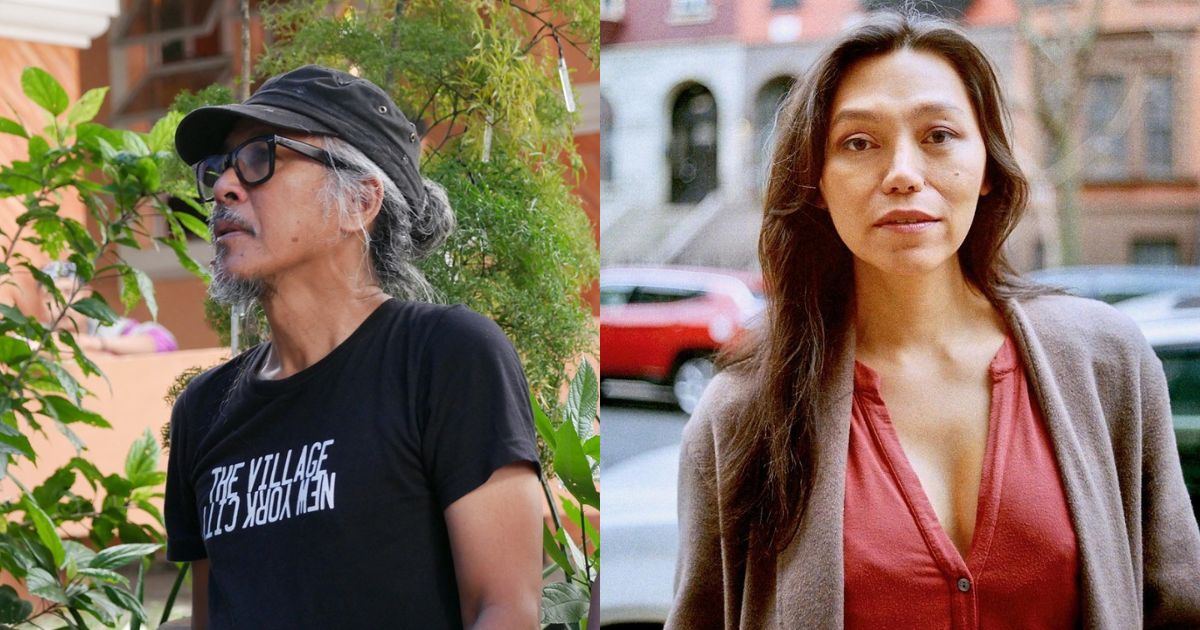
The prolific and award-winning filmmaker Lav Diaz has done it again!
After making waves at the Cannes Film Festival where his acclaimed “Magellan” starring Gael Garcia Bernal premiered, the Filipino filmmaker is headed back at the 83rd Venice International Film Festival in September, where his latest film, "Makikiraan Po" (Let Us Through, Dear Ancestors) has been selected to premiere.
Produced by C'est Lovi Productions, Epicmedia Productions, and Sine Olivia Pilipinas, the film is his third out-of-competition entry at the Venice Film Festival.
Known for his lengthy films, “Makikiraan Po” is also now Diaz’s shortest film in 24 years, clocking in at two hours and 27 minutes. It stars Isabel Sandoval, Yul Servo, Christian Bables, Bart Guingona, Ronnie Lazaro, and Bong Cabrera.
Set during the Spanish colonization of the Philippines, "Makikiraan Po" depicts how churches built in the 17th century through the forced labor of thousands of native Filipinos stand as enduring reminders of violence, plunder, and suffering brought by colonial rule.
Diaz’s Director’s Statement reads:
“In 1565, forty-four years after Ferdinand Magellan reached the island of Cebu, where he conducted the first mass conversion to Christianity in the archipelago now called the Philippines, Miguel Lopez de Legazpi was able to recapture Cebu and declared the area a colony and property of Spain under the Treaty of Tordesillas. There were four failed expeditions between Magellan and Legazpi. By 1571, Legazpi implemented the encomienda system and assigned the initial five hundred plus encomenderos in many parts of the archipelago. This was the beginning of the feudal setup in the Philippines that still exists until today. In the encomienda system, friars, conquistadors, and settlers were assigned and given authority to govern and convert indigenous communities, enforce tributes/taxes, and impose force/serf labor, and with this setup in place, the construction of churches, forts, piers, roads, bridges and mansions went full blast, along with the development of plantations, factories and mining sites.
“The encomenderos and their families eventually became part of the principalia, the rich landowners and hacienderos, who owned plantations and big businesses.
“During this period of interminable constructions, thousands upon thousands of natives, especially males, died because of forced labor. The first Catholic church in the Philippines made of stones, the San Agustin Church, was built for twenty-one years, from 1586 to 1607. Fifteen to twenty years was the average construction of churches from the late 16th century to the 17th century. Most of the churches then were built with blood and death of the natives.
“These houses of God, created with deified grandeur, heavy stones, thick walls, and majestic high ceilings, are among the true proofs of the horrors of colonization. This is simply the discourse of the film, ‘Makikiraan Po’ (Let Us Through, Dear Ancestors).”
In an exclusive email interview, Diaz and Sandoval talked about the challenges of making the movie and going back to the Lido for the Venice Film Festival. It's been edited for length and clarity.
Lav Diaz (Director)
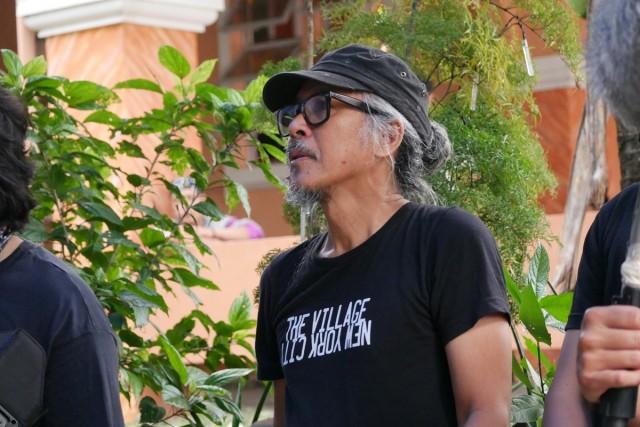
What was your inspiration for “Makikiraan Po”?
The Filipino struggle. The film examines and confronts another epoch of our complex history — the late 16th century and early 17th century — the period of mass conversions of the indigenous inhabitants of the archipelago and the brutal imposed constructions of roads, bridges, churches, forts, ports, mansions, plantations, factories, and mining. Thousands died because of forced labor.
How did you decide on the casting for this movie? What made you choose Isabel Sandoval, Christian Bables, Ronnie Lazaro, Hazel Orencio, Yul Servo and Rafa Siguion Reyna?
I was looking for a unique personality for the Babaylan (healer) character, and Isabel Sandoval was the only choice; she is Bisaya, and her aura is that of a true Malay Babaylan.
Christian was recommended by Hazel Orencio — they'd worked together. Bianca Balbuena, one of our producers, got in touch with him.
I met up with him in some bourgeois restaurant, and upon seeing him, I told him right then and there that he shall be the actor for the Dungwen character. He actually cried when I told him, but I'm not sure if it's about him being chosen; there could be just too much chili in his utterly bourgeois food.
Yul, I chose months before the shoot started. We had coffee in his bourgeois cafe and gallery, had a joyful reunion after his first film,” Batang West Side,” that I directed in the years 1999-2000; and he was truly happy to be acting again, and he came to the set with his bourgeois van and bourgeois entourage.
Rafa is our only choice for the Higante (giant) role; he is really tall and has so many bourgeois manners, and he is great.
For Padre Enciso, Bart Guingona was our only choice, too, for his utterly mestizo look and bourgeois countenance. Dani Palisa is the English Architect Alejo Smith, builder of churches, and he was our only choice, too, for the role, because of his heavy metal and overworked countenance; he was also our great prosthetics artist.
Ronnie Lazaro and Hazel Orencio — I couldn't deny them; they are hardcore working-class heroes, with bits of bourgeois leanings. Now, I have a disturbing question: What will happen to our cultural revolution with all these bourgeois attributes?
What were the major challenges you had to hurdle in the making of this film?
Scheduling actors, sometimes waiting for the budget, which is just normal. The weather, as it was too hot then, and how to be sure that all the bourgeois trappings will not be seen in the film. The production design and costume group made sure of that.
How long did it take you to finish this?
We are still actually shooting. “Makikiraan Po” is just a flashback in the original script, but during the shoot, it kept growing, and so I followed and followed and followed channels and doors and windows; I felt that it was leading me somewhere.
It's been my praxis to be free in following leads and threads that come up during the shoot. My fulfillment with this process is always immense in terms of discovery, to keep traversing the unknown and reaching realms that nurture transcendence for the soul.
What are you looking forward to going back to the Lido and being part of the festival again?
The film, “Makikiraan Po,” shall be there; it shall be a commencement of its own life now, a birthing, a liberation.
Going back to the Lido provides me with that vision of an island of dreams. It's always a journey back, and a journey to the unknown again. You don't stop. It's a pilgrimage. You go, struggle, and be grateful for the wisdom gained. It's cinema.
Isabel Sandoval (actress, Babayeng Indimatandog)
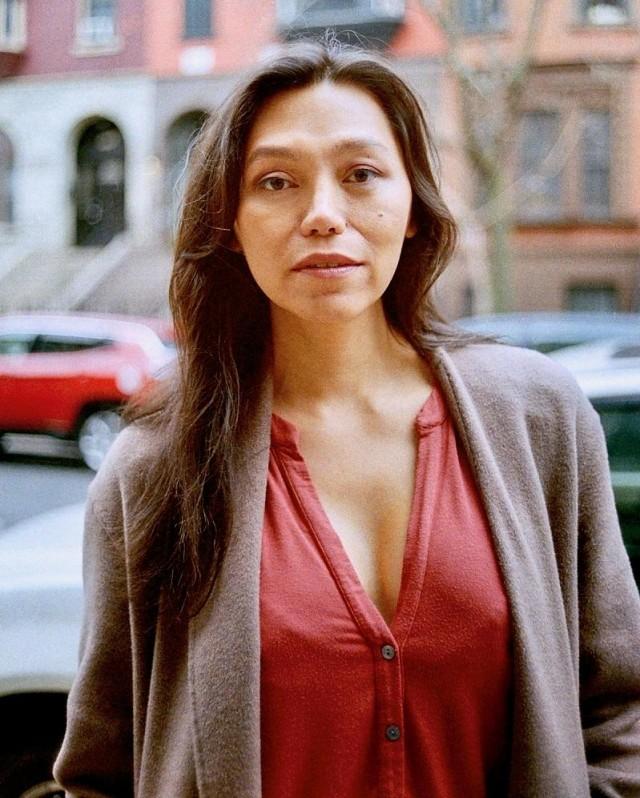
This is your first time working with Lav. How did everything start and how did you land the role?
I first met Lav in 2019 at the Hamburg Film Festival, where "Lingua Franca" was screening. We were briefly introduced, and I attended one of his masterclasses.
In 2023, our paths crossed again at the Locarno Film Festival, where I was serving on one of the festival juries while “Essential Truths of the Lake” was premiering there.
The third time we met was at the New York Film Festival during the premiere of “Magellan.” We were chatting after the screening and, half-jokingly, I told him, "Lav, let me be an extra in your next film." He smiled and replied, "Actually, how about I give you a real role?" I assumed he was just being gracious, but he asked me to email him.
Afterward, I reached out to Hazel Orencio, who helped coordinate everything, and before long I was flying to the Philippines just before Christmas to shoot in Quezon Province.
While I'd acted in a handful of short films before—including Elisabeth Subrin's “Maria Schneider,” 1983—this was my first time acting in another director's feature. I couldn't have imagined a more meaningful filmmaker with whom to take that step than Lav.
How was it working with Lav Diaz? What did you learn from him since you are also a director?
One of the things that struck me immediately was how much trust Lav places in his actors. He didn't give exhaustive performance notes, and we didn't really rehearse.
But I've watched his films for years, so I already had a sense of his cinematic language and the kind of performances he gravitates toward. I think he cast me as much for the stillness and inner life I naturally project as for anything I could consciously "perform."
His films call for a very naturalistic style of acting, which felt instinctive to me. We almost always did a single take unless there was a technical issue. Each take could last several minutes, and each scene was covered with very few setups, so there wasn't the luxury of thinking, I'll get it on the next one. Every second of every take mattered because there was a good chance that was what would end up in the finished film.
As a director, I found that incredibly inspiring. Lav trusts actors to arrive prepared and to follow their intuition. Watching him work reminded me that sometimes the most generous thing a director can do is create the conditions for truth to emerge instead of trying to orchestrate every emotional beat.
What were some of the memorable or challenging experiences or scenes you did for the movie?
I play Babayeng Indimatandog, a Babaylan, or native priestess, during the Spanish colonial period. One of the most meaningful aspects of the role was performing in Cebuano, my mother tongue.
I've spoken Cebuano on screen before, but here it carried a different emotional and historical weight because the character's language becomes an act of cultural memory and resistance.
The biggest creative challenge—and one I genuinely loved—was the spontaneity Lav encouraged. Most of my ritual scenes weren't fully scripted. While the other actors generally had their dialogue written out, many of my invocations and chants were left for me to create. We'd receive the script around five in the morning, and before heading to set around noon, I'd spend those few hours inventing prayers and ritual language for my character.
As an independent filmmaker myself, I love happy accidents and discovering things in the moment, so that process felt surprisingly natural. It required me to trust my instincts and embrace uncertainty.
The atmosphere on set reflected that same spirit. It was a small, intimate crew, Lav was incredibly relaxed, and we never shot for more than about six hours a day. I didn't have any night scenes, so after wrapping we'd often head back into downtown Sampaloc for dinner together. It felt less like a conventional film shoot and more like an artists' retreat.
How was it working with your co-stars Christian Bables, Ronnie Lazaro, Hazel Orencio, Yul Servo and Rafa Siguion-Reyna?
One of the great privileges of this film was working alongside artists I've admired for years. Ronnie Lazaro, who plays my elder brother, was my primary scene partner. I loved our conversations between takes—he's also a very talented painter—and despite being one of the giants of Philippine cinema, he's incredibly grounded and generous.
I also enjoyed spending time with Bart Guingona, whom I've long admired as one of the great actors of Philippine theater. He's articulate, quietly cool, and completely without ego. In fact, that spirit defined the entire production. No one carried themselves like a star. Everyone, whether they were veteran actors or crew members, was ready to roll up their sleeves and do whatever the film needed.
Bong Cabrera, Rafa Siguion-Reyna, Arjhay Babon, and Dani Palisa became my little group during the shoot—we laughed a lot, both on set and over dinners after we wrapped.
Interestingly, I never actually shared a scene with Christian Bables, but he couldn't have been sweeter. He's thoughtful, kind, and remarkably down-to-earth.
More than anyone, though, I have to thank Hazel Orencio. Besides being such a formidable actor, she made my entire experience effortless as one of the film's producers. From the moment I arrived until I flew home, she made sure everything ran smoothly, so I could simply focus on the work.
When was the last time you were at the Venice Film Festival and what do you look forward to when you go back to the Lido?
The first two times I went to Venice were as a director—"Lingua Franca” in 2019 and “Shangri-La” in 2021. This time I'm returning as an actor, and in a Lav Diaz film no less, which feels like a completely different chapter of my career.
The first two visits were naturally filled with the responsibilities and nerves that come with presenting your own work. This time I feel like I can simply enjoy the experience a little more—and yes, maybe have fun dressing up and embracing a bit of the festival glamour.
I'm also excited that my good friend Dan Garber, who co-edited my film “Moonglow,” has a film premiering there as well—"Primetime,” starring Robert Pattinson. It'll be wonderful to celebrate together.
Beyond the festival itself, I'm looking forward to visiting “The Phantom Combatants and the Metabolism of Disobedient Organs” installation at the Biennale, which features Indonesian actress Asmara Abigail, returning to the Peggy Guggenheim Collection, wandering Venice's labyrinthine streets until I stumble upon a little trattoria, and checking out the locations for Nicolas Roeg's “Don't Look Now.”
What's next for you?
I'm currently preparing my next feature as a writer-director, “Tropical Gothic,” which has been in development for several years. Coincidentally, it also features a Babaylan as one of its central characters, so working on “Makikiraan Po” became an unexpectedly meaningful creative experience for me.
My latest feature, “Moonglow,” will also continue its festival run this fall, including its UK festival premiere.
Working with Lav reminded me how rewarding it can be to surrender to another filmmaker's vision. As a director, I'm usually the one making the decisions. As an actor, there's something liberating about giving yourself over to someone else's imagination. That said, I'd be very selective going forward. Acting asks for a great deal of emotional openness, so it has to be for filmmakers whose work I truly love and whose artistic vision I want to become part of, like Joanna Hogg and Alexandre Koberidze. — LA, GMA News

