

 GMA Brandtalk
 Tracking
 Archives

Coming home for Christmas: What it’s like to be on a repatriation flight from a red-listed country
I’ve always wondered how my reunion with my family would be like after more than two years of being apart. Would I first hug them, or kiss them? Would I cry? It felt weird to come home after missing so many important occasions. Apart from the birthdays, Christmases, and New Years, I also missed my mother’s retirement celebration. They missed our wedding in October 2020 in The Hague, the first wedding of the family amid a pandemic.
My mom was hit by COVID-19 twice being in the frontline, and I missed taking care of her when she needed me most.
I was already planning our homecoming as early as November. Back then, traveling home without any glitch felt possible: We were all vaccinated against Covid-19, and the ground situation in both the Netherlands where I am based, and in the Philippines were improving. Cases in both countries were on a downward trend, both were loosening their travel regulations. The Netherlands opened up for inbound travelers, and so did the Philippines, albeit at a slower pace.
We thought, after more than two years of waiting, it was finally time to go home. We booked the tickets as early as possible. We were going to go home on November 22!
And then things turned south.
Seeking for a repatriation flight
The Netherlands was suddenly put under Red Listed Countries from November 16 to November 30, making it impossible for us to make our journey home.
Our November 22-flight was directly affected by the travel ban issued by the Inter-Agency Task Force (IATF) in the Philippines. Under the resolution, “only Filipinos returning to the country via government-initiated repatriation, non-government-initiated repatriation, and Bayanihan Flights may be allowed entry.”
The new threat of the Omicron virus was starting to make waves and the Philippines, like other countries, began imposing stricter travel restrictions again.
I immediately contacted the Embassy of the Philippines in the Netherlands to ask about the possibility of a repatriation flight but they, too, were surprised about the sudden turn of events. They promised to contact me for a repatriation flight.
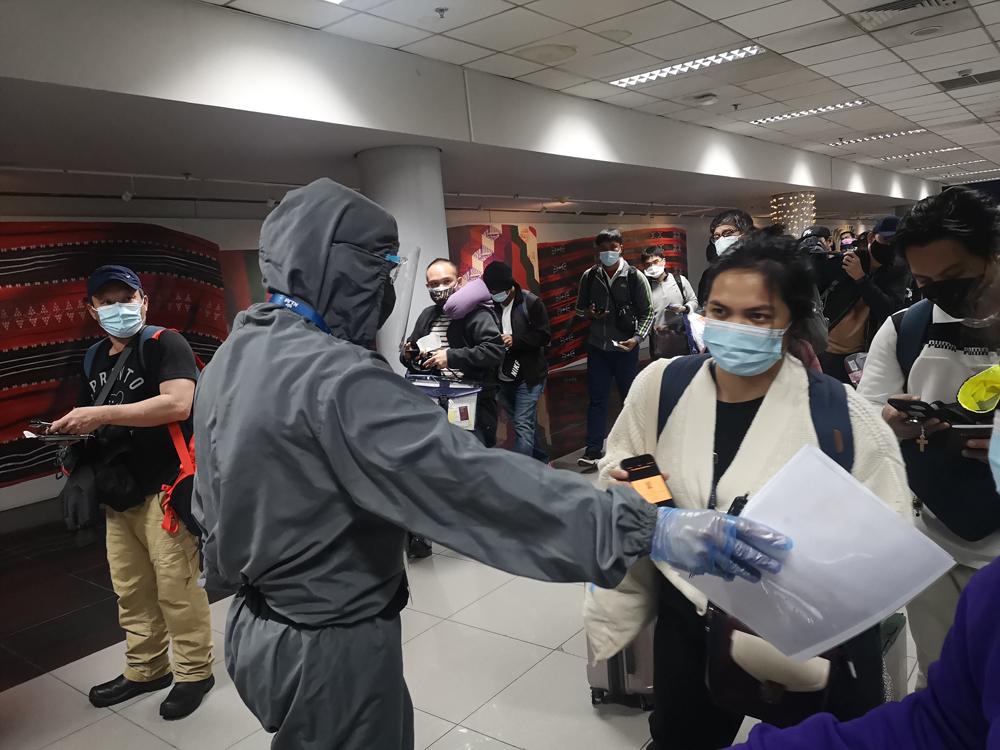
The weeklong wait was purgatorial at best. But as they promised, the Embassy called with some good news. There's going to be a repatriation flight to the Philippines and we were lucky enough to get a ticket, together with other stranded seafarers, distressed overseas working Filipinos (OFWs) and non-OFWs, pandemic-affected workers, and displaced OFWs due to Covid-19 lockdowns.

The tickets were costly, to say the least. We paid €1333 one way per person to join a repatriation flight organized by KLM Dutch Airlines departing from Amsterdam on November 24.
It was a wise decision, we later learned, as the Philippine government continued to classify the Netherlands under the Red List countries until December 15. It won't be until December 16 through December 31 that the Netherlands was officially removed from the red list.
Protocols for repatriated Filipinos from Red List Countries
To join a repatriation flight, the Department of Foreign Affairs advised Filipinos abroad to contact their respective embassies.
The IATF regulation changes every two weeks so it is best to check the latest issued regulations.
To know under which color code your country is classified, check out the latest IATF regulation 154-B, currently valid from December 16 to December 31, 2021.
Prior to boarding the repatriation flight, we had to register to the following websites in order to enter the Philippine borders:
- One health Pass
- OASIS OWWA
- Traze App
Based on IATF regulation 154-C issued on December 14, 2021, the following rules apply to OFWs coming from red-listed countries. The hotel quarantine period was much shorter compared to the previous regulations.
- If fully vaccinated:
- International arriving passengers are required to present a negative RT-PCR test taken within seventy-two hours (72hrs) prior to departure from the country of origin.
- They are also required to undergo facility-based quarantine with an RT-PCR test taken on the seventh ( 7th) day.
- They may be discharged from the facility upon the release of a negative RTPCR result, but will need to be on home quarantine until the fourteenth (14th) day of arrival. The day of arrival is counted as the first day.
- For unvaccinated arriving passengers, partially vaccinated, or those whose vaccination status cannot be independently validated:
- International arriving passengers shall be required to present a negative RT-PCR test taken within seventy-two hours (72hrs) prior to departure from the country of origin.
- They are required to undergo a mandatory ten (10) day facility-based quarantine with RT-PCR testing on the seventh (7th) day.
- They may be discharged only upon the completion of a 10-day facility-based quarantine, regardless of a negative RT-PCR result.
- They need to be on home quarantine until the fourteenth (14th) day of arrival. The date of arrival is counted as the first day.
The Quarantine before the Reunion
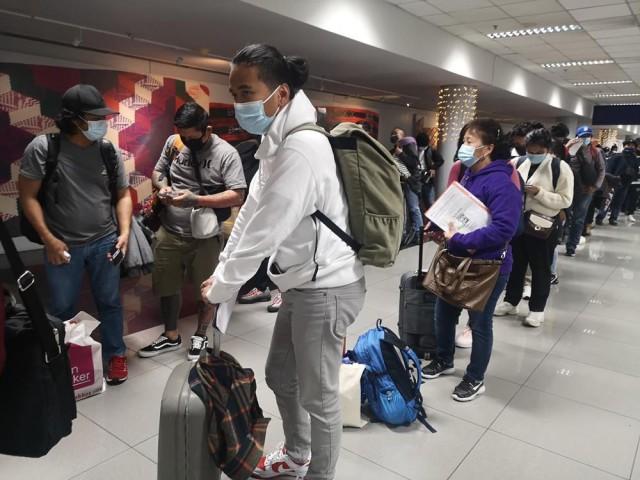
As arriving OFWs, we were afforded free transport, free hotel accommodation, food and tests by the government.
Upon arriving at the Philippine airport around 7 p.m., Filipinos coming from red listed countries were separated in a different queue and were briefed by OWWA and Bureau of Quarantine officers.
It was a long and timely process, before we could board the bus going to our quarantine hotel, which was around five kilometers from the airport.
At the quarantine hotel, we had to wait for almost an hour before we were allowed to go in. We were briefed again by an OWWA officer before we could go to our respective rooms.
All in all, the transfer from airport to the hotel took five hours.

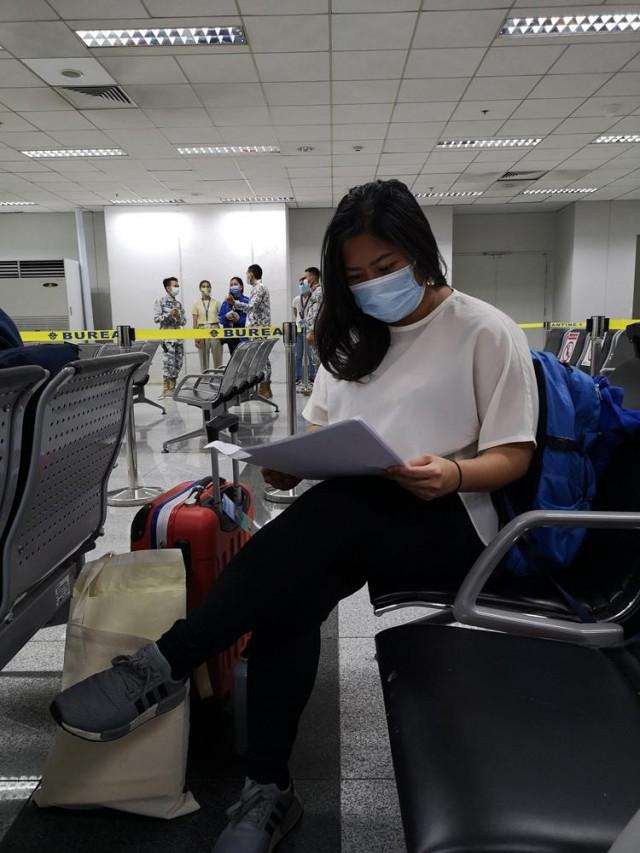
Going on hotel quarantine for nearly two weeks is not easy.
We were not allowed to order food from outside or even receive food packages from relatives or friends. Relying only on hotel food rations for our meals, food was just enough. Best to bring snacks in case you get hungry in between meals.
For toiletries, we were allowed to ask our OWWA officer to get some basic necessities and groceries for us. Some OWWA officers would give us a call every now and then to check our status and well-being.
Since I travelled with my husband and mother-in-law (who is now a Senior Citizen), we were allowed to visit each other in our rooms sometimes. We were briefed about the risks, of course, before we could visit each other. This was something we appreciated a lot during the period of quarantine.
I worked from the hotel every day during the quarantine period so I had something to keep me busy during the isolation. But for those who are not working online, boredom could be your biggest challenge. Therefore, it is best to always keep in contact with your family and friends to keep you busy. Meditation and exercises are encouraged in the hotel room.
After receiving our negative results of swab test and completing our quarantine procedures, we were ready to be discharged from our hotels. Our OWWA officer told us we could leave as early as 6 a.m. if a family member or friend is picking us up.
OFWS also have the option to be transported home to regions via special buses or special flights. Since our family lived just outside the city, they were able to pick us up at the quarantine hotel.
On the day of our quarantine release, we hardly got any sleep, probably because of excitement. It took us more than two years of waiting and planning, a border lockdown, two cancelled flights to Manila, one repatriation flight, two weeks of quarantine and many days of longing, anticipation and anxiety before this day arrived. This day was the culmination of our homecoming, so to say.
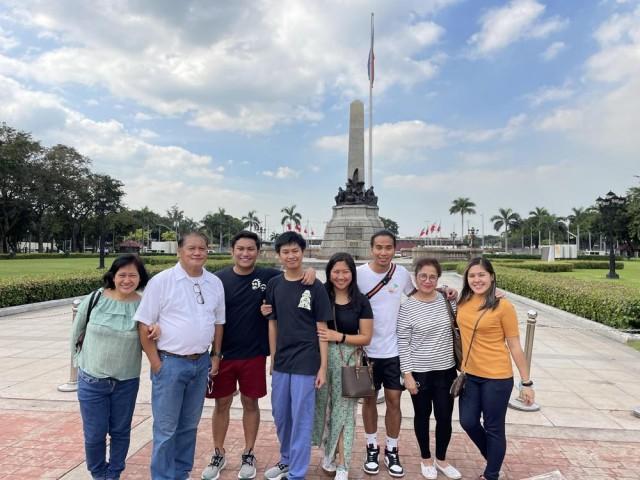
I’ve always wondered how I would feel on the day I see my parents and siblings after more than two years. It felt like this: like opening presents on Christmas morning.
This was my gift. We are home.
— LA, GMA News

