

 GMA Brandtalk
 Tracking
 Archives

ADVERTISEMENT
Filtered By: Lifestyle
Lifestyle
Home-style cooking from Divisoria to the table
In 1917, a girl named Teresita was born to Engracia and Alex Reyes, who built Aristocrat Restaurant in Manila. Nicknamed Sita, she was the third of 13 children. Sita took after her mother, who was fondly called Asiang. Not only did she have the same round face, well-defined eyebrows, well-shaped lips and pretty nose—she also inherited her mother's passion for good food.
Growing up, Sita often accompanied Asiang to market, and she also assisted in the kitchen. She was good with numbers, too, and manned the cash register in her mother's food stalls and restaurant, the first of which was a Ford sedan converted into a food stall.
Asiang taught Sita to respect the flavors of the ingredients. The rule was no shortcuts, and while this called for a longer cooking time, the naturally delicious dishes were always worth it.
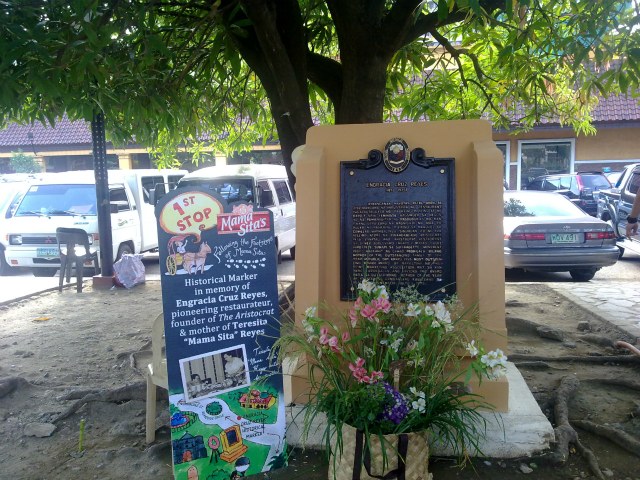
A historical marker in remembrance of Aling Asiang Reyes, founder of The Aristocrat.
This meant that the success of a dish depends on how fresh the ingredients are, and so Sita was a regular at the nearby Divisoria market. Sita became the "diva of Divisoria"—not just a regular customer but a true friend. She would haggle with the vendors, exchanging not only money for goods but stories for advice. The vendors became her lifelong friends and mentors.
Sita eventually began her own food business. First selling fresh fruit, kakanin and banana turon at St. Theresa's College, Ateneo de Manila University and De La Salle University, Sita's business expanded to creating homemade sauces and dips, which have been popular among many Filipinos cooking menudo, kare-kare, sinigang and caldereta.
Walking around Divi
Last Thursday, we followed Mama Sita's footsteps in Divisoria. From Aristocrat Restaurant along Roxas Boulevard, we visited the Aling Asiang marker, then made our way to Divisoria.
It was the first day of December, and the usually crowded streets were even more congested with holiday shoppers. The streets were wet and littered with objects of every imaginable material—plastic, paper, rubber, metal.
It was mid-morning, but for Divisoria, this was late, as the goods are delivered at night. From Baguio, fruits and vegetables are delivered to the bagsakan on C.M. Recto Avenue, formerly Azcarraga. In the past, the fresh produce would be brought from the port via small flat boats called cascos. Trade would come in from Manila Bay through the Pasig River, to the esteros along Azcarraga.
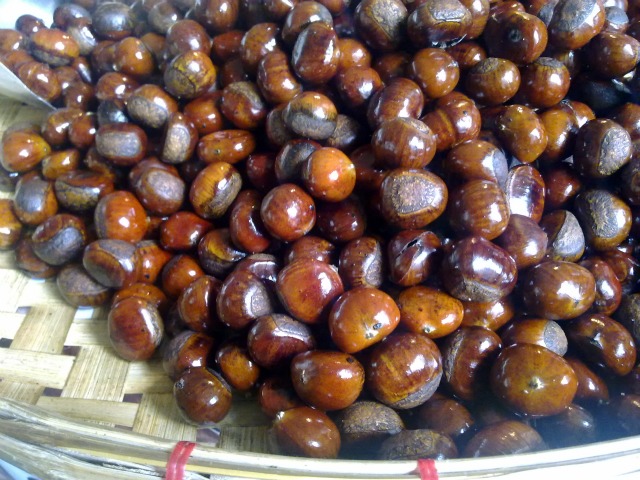
Chestnuts are just one of thousands of items you can find in Divisoria.
The first tip for going to Divisoria is: If you want the freshest picks, you have to be there before sunrise. By 9 a.m., it will take you hours to wade through the narrow streets, where shoppers squeeze in between carts, stalls, and the occasional traffic-stopping truck.
The second tip is to always keep your belongings close to you. Divisoria is a haven for shoppers and thieves.
The area was probably less difficult to navigate back in Mama Sita's time, but the atmosphere in Divisoria is as festive as ever. On Ilaya Street where Mama Sita grew up, you can find everything from gowns to stuffed toys.
For fruits sold in bulk, head to Carmen Planas Street. Formerly known as Folgeras, this was Mama Sita's favorite place to find pomelo, bananas, lanzones, mangoes, atis and dalanghita. But Divisoria is not immune to globalization, and today, Carmen Planas is filled with imported apples, oranges and pears.
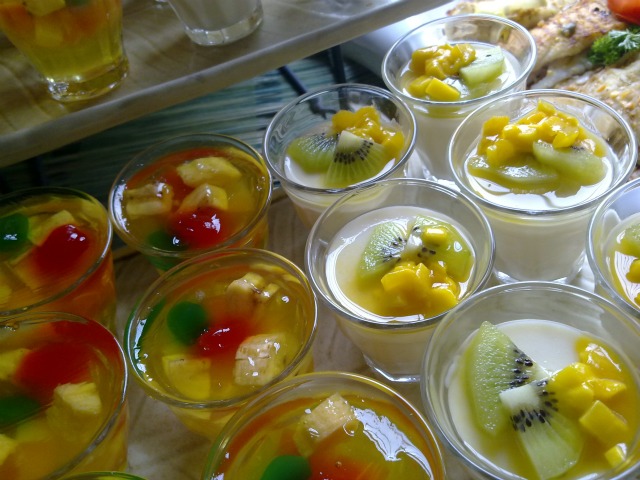
Fresh fruit brightens up this delicious dessert.
Tabora Street is heaven for crafters, with its wide assortment of ribbon, fabric, beads, hooks, and just about anything you might need for handmade items. Apart from cooking, Mama Sita also busied herself with cross-stitch patterns. Combining her passion for food and cross-stitch, she made personalized placemats for all her 27 grandchildren.
While we lacked Mama Sita's diva status, we were still able to get some good deals. Most vendors were difficult to persuade to give us discounts, and we were told "tapat na po ‘yan" more times than we could count.
Even without further discounts, Divisoria prices are already a lot cheaper than supermarket prices. A bag of kiat-kiat can be bought for as low as P40, and Fuji apples are sold for P10 each. If you're lucky, a vendor might give you a handful of calamansi after you purchase a bag of vegetables.
We walked around Divisoria until it was afternoon, not noticing how hungry we were. A trip to Divisoria is definitely tiring, but you won't lack for things to see, touch, taste and smell. Granted, not everything is pleasant, but it's a sensory overload you won't forget.
Leisurely lunch at Intramuros
We arrived at Ristorante Delle Mitre in Intramuros for lunch. Intramuros was Mama Sita's second home, and it was a fitting place to enjoy dishes prepared with her special touch.
There was a vegetable casserole, roast pork belly, chicken morconitos, sinigang na ulang, grilled fish and meatball spaghetti.
The dishes weren't particularly fancy, but you could tell they were no ordinary recipes from the first bite. The vegetable casserole was made with caldereta sauce, giving the usually creamy dish an unexpected kick. The sinigang na ulang was made using Mama Sita’s sinigang paste, giving it a tangy twist.
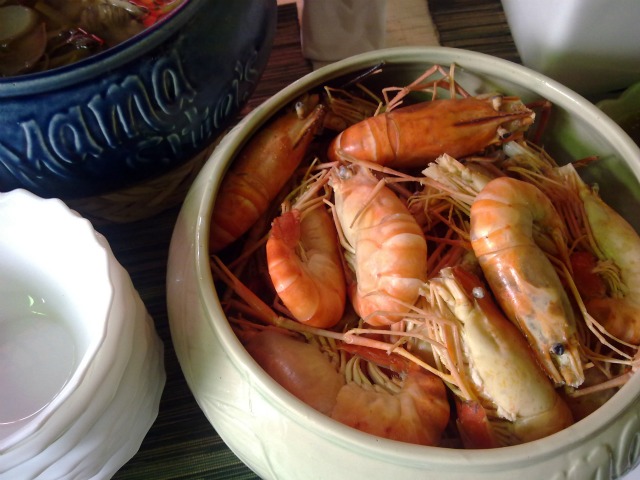
Mama Sita's Sinigang na Ulang is delightfully sour.
The chicken morconitos were simmered in menudo sauce and the meatball spaghetti was cooked with sweet spaghetti sauce. For several minutes, no one spoke. The only sounds were the spoons and forks touching the plates, and the occasional lip-smacking. Yes, we were all very hungry. But the food was also very good, and demanded our full attention.
Groceries make it so easy to skip going to the market. But as we enjoyed the lunch made from the freshest ingredients, we realized that it's worth the effort. There's nothing like a home-cooked meal made using that day’s finds at the market. –KG, GMA News

