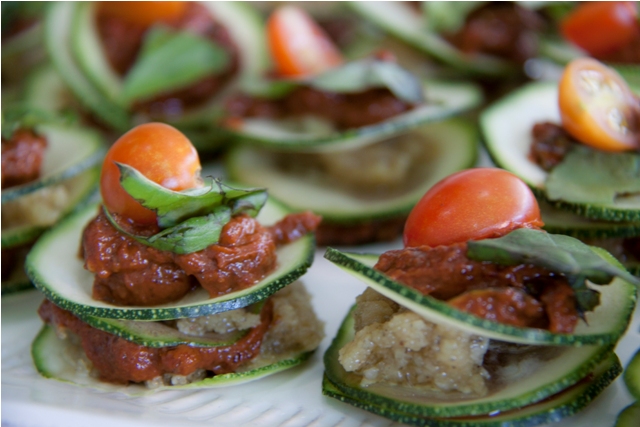
Glorious raw food. Photo by Mel Gatchalian
How does one go ‘raw’? What’s a ‘vegan’? These are a few of the terms vegetarians are familiar with, like a caste system in the ranking order of health food freaks. I have stuck to the principle of eating nothing more than plants for more than 12 years now, and when people ask me why, I say it’s because I had married a monk – and that answer hardly required any explanation. My father hasn’t gotten used to this idea until now; he still tells me to buy
lechon manok down the street from my apartment when my fridge runs out of food. In our country’s love for gastronomy of all kinds, I may seem to be a pathetic example of deprivation.
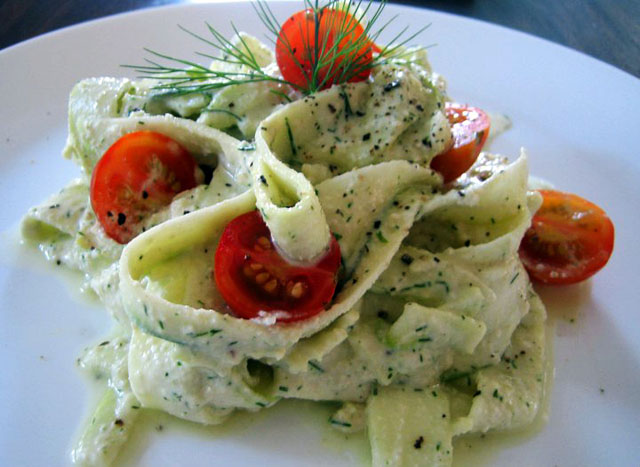
Creamy Dill Pasta. Photo courtesy of Sugarleaf.
But being a vegetarian is more than just a fad. You wouldn’t know what it’s like unless you try being one. My blood type (A+) made the transition easy. It was only after the second year when I heard my body telling me, stick to veggies and you’ll be fine. Later I gradually let go of the eggs, the dairy products, and the refined sugar, putting me on a level a notch higher, to that of being a vegan. I confess however to having made some exceptions, especially when I am invited to taste the pastries at the Café Damaso. And then now, I am toying with the idea of turning to raw food, thinking that it would make my lifestyle a whole lot simpler: instead of oatmeal for breakfast, I would have smoothies; of rice, fine granules of daikon; of pasta, noodles from an extractor.
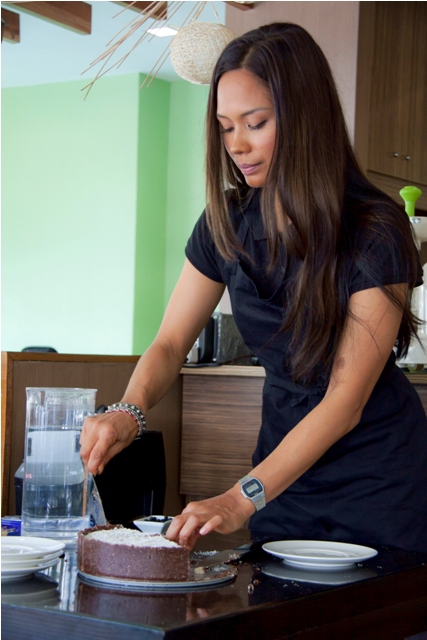
Chef Mona Lisa Neuboeck. Photo by Mel Gatchalian
That kind of simplicity may be a bit complicated for a certain lifestyle. As it is, I make do with my vegetables cooked in a steamer or an oven toaster. If I decide to make the shift to pure raw, I would have to acquire a top-rate blender; a juicer that can also mince, grind, mill, chop, and make sorbet and noodles; and possibly, a dehydrator for more sophisticated recipes. At the Sugarleaf restaurant last Feb. 15, the raw food chef Mona Lisa Neuboeck served us in the haute gourmet style of her dishes that gained the applause of my stomach. In being a vegetarian, your body discriminates, it complains when too much sugar kicks in, it belches out trans fat and monosodium glutamate, it barely tolerates processed food. Mona Lisa has done her transition well, from being the daughter of an Austrian butcher and a Filipina mother from Iloilo, where culinary reputation heavy on the meat is its pride. A model and an athlete, she bears the physical profile that invites us to embark on a path similar to hers, from yoyo dieting – a cyclical gaining and losing of weight – to fixing her hormonal imbalances through the food she eats. She took us on a taste tour of her course of raw creations, starting with a grapefruit ginger blast with hints of cayenne pepper, bee pollen, vanilla bean, coco sugar, and stevia powder, a natural sweetener with no calories, in the blender. We went wow with her raw-violi with garlic cheese filling and sun-dried tomato sugo for the entrée. Her main dish of raw daikon garlic rice and baby bok choy and shitake un-stir fry took me soaring high with satisfaction that I wound up scraping the bowl for more. It’s in the way she marinated them with seasonings of sesame oil, liquid aminos, apple cider vinegar, honey, sea salt, coriander seed powder, and psyllium powder that cinched the flavor. This dish can be heated to not more than 118 degrees Fahrenheit – when the enzyme in raw food starts breaking down, defeating its principle of staying raw.
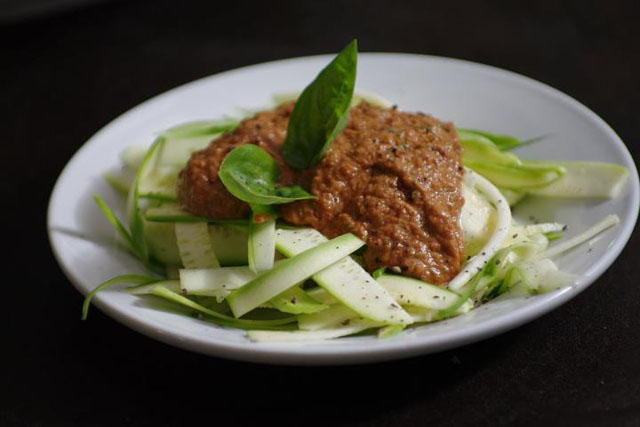
Zucchini Pasta. Photo courtesy of Sugarleaf.
And as far as I can tell, no one in the room turned down her deliciously layered sweet potato mocha torte for dessert – which needs a lot of chopping in a food processor and soaking of some nuts overnight. This is what Mona Lisa calls the “living food” or the “youthening diet” (as opposed to anti-aging), having trained at the raw food academy in Fort Bragg, California, and getting certified as a raw food chef. It’s the enzymes that make a difference, making digestion easier and longevity possible. “The more enzymes we get in, the more life force we have,” she said.
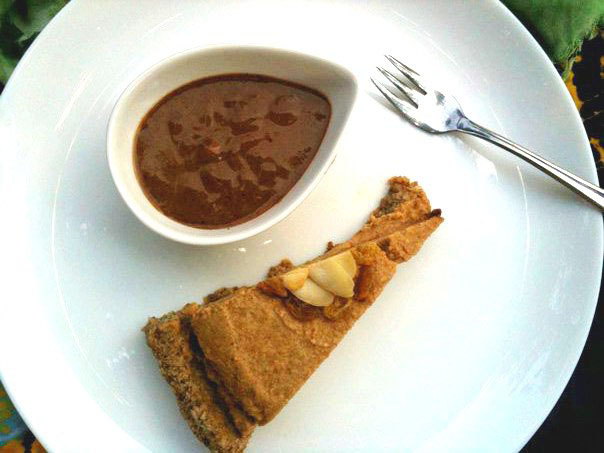
Sweet Potato Mocha Torte Pie. Photo courtesy of Sugarleaf.
“We don’t have to get too religious about this,” she adds – and that is what I tell others as well when they ask me about what it takes to be a vegetarian. We decide what our body needs and we make the adjustments and discipline into being healthy. It does get intimidating when it calls for imported or organic ingredients that tend to be heavy in the pocket. I have for the first time heard of the chia powder, a super food used by the Aztecs, and the Incan maca powder, considered to be a natural Viagra. A packet of each costs more than one thousand pesos. We could look into what we have, so let’s not take the
malunggays, the
ampalaya, the mangosteen and durian for granted. We do have an abundance of natural food if we look around and easy recipes to make with them. Judging from Mona Lisa’s recipes, I would need more patience with giving my all to raw food, and so I think that for a start, I could try a variation of the smoothies. That’s easy enough. –
YA, GMA News Note: Mona Lisa will give a raw cuisine demonstration on April 14. To find out more, visit www.sugarleafph.com. 

 GMA Brandtalk
 Tracking
 Archives


