

 GMA Brandtalk
 Tracking
 Archives

ADVERTISEMENT
Filtered By: Lifestyle
Lifestyle
Authentic taste of Singapore at East-West food fest
+
Make this your preferred source to get more updates from this publisher on Google.
For foodies, Singapore is one destination that always brings mouthwatering memories of chili sauces, delectable noodles, and seafood delights. And so when Makati Shangri-la Hotel sent an invite for a media lunch that promised to bring Singaporean cuisine to Manila, it was hard to say no.
We were glad we didn’t, as the lunch spread on that sunny Wednesday was definitely worth the midday commute from Quezon City to Makati. Guest chef Samson Chan was also very patient in sharing insider’s tips on a great Singaporean meal to the food enthusiasts gathered at the Circles Event Café.
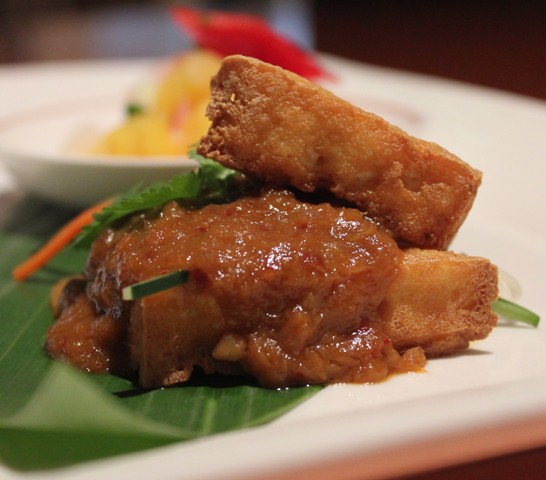
Tahu Goreng with sweet and spicy sauce
To start the meal, the kitchen served pineapple pickle salad and tofu goreng in one appetizer plate. Drizzled with peanut sauce, the fried tofu wedges served with julienned carrots and bean sprouts presented a tasteful prelude to the array of dishes to come. The sauce held just the right amount of sweetness and spiciness, plus a hint of lemongrass, to bring some excitement to the tasteless tofu. Meanwhile, the pineapple bits sprinkled with onion, chili, and calamansi refreshed the palate.
Before the entrées, there was bak kut teh, a traditional pork spareribs soup that is clearer in consistency in Singapore, Chef Chan explained. I got introduced to this soup a decade ago in Kuala Lumpur, where it is more robust and cloudy. My foodie friend Asi detected star anise in the mildly spicy soup, and the chef said cinnamon also contributed to the piquant taste. The meat was tender to the bite, and it was a pity not to finish every bit as the dishes kept coming in quick succession.
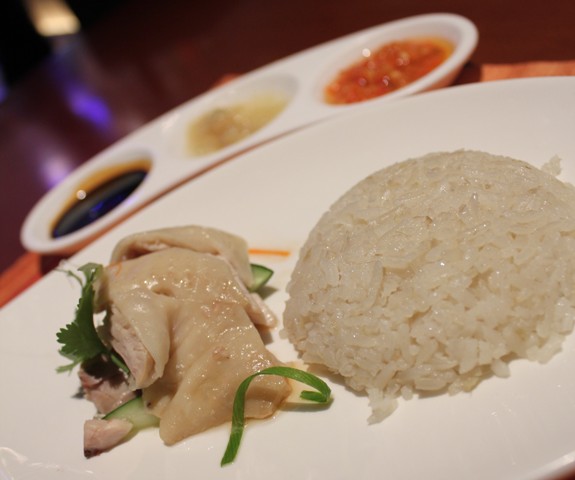
Delicate taste of Singapore Chicken Rice
“I’m happy with the ingredients I have come across here,” Chef Chan tells us in between mouthfuls of spicy goodness. During the media lunch, he had only been in Manila for a few days and admits he was still adjusting the dishes for the Pinoy taste, without compromising their authentic Singaporean flavor.
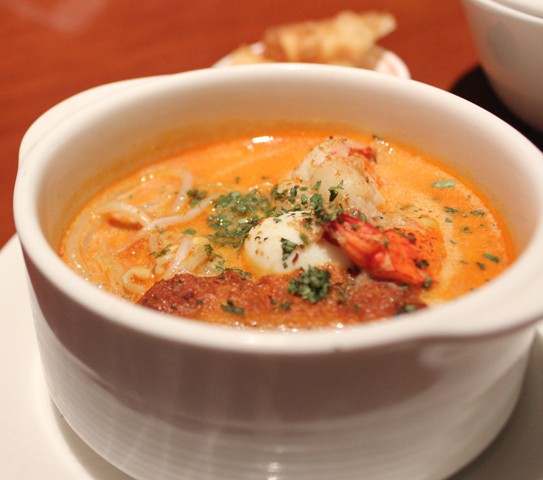
Peranakan-style laksa
As expected, the highlight of the meal was the Singaporean chili crab, which came in a huge plate for sharing in small groups. While the other diners demurely picked at the crabmeat with forks and knives, I knew the only way to do justice to the dish was to use both hands, and the hotel staff graciously provided wet towels for the task. Warm and soft, the mantou buns served with the chili crab was a pleasantly sweet counterpoint to the fiery sauce that had black and white pepper as well as chili, according to Chef Chan. It was definitely delicious.

Singapore Chili Crab with sweet mantou rolls
The chili crab certainly brought back the sights and smells of Singapore’s hawker stalls, without the sneezing frenzy that often comes with the senses getting overpowered by all those spices. For the classic dish, Chef Chan says the hotel only uses male crabs because it would be a waste to smother the flavor of the female crab and roe in chili. The sauce for the Singaporean chili crab was much spicier than the earlier dishes, lingering in the mouth long after the last morsel had disappeared from the plate.
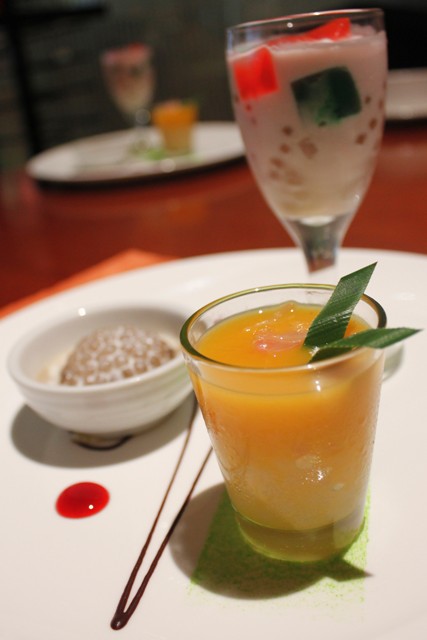
Musical notes: bo bo cha cha, gula melaka and mango puree with pomelo
A trio of sago-themed desserts rounded up the meal: the playful bo bo cha cha in red, green, and yellow cubes and balls with contrasting flavors; the cloyingly sweet and syrupy gula melaka, its dark looks not quite as appealing as the others; and mango puree with pomelo that provided balance with sour and tart tastes. “Parang musical notes,” my friend Asi commented, and I couldn’t agree more.
As we sipped our coffees, Chef Chan regaled us with stories on how he learned his craft from Hong Kong chefs. Eventually, he applied the lessons to the rich cuisine of Singapore and other countries where he has shared his passion for cooking, to the benefit of foodies all over the world. Our tummies were certainly glad to have made his acquaintance. – KG, GMA News
Chef Samson Chan’s dishes are available at the Makati Shangri-La’s Circles Event Café until March 16, 2012. The hotel’s East Meets West festival also features foie gras master Chef Michael Petit from March 12 to March 15 at the Red restaurant. All photos courtesy of Makati Shangri-La Hotel

