Ilonggo cooking is full of robust flavors, like their strong, tempestuous women and celebrated men of choler. The Mandarin Oriental Manila’s Paseo Uno pays homage to Iloilo’s range of dishes in "Flavors of the Visayas," featuring celebrity chef and Ilonggos' own Chef Pauline Gorriceta-Banusing.
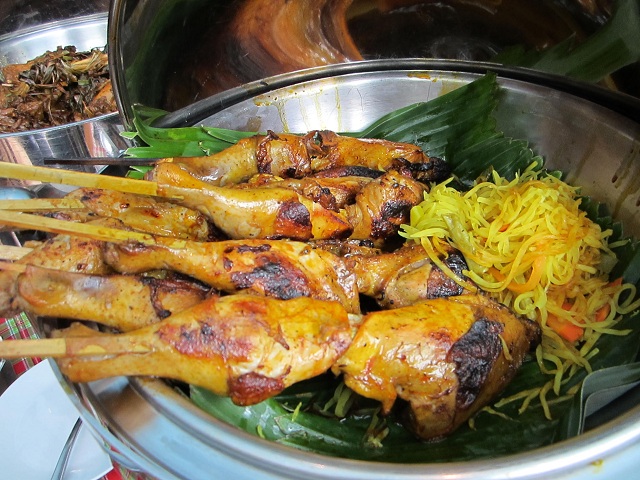
Ilonggo cuisine is more than just inasal—but the inasal is delicious, too.
I confess I have a brutish tongue, which is to say my appreciation for a good piece of angus steak is more or less on the level with that for a good piece of carinderia pork chop; I’d eat them both with gusto. Sure, I’d appreciate the craft and prep time in the former, but growing up in an Ilocano house with its modest vegetable and salted meat recipes, being on a bad diet of fishballs, isaw, and squidballs in my college years, and fast fooding my way as a cub reporter hasn’t sharpened my palate any. Which is to say, I really appreciated the self-assuredness of the Ilonggo dishes, their sense of completion, and no-nonsense “this is the way it tastes like” attitude. Chef Pauline apparently feels the same way. “I have nothing against fusion. I just don’t do it,” she shrugged. The owner of Iloilo restos Steps of Rome and 101 Luna Steak Room might know a thing or two about the value of keeping heritage dishes as is. She’s already been representing her province’s culinary tradition for years now, even in Mandarin Oriental’s kitchens back in 2006’s “Manamit!” festival. Dubbed a culinary doyenne, and a celebrity in her native Iloilo, she was trained at the Culinary Institute of America, the New School of New York, and at the Institute of Culinary Education. I’ve visited Iloilo and the cities of Bacolod and Dumaguete before, but haven’t really had the time to devour anything but the range of inasal flavors. Now, the many other dishes I had to try were a delight and a welcome surprise.
How it's done At the buffet, the chicken dishes are like a mini-feast all by themselves. Inasal is a staple of endless variety if you go to Manokan Country in Bacolod and the Negros territories, but this is that dish galvanized by both a palate that knows exactly how your Lola made it and refined by culinary artistry into comfort food extraordinaire. Meanwhile, the Chicken Pancit Molo has a dry, almost bitter aftertaste that chef Pauline explains is really how “real molo” should taste like, not the swimming-in-moisture siomai dumplings of many establishments. No surprise there, since the dish itself is named after a district in Iloilo: Molo. “This is really how it’s done. This is nostalgic cuisine for Ilonggos and Ilonggas,” declared Chef Pauline, adding that there’s nothing extenuate about this, no added spices or herbs to make it palatable to a wider audience, or to Western tongues.
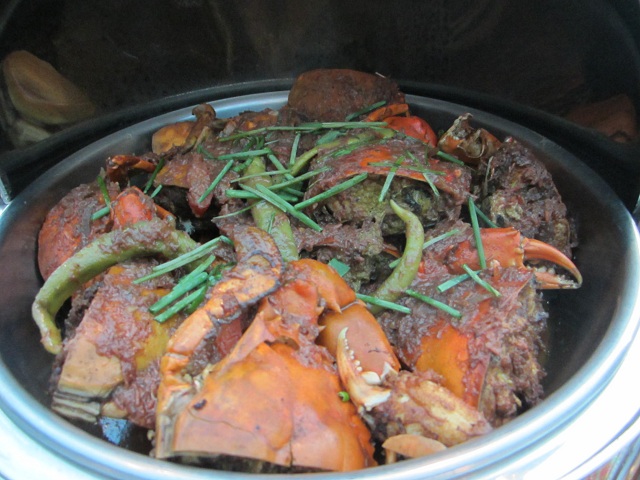
Chef Pauline Gorriceta-Banusing does Ilonggo cuisine—like her Alimango na May Ginisa na Guinamos—the way it really should be done.
The Native Manok sa Gata takes the cake for exoticism, that is if you haven’t tasted anything that’s made with tultul salt, the hard, brick-like salt from Guimaras that has shades of gray in it. The mix with gata has it simmering with a bold, full flavor. What may be an acquired taste for non-Visayans is the KBL or Kadios Baboy Kag Langka na may Batuan, which basically means pork stew with jackfruit and black peas. As far as comfort food goes, anybody who grew up around Ilonggos, I am assured, will remember this just like anybody raised around Ilocanos has had to tolerate and come to love Pakbet. The strong and robust taste of the stew just full of the langka with the dry, painterly daubs of the black peas in every spoon may turn off the hardiest of meat lovers but the scent alone will make Visayans remember home and childhood better than any madeleine.
God is a pastry chef Of the meat and poultry dishes, my fave is the Kansi na Baka, which is the Visayan version of bulalo. The beef short rib and beef tendon remind you vaguely of eating pares that’s been made into a perfect version of itself, bold as brass and almost as sour as sinigang, a delight for anybody with a hankering for meat. Which means me. When we got to the dessert, by far the best for me is the truly astounding Yema Cake that’s like a taste of God’s kitchen if He were a pastry chef. I could eat this thing all day, diabetes be damned. From the sweet tooth of the Ilonggos we also have the piyaya, with each version being different for the family that bakes it. These soft, pita-like delicacies are the souvenir take-home of many a visitor to Iloilo and the region. Chef Pauline however convinced one of the original families that invented the piyaya to teach her the rolling and filling technique and, fortunately after much assurance she wouldn’t profit from it, they taught her their super secret modes of making and heating it.
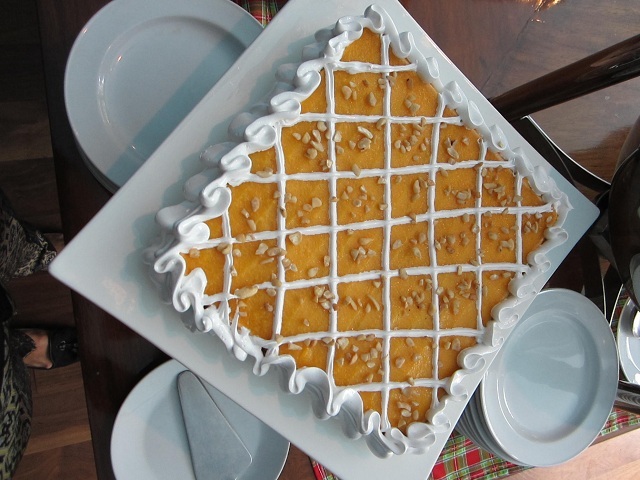
The yema cake: divine.
The seafood menu has a range of dishes that tackle both fish and crustaceans. Since I am allergic to anything with a shell I tried the Pinamalhan na Isda sa Dahon sang Pabo (Fish wrapped in mango leaves) and it turned out to be excellent fare, the fish and the native vinegar plus the ginger creating a swirling effect on the palate. Also notable were the Fish Tapa and the Fresh Lumpia Ubod as starters. I asked my companion to sample the crustacean dishes and she gave the thumbs up to the Alimango na May Ginisa na Guinamos, with guinamos being the Visayan version of bagoong. The lack of preservatives and artificial coloring really let the flavor of the crab come through. If you sit down for a full-course meal though there’s also the more rare grilled seafood options like Bulgan (sea bass) and the Managat (Visayan Snapper) to choose from, plus a Blue Marlin if that’s what you like. Wash it all down with a choice of buko juice or sago’t gulaman and you’re golden. For Chef Pauline, Visayans should come to this feast with their family because the taste of comfort will remind them of hearth and home, childhood and sweet memories. And because it’s proudly, traditionally Ilonggo. “[Visayans] can taste their heritage [here] proudly,” she smiled.
— BM, GMA News “Flavors of the Visayas” runs from May 6 to 12, 2013 at Paseo Uno, Mandarin Oriental Manila, Makati Avenue, Makati City. 

 GMA Brandtalk
 Tracking
 Archives


