

 GMA Brandtalk
 Tracking
 Archives

ADVERTISEMENT
Filtered By: Lifestyle
Lifestyle
Attention, foodies: A new katsu house to sink your teeth into
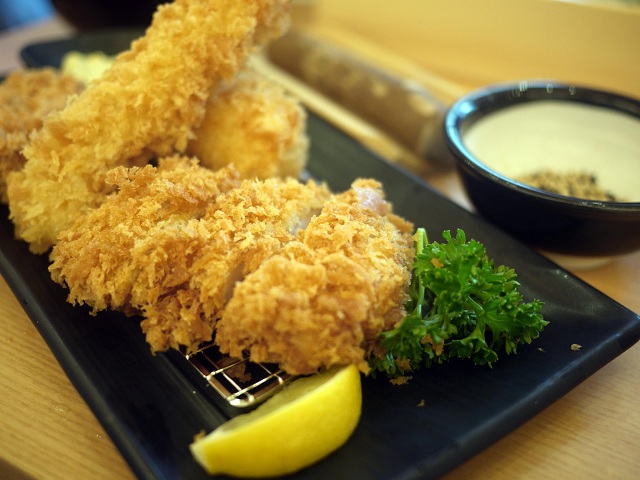
The Saboten special set. Photos by Alina R. Co
Two years ago, I was one of those curious foodies who rushed to the first Yabu branch in Megamall to find out what the fuss was behind a supposedly very simple, humble dish. A restaurant that serves only deep-fried breaded meat and fish? Curiouser and curiouser!
People were lining up like ants despite the not-so-humble prices. Yet the moment I sank my teeth into the perfectly crunchy-on-the-outside, soft-on-the-inside pork cutlet, I instantly bit into the katsu craze myself, which many people refer to as the "cult" of Yabu.
And now, things get deliciously crazier with the arrival of Saboten, a huge restaurant brand from Japan. What started as a small canteen in a Shinjuku university is now a 47-year-old tonkatsu place with branches in Japan, Korea, Thailand, Taiwan, Hong Kong, Canada—and now the Philippines, with the opening of its 515th outlet in Serendra, Fort Bonifacio, Manila.
Saboten and other katsu places in Japan are reportedly local contender Yabu’s inspiration for its delectable katsu offering, with the famous pounded sesame seeds, unlimited cabbage and rice. But, hey, we’re not complaining! In fact, if there’s anything food-loving Filipinos know for sure, it’s that healthy competition levels the playing (or should I say eating) field and sparks an intellectual foodie debate.
So, ”like-tongued” foodies, bring on your best katsu eater stance and ready your chopsticks for some serious clicking, as the katsu craze rages on. Constructive comparisons are welcome.
People were lining up like ants despite the not-so-humble prices. Yet the moment I sank my teeth into the perfectly crunchy-on-the-outside, soft-on-the-inside pork cutlet, I instantly bit into the katsu craze myself, which many people refer to as the "cult" of Yabu.
And now, things get deliciously crazier with the arrival of Saboten, a huge restaurant brand from Japan. What started as a small canteen in a Shinjuku university is now a 47-year-old tonkatsu place with branches in Japan, Korea, Thailand, Taiwan, Hong Kong, Canada—and now the Philippines, with the opening of its 515th outlet in Serendra, Fort Bonifacio, Manila.
Saboten and other katsu places in Japan are reportedly local contender Yabu’s inspiration for its delectable katsu offering, with the famous pounded sesame seeds, unlimited cabbage and rice. But, hey, we’re not complaining! In fact, if there’s anything food-loving Filipinos know for sure, it’s that healthy competition levels the playing (or should I say eating) field and sparks an intellectual foodie debate.
So, ”like-tongued” foodies, bring on your best katsu eater stance and ready your chopsticks for some serious clicking, as the katsu craze rages on. Constructive comparisons are welcome.
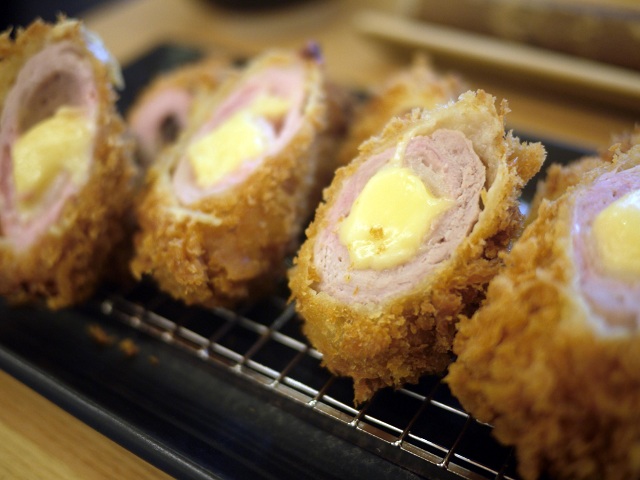
Katsu cheese.
Saboten vs. Yabu
Fans of Yabu will delight in the fact that Saboten pretty much offers the same katsu experience. With our obsession for all things “unlimited” or “eat all you can,” how can you not indulge in several cups of rice and platefuls of cabbage?
Both offer the same cabbage dressing, but with different names: goma mayonnaise and the ponzu (soy sauce with citrus juice) vinaigrette in Yabu; creamy sesame and tangy citrus sauce at Saboten. The latter's tangy citrus sauce, however, was too sour (more sour than Yabu’s) so I quickly changed my cabbage’s dressing to the creamy sesame, which had a stronger sesame taste than Yabu’s sauce, making it more unctuous. I can gobble up cabbage with this dressing all day long and be a happy camper.
Quality-wise, the breaded chops coated with crispy panko (Japanese breadcrumbs) of both restaurants hit the same delicious notes, complemented by the same enjoyable “interactive experience” of pounding sesame seeds to be combined with the sweet tonkatsu sauce.
The striking difference is that in Saboten’s special sets, besides the pickles and radish, rice, miso soup and cabbage, they offer two more appetizers, which you can choose among chicken salad with bang bang ji dressing, radish salad with plum dressing, and chicken with onion radish and seasoning.
Instead of fruit, Saboten lets diners choose between green tea and vanilla ice cream for dessert. I recommend the special sets “Snow”, “Moon” and “Flower”, which are priced at P625, P575 and P525 respectively, because you get more value for your money with the wise add-ons of two appetizers and dessert. It’s also so hefty you can share it with a friend.
But if you crave an a la carte dessert, try their strawberry shortcake, which was so light and fluffy. It was the perfect way to end a heavy katsu meal.
Menu differences
The menu of Saboten is quite lean compared to Yabu, which has a dizzying array of pork sets, chicken sets, seafood sets and mixed sets, which I personally prefer. My favorite set in Yabu is the chicken and seafood katsu set (chicken, black tiger prawn, squid, oyster, eggplant and pepper), because I get to have a little bit of everything.
Saboten’s, on the other hand, has a smaller menu, which is all the better because it’s straight to the point. Besides the original tenderloin and loin sets (imagine huge slabs of pork cutlets), a diner can choose among options of shrimp sets and a few choices for mixed or variety sets (chicken cutlet set, mixed seafood set, tenderloin and loin set).
For the launch, we were able to try the Saboten special set (deep fried shrimp, loin cutlet, tenderloin cutlet and cream crab croquette), priced at P525, not far from Yabu’s price list (P495 for the cheapest mixed set). The cream crab croquette is a must-try with its surprising tender creaminess and subtle hints of crabmeat. But what about the oysters, I gingerly asked the owners. They said they’ll fly in oysters come October in time for oyster season in Japan. Well and good!
Fans of Yabu will delight in the fact that Saboten pretty much offers the same katsu experience. With our obsession for all things “unlimited” or “eat all you can,” how can you not indulge in several cups of rice and platefuls of cabbage?
Both offer the same cabbage dressing, but with different names: goma mayonnaise and the ponzu (soy sauce with citrus juice) vinaigrette in Yabu; creamy sesame and tangy citrus sauce at Saboten. The latter's tangy citrus sauce, however, was too sour (more sour than Yabu’s) so I quickly changed my cabbage’s dressing to the creamy sesame, which had a stronger sesame taste than Yabu’s sauce, making it more unctuous. I can gobble up cabbage with this dressing all day long and be a happy camper.
Quality-wise, the breaded chops coated with crispy panko (Japanese breadcrumbs) of both restaurants hit the same delicious notes, complemented by the same enjoyable “interactive experience” of pounding sesame seeds to be combined with the sweet tonkatsu sauce.
The striking difference is that in Saboten’s special sets, besides the pickles and radish, rice, miso soup and cabbage, they offer two more appetizers, which you can choose among chicken salad with bang bang ji dressing, radish salad with plum dressing, and chicken with onion radish and seasoning.
Instead of fruit, Saboten lets diners choose between green tea and vanilla ice cream for dessert. I recommend the special sets “Snow”, “Moon” and “Flower”, which are priced at P625, P575 and P525 respectively, because you get more value for your money with the wise add-ons of two appetizers and dessert. It’s also so hefty you can share it with a friend.
But if you crave an a la carte dessert, try their strawberry shortcake, which was so light and fluffy. It was the perfect way to end a heavy katsu meal.
Menu differences
The menu of Saboten is quite lean compared to Yabu, which has a dizzying array of pork sets, chicken sets, seafood sets and mixed sets, which I personally prefer. My favorite set in Yabu is the chicken and seafood katsu set (chicken, black tiger prawn, squid, oyster, eggplant and pepper), because I get to have a little bit of everything.
Saboten’s, on the other hand, has a smaller menu, which is all the better because it’s straight to the point. Besides the original tenderloin and loin sets (imagine huge slabs of pork cutlets), a diner can choose among options of shrimp sets and a few choices for mixed or variety sets (chicken cutlet set, mixed seafood set, tenderloin and loin set).
For the launch, we were able to try the Saboten special set (deep fried shrimp, loin cutlet, tenderloin cutlet and cream crab croquette), priced at P525, not far from Yabu’s price list (P495 for the cheapest mixed set). The cream crab croquette is a must-try with its surprising tender creaminess and subtle hints of crabmeat. But what about the oysters, I gingerly asked the owners. They said they’ll fly in oysters come October in time for oyster season in Japan. Well and good!
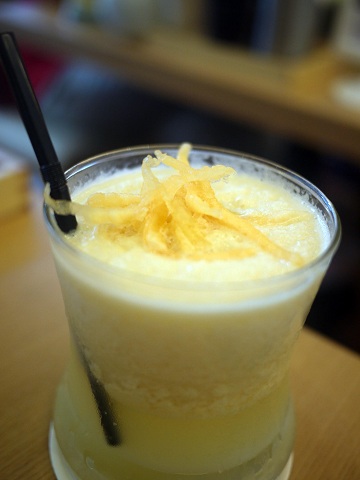
The Yakult melon drink.
I also hope Saboten will also offer an unlimited brown rice option on its menu (which Yabu just introduced this year) for the more health-conscious clientele.
For the fans of katsu curry in Yabu, Saboten has these too. I also noticed Saboten offers miso katsu dishes, which was described as “an original from Nagoya—tonkatsu with hot miso sauce,” something that Yabu doesn’t have on their menu.
Whereas Yabu offers breaded vegetables like eggplant and bell peppers, Saboten has breaded cheese (so rich I wasn’t able to eat it after finishing off all the katsus), asparagus and plum.
It’s too early to tell which high-end katsu place will rule the city. But at the end of the day, it’s not about deciding which one is better and staying loyal to either Yabu or Saboten. It’s all about getting the best of both worlds and that whenever we get an overpowering katsu craving (which always happens), we have options. And as a happy effect, there’ll be shorter lines. — BM, GMA News
For the fans of katsu curry in Yabu, Saboten has these too. I also noticed Saboten offers miso katsu dishes, which was described as “an original from Nagoya—tonkatsu with hot miso sauce,” something that Yabu doesn’t have on their menu.
Whereas Yabu offers breaded vegetables like eggplant and bell peppers, Saboten has breaded cheese (so rich I wasn’t able to eat it after finishing off all the katsus), asparagus and plum.
It’s too early to tell which high-end katsu place will rule the city. But at the end of the day, it’s not about deciding which one is better and staying loyal to either Yabu or Saboten. It’s all about getting the best of both worlds and that whenever we get an overpowering katsu craving (which always happens), we have options. And as a happy effect, there’ll be shorter lines. — BM, GMA News

