

 GMA Brandtalk
 Tracking
 Archives

ADVERTISEMENT
Filtered By: Lifestyle
Lifestyle
In the mood for ramen
+
Make this your preferred source to get more updates from this publisher on Google.
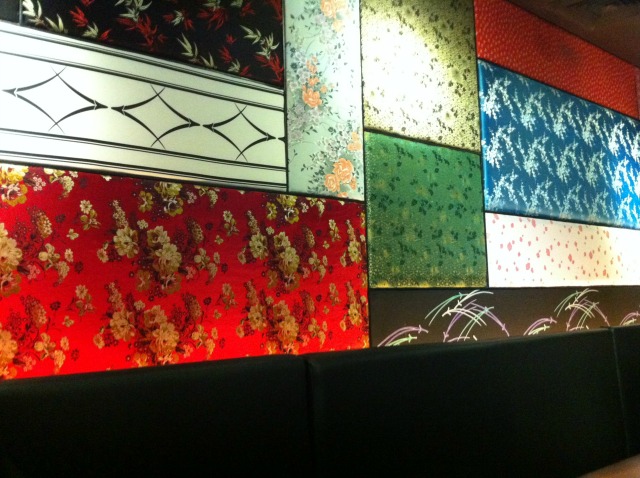
The colorful interior of Kichitora of Tokyo
Some days, I believe, are meant for ramen. I’m talking about those days when raindrops fall in a haphazard pattern outside your window, or when, in spite of avoiding the puddles on the sidewalk while walking with your umbrella, your sandaled feet still get wet, or when your friends declare “it’s bed weather” on their Facebook walls.
After all, during days when you’d like to cuddle up in bed with your comforter or bundle up in a snug jacket at work, there’s nothing like having some hot soup to comfort you and warm you.
Though instant noodles can do the trick, or a bowl of hot mami at the neighborhood pares-and-mami house, ramen somehow satisfies all the more. There’s a kick and an aaahhh moment that ramen gives one at first slurp—and make that a noisy slurp please.
The secret, they say, is in the broth. The more hours that broth is left on the stove, the tastier the ramen is. The umami flavor comes through! No wonder ramen has been a favorite of hungry Japanese workers since the 1900s.
On those days I have craved for ramen, I visited these places. Call this your little guide to ramen eating about town.
Ramen Yushoken
After all, during days when you’d like to cuddle up in bed with your comforter or bundle up in a snug jacket at work, there’s nothing like having some hot soup to comfort you and warm you.
Though instant noodles can do the trick, or a bowl of hot mami at the neighborhood pares-and-mami house, ramen somehow satisfies all the more. There’s a kick and an aaahhh moment that ramen gives one at first slurp—and make that a noisy slurp please.
The secret, they say, is in the broth. The more hours that broth is left on the stove, the tastier the ramen is. The umami flavor comes through! No wonder ramen has been a favorite of hungry Japanese workers since the 1900s.
On those days I have craved for ramen, I visited these places. Call this your little guide to ramen eating about town.
Ramen Yushoken
Ramen Yushoken's Shoyo Ramen
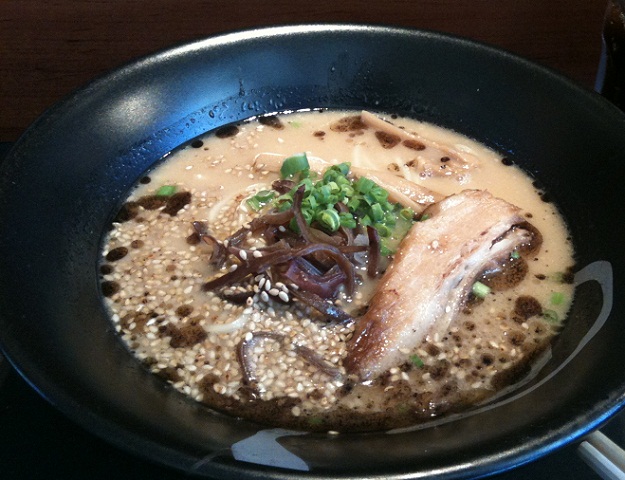
The tonkotsu (pork bone) broth here, they say, takes 12 hours to make. The slow cooking indeed makes the broth flavorful, whether it’s the spicy tantanmen ramen you order, or the soy sauce-based shoyo tonkotsu ramen. The miso ramen, touted to use seven kinds of miso, promises to be as rich as can be.
I’ve gone back twice here for the shoyo tonkotsu (I’m a fan of soy sauce-based ramen!), and would have done so more often, if only Ramen Yushoken were nearer my house.
The karaage and gyoza are both winners, so do include them in your order. Oh, and here's a tip: Come early to avoid the long queue.
Ramen Yushoken is at Unit 20, Cluster 3 Molito Lifestyle Complex, Alabang-Zapote Road, Muntinlupa City.
Kichitora of Tokyo
I’ve gone back twice here for the shoyo tonkotsu (I’m a fan of soy sauce-based ramen!), and would have done so more often, if only Ramen Yushoken were nearer my house.
The karaage and gyoza are both winners, so do include them in your order. Oh, and here's a tip: Come early to avoid the long queue.
Ramen Yushoken is at Unit 20, Cluster 3 Molito Lifestyle Complex, Alabang-Zapote Road, Muntinlupa City.
Kichitora of Tokyo
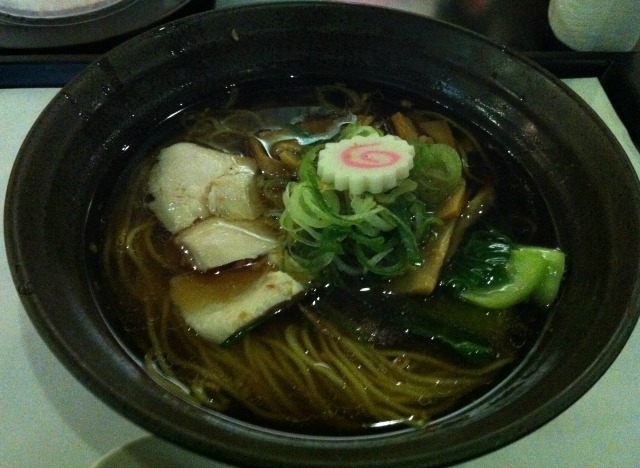
Kichitora of Tokyo's Shoyu Ramen
This little ramen place stands quietly across a popular Japanese tonkatsu restaurant in SM Megamall, and whereas there’s always a long queue outside the latter’s doors, there’s none at Kichitora.
But diners are missing out on something good being served within the kimono-paneled walls here. Kichitora, after all, is as Japanese as it can be, being a branch of the famous ramen place in Shibuya in Tokyo. Japanese chefs Hiroshi Morishima, executive chef of the Shibuya outlet, and Koutaro Kanda, executive chef of the Manila outlet, have said on the menu that their goal “is to serve the best of Japan’s ramen culture to Asia and the world.”
There’s miso ramen in spicy and regular versions for miso fans, and tan tan mien for the spicy ramen fanatics. Purist that I am, I went for the shoyu ramen, which is soy sauce-based, just so I can compare it with Yushoken’s.
Kichitora’s shoyu ramen is of the clear kind, while Yushoken’s is opaque. Unlike Yushoken which uses pork, Kichitora adds chicken for its broth, but it is flavorful too. Topped with chasu (pork), Kichitora’s shoyu ramen is filling and aaahhh-worthy.
Kichitora of Tokyo has branches at 2/F Atrium, SM Megamall, and at 2/F Glorietta 5.
Wrong Ramen
But diners are missing out on something good being served within the kimono-paneled walls here. Kichitora, after all, is as Japanese as it can be, being a branch of the famous ramen place in Shibuya in Tokyo. Japanese chefs Hiroshi Morishima, executive chef of the Shibuya outlet, and Koutaro Kanda, executive chef of the Manila outlet, have said on the menu that their goal “is to serve the best of Japan’s ramen culture to Asia and the world.”
There’s miso ramen in spicy and regular versions for miso fans, and tan tan mien for the spicy ramen fanatics. Purist that I am, I went for the shoyu ramen, which is soy sauce-based, just so I can compare it with Yushoken’s.
Kichitora’s shoyu ramen is of the clear kind, while Yushoken’s is opaque. Unlike Yushoken which uses pork, Kichitora adds chicken for its broth, but it is flavorful too. Topped with chasu (pork), Kichitora’s shoyu ramen is filling and aaahhh-worthy.
Kichitora of Tokyo has branches at 2/F Atrium, SM Megamall, and at 2/F Glorietta 5.
Wrong Ramen
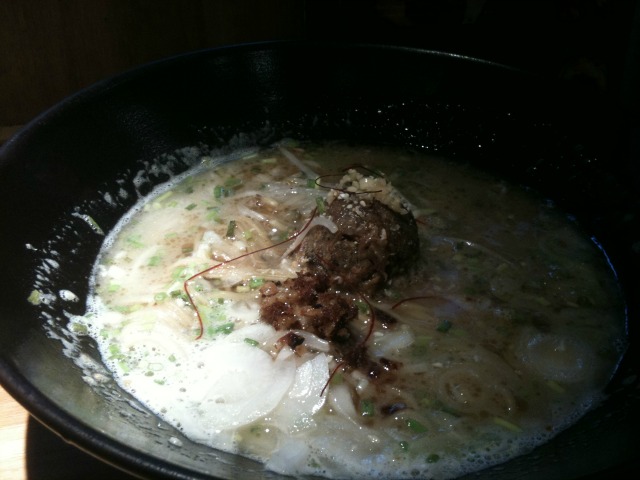
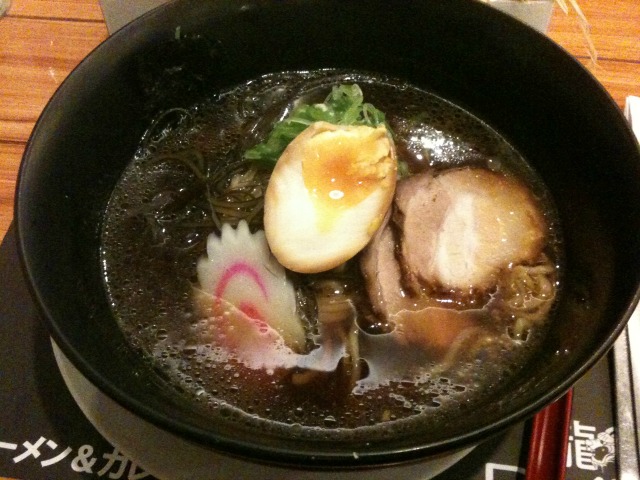
Wrong Ramen's Tonkotsu Light Ramen
It wasn’t even 5:30 p.m. yet when our party of three arrived at Wrong Ramen one weekend for dinner and there was a queue already.
The reason for that became evident the minute the waiter gave me the menu. Someone (or maybe some people) definitely had fun making the menu items. And the chefs apparently are having so much fun in the kitchen that they are always in the mood to play with ramen.
Consider this—Spam and bacon with your ramen. Uh-oh. It sounded very wrong (thus the name of the place) and disastrous, but one sip—or make that slurp—of the FU Ramen made me think: Sabaw pa lang, ulam na! Who knew it would work, right?
Spicy fans may want to try something spicier than tantanmen: the Communist ramen, which, as the name implies, is very red given the Asian spices that go into it.
And again, because I’m a purist, I went for the tonkotsu light ramen, the same soy-sauce based ramen I love, albeit in a less fatty and smaller version. Although it was good, I then realized why we need more fat. I’ll go next time for the full fatty version of tonkotsu ramen here to enjoy the full flavor.
Tip: Eat fast or risk feeling guilty. There's a long line of hungry diners outside.
Wrong Ramen is at Burgos Circle, Bonifacio Global City.
RYU Ramen and Curry
The reason for that became evident the minute the waiter gave me the menu. Someone (or maybe some people) definitely had fun making the menu items. And the chefs apparently are having so much fun in the kitchen that they are always in the mood to play with ramen.
Consider this—Spam and bacon with your ramen. Uh-oh. It sounded very wrong (thus the name of the place) and disastrous, but one sip—or make that slurp—of the FU Ramen made me think: Sabaw pa lang, ulam na! Who knew it would work, right?
Spicy fans may want to try something spicier than tantanmen: the Communist ramen, which, as the name implies, is very red given the Asian spices that go into it.
And again, because I’m a purist, I went for the tonkotsu light ramen, the same soy-sauce based ramen I love, albeit in a less fatty and smaller version. Although it was good, I then realized why we need more fat. I’ll go next time for the full fatty version of tonkotsu ramen here to enjoy the full flavor.
Tip: Eat fast or risk feeling guilty. There's a long line of hungry diners outside.
Wrong Ramen is at Burgos Circle, Bonifacio Global City.
RYU Ramen and Curry
RYU Shoyu Ramen
The word “accessible” came to mind when I sat down at the Tomas Morato branch last Wednesday and looked at RYU Ramen & Curry’s menu. This Japanese restaurant owned by singers Ogie Alcasid and Regine Velasquez doesn’t just serve ramen and curry; it also has katsu, tempura, yakisoba, and other Japanese dishes familiar to many Filipinos.
The waitresses told our group that among the bestsellers is the tantanmen whose spiciness can be adjusted depending on your tolerance.
To make my food review fair, however, I ordered their shoyu soy-based ramen just as I did in the other ramen places. It came to the table piping hot, with the tamago (egg) and tender chasu (pork slice) done right.
Maybe next time I will order the tantanmen. If it’s the most popular ramen dish on the menu, it must be that good. For some reason, though, their karaage doesn’t work for me.
RYU Ramen & Curry has outlets at 220 MJB Bldg., Tomas Morato Ave., Bgy. Laging Handa, Quezon City, and at UP Town Center, Katipunan Avenue, Loyola Heights, Quezon City.
Nomama Artisanal Ramen
The waitresses told our group that among the bestsellers is the tantanmen whose spiciness can be adjusted depending on your tolerance.
To make my food review fair, however, I ordered their shoyu soy-based ramen just as I did in the other ramen places. It came to the table piping hot, with the tamago (egg) and tender chasu (pork slice) done right.
Maybe next time I will order the tantanmen. If it’s the most popular ramen dish on the menu, it must be that good. For some reason, though, their karaage doesn’t work for me.
RYU Ramen & Curry has outlets at 220 MJB Bldg., Tomas Morato Ave., Bgy. Laging Handa, Quezon City, and at UP Town Center, Katipunan Avenue, Loyola Heights, Quezon City.
Nomama Artisanal Ramen
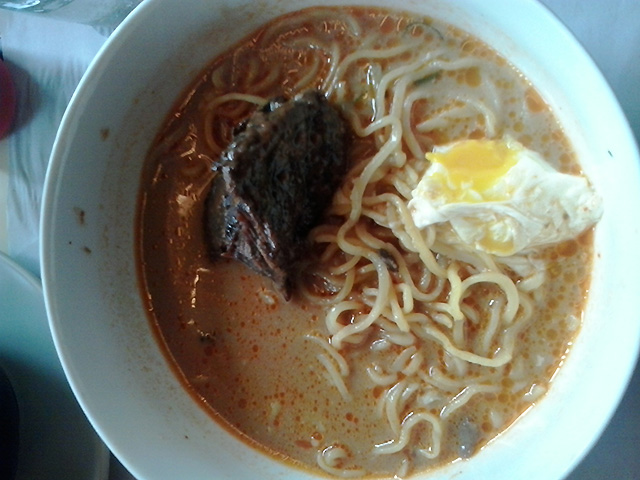
Wagyu Beef Cheek Ramen at Nomama Artisanal Ramen. Photo by Roehl Niño Bautista
Although a couple of friends have vouched for the Kit Kat Bar dessert at Nomama, one has to visit this place for the ramen. Aside from the freshly made noodles you can see the kitchen staff working on, some of the ramen items here fall under fusion cuisine, and that makes the place interesting.
There’s Thai green curry ramen, a curious blend of spices, and the ox tongue and chili tofu ramen that intrigues the adventurous eater. Another ramen dish has Wagyu beef.
As for me, there’s the traditional Nomama ramen—miso-based ramen made of pork broth and with chasu toppings. Yeah, yeah, I’m not so adventurous after all, but I like my ramen the way it should be. And Nomama’s satisfies.
Nomama Artisanal Ramen is at the G/F FSS Bldg, 18 Sct Tuazon, Bgy. Laging Handa, Quezon City.
Tokyo Tokyo Ramen Bar
There’s Thai green curry ramen, a curious blend of spices, and the ox tongue and chili tofu ramen that intrigues the adventurous eater. Another ramen dish has Wagyu beef.
As for me, there’s the traditional Nomama ramen—miso-based ramen made of pork broth and with chasu toppings. Yeah, yeah, I’m not so adventurous after all, but I like my ramen the way it should be. And Nomama’s satisfies.
Nomama Artisanal Ramen is at the G/F FSS Bldg, 18 Sct Tuazon, Bgy. Laging Handa, Quezon City.
Tokyo Tokyo Ramen Bar
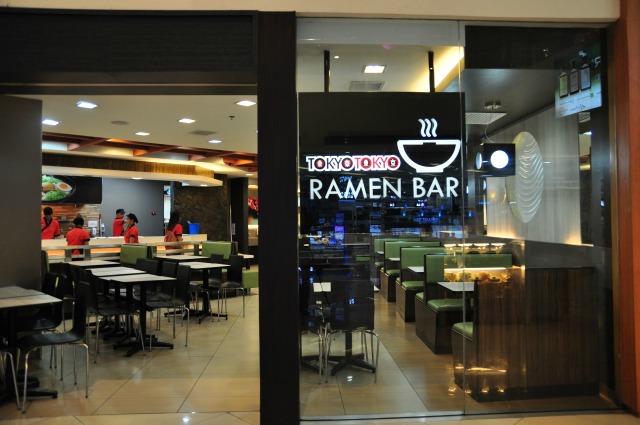
Tokyo Tokyo Ramen Bar's Trinoma branch. Photo from Tokyo Tokyo
On those days when you’re stuck in the mall doing errands and the craving for ramen hits you, it’s good to know you can go to one place where you can have a bowl pronto—Tokyo Tokyo.
Tokyo Tokyo has been around since 1985. It has since grown up with the times and proof of this is their new lineup of ramen bowls: tempura miso, braised pork, and spicy chicken.
At the media launch last August, we were told that Tokyo Tokyo simmers the broth for 24 hours in Japanese hagamas (cast-iron pots) to get that authentic ramen taste. The noodles are freshly made, they say.
I’ve tried the three variants, but the best for me is the braised pork ramen. It has soft pork cutlets with a strip of nori on the side. Though nowhere near the shoyu ramen of Yushoken and Kichitora, it makes for a quick satisfying meal that’s also easy on the pocket. Forget cup noodles!
Tokyo Tokyo Ramen Bar has outlets at TriNoMa, SM Southmall, Net Lima at The Fort, SM Megamall, People Support on Ayala Avenue, Greenbelt, Market Market, SM Baguio, SM Fairview, SM North EDSA Annex and Main, SM San Lazaro, SM Manila, Greenhills, Harbor Point Subic, Robinsons Pioneer, Ali Mall, Festival Mall, SM Dasmariñas, and SM Bicutan. — BM, GMA News
Tokyo Tokyo has been around since 1985. It has since grown up with the times and proof of this is their new lineup of ramen bowls: tempura miso, braised pork, and spicy chicken.
At the media launch last August, we were told that Tokyo Tokyo simmers the broth for 24 hours in Japanese hagamas (cast-iron pots) to get that authentic ramen taste. The noodles are freshly made, they say.
I’ve tried the three variants, but the best for me is the braised pork ramen. It has soft pork cutlets with a strip of nori on the side. Though nowhere near the shoyu ramen of Yushoken and Kichitora, it makes for a quick satisfying meal that’s also easy on the pocket. Forget cup noodles!
Tokyo Tokyo Ramen Bar has outlets at TriNoMa, SM Southmall, Net Lima at The Fort, SM Megamall, People Support on Ayala Avenue, Greenbelt, Market Market, SM Baguio, SM Fairview, SM North EDSA Annex and Main, SM San Lazaro, SM Manila, Greenhills, Harbor Point Subic, Robinsons Pioneer, Ali Mall, Festival Mall, SM Dasmariñas, and SM Bicutan. — BM, GMA News

