

 GMA Brandtalk
 Tracking
 Archives

ADVERTISEMENT
Filtered By: Lifestyle
Lifestyle
Food safety tips: Keep out of the temperature danger zone
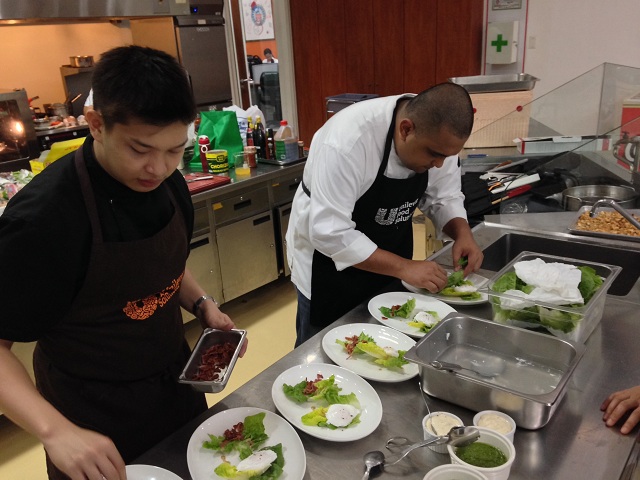
Chefs test recipes in the Unilever kitchen.
Did you know that it is not safe to leave cooked food out in the open for more than four hours? I admit, I have been guilty of this when my husband and I moved into our new home and had no helper in the kitchen. We would use the rice cooker, for instance, and leave the cooked rice there overnight. The next morning, we would make some garlic rice with it and eat it with gusto.
I didn’t know that there is such a thing as time and temperature abuse, which could lead to food contamination. The moisture inside the cooker provides the ideal condition where bacteria would have a chance to grow. We were fortunate that we did not get any foodborne illness or something, but we stopped that habit and learned to practice food safety, especially since we now have a helper to manage the kitchen.
Preparing to prepare food
 Knowing about food safety should be everyone’s responsibility, especially those who work in the food industry. Although culinary schools have food safety classes in their curriculum, most food workers do not undergo any formal culinary training—a lot of them rise through the ranks, learning as they go.
For those who want additional learning, Unilever Food Solutions' Chefmanship Academy offers 12 modules, including one on food safety launched just this year—and the only one in the country so far. It tackles various topics ranging from personal hygiene, personal safety, foodborne illnesses and food safety hazards, among others.
“Chefmanship Academy is a program that we’ve been running since 2009,” said Chef Joanne Limoanco-Gendrano, a ServSafe-certified chef who has been working with Unilever since 2007. “We made sure that it’s applicable to the market. Basically, our target is local restaurants. We feel that a lot of the chefs or cooks working there—they’re the ones who have been requesting for extra learning.”
According to the chef who was part of the regional team reviewing the materials, “It all starts with yourself—your hygiene. What are your standards before you go into a kitchen? What should you do? Start with cleaning yourself—short fingernails, hair away from the face, hair restraints, what clothes you need to wear.”
Learning about foodborne illnesses
One of the topics covered by the food safety class is the danger of cross-contamination, which Gendrano says is one of the key things that has been causing a lot of foodborne illness.
"A common thing that people do, for example, on a chopping board, you would chop raw meat then you don’t wash it or change your chopping board and then you chop your vegetables. That’s already a case for cross-contamination. Especially when you’re working with chicken, which is high in salmonella.”
Unilever Food Solutions has created a checklist of best practices to follow in order to prevent or minimize the risk of contamination.
The Academy also teaches its participants to be aware of the different food pathogens, bacteria, viruses, and parasites that can be brought into the body through unsafe food preparation, and the symptoms of foodborne illness, such as diarrhea and vomiting. "Something as simple as headache is already a [sign of] foodborne illness," said Gendrano.
The temperature danger zone
 From the chef, I learned that there is such a thing as a temperature danger zone, which is basically the range of temperature that food should not be exposed to. She said that during her training as a chef, the tolerance was higher (around 45°-140°F), but now it has become lower. "Food safety needs to be reviewed at least every two to three years because some of the standards change," Gendrano said.
"[I]f you really want to practice [food safety], your food should always be chilled and always in a heater," she added.
The training is tailored to local needs, providing solutions that caterers or even carinderia owners would be able to relate to. "Imagine if you’re a carinderia, you don’t have heaters and you can’t afford chiller display," said Gendrano. "What should you do? We kind of have to give them options. The rule would be you have to reheat your food every two hours so as not to reach the four-hour quota when bacteria would start to grow. Or for instance, if you have raw food display, make sure that there is ice underneath, if you don’t have a chiller."
When it comes to cooling or thawing food, Gendrano advises three methods: "From frozen, put it in the refrigerator and leave it to thaw overnight—the safest way. Second is under running water which a lot of people don’t want to do because it’s a waste of water. Third is through microwave. But if it’s microwave, you have to eat it right away or cook it right away. You can’t wait for an hour or two before you cook it."
As much as possible, the team behind the Academy provides examples that would be applicable to the food business set-up of the actual participants.
Tthe Academy covers a lot of points that are useful in both the industrial kitchen and at home. But for those in the industry who aspire for additional education, try to attend any of the small-pocket events or big-scale ones of Unilever Food Solutions. The Academy could also facilitate exclusive trainings for a certain food business. “It doesn’t matter if it’s small or big, just as long as we have a chance to make it relevant to that particular group," said Gendrano. — BM, GMA News
Find out more about the Chefmanship Academy of Unilever Food Solutions by logging on to www.ufs.com.
I didn’t know that there is such a thing as time and temperature abuse, which could lead to food contamination. The moisture inside the cooker provides the ideal condition where bacteria would have a chance to grow. We were fortunate that we did not get any foodborne illness or something, but we stopped that habit and learned to practice food safety, especially since we now have a helper to manage the kitchen.
Preparing to prepare food
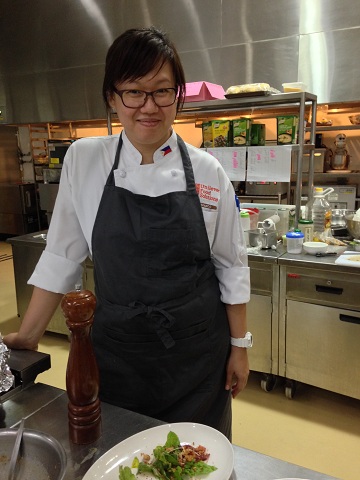
Chef Joanne Limoanco-Gendrano
For those who want additional learning, Unilever Food Solutions' Chefmanship Academy offers 12 modules, including one on food safety launched just this year—and the only one in the country so far. It tackles various topics ranging from personal hygiene, personal safety, foodborne illnesses and food safety hazards, among others.
“Chefmanship Academy is a program that we’ve been running since 2009,” said Chef Joanne Limoanco-Gendrano, a ServSafe-certified chef who has been working with Unilever since 2007. “We made sure that it’s applicable to the market. Basically, our target is local restaurants. We feel that a lot of the chefs or cooks working there—they’re the ones who have been requesting for extra learning.”
According to the chef who was part of the regional team reviewing the materials, “It all starts with yourself—your hygiene. What are your standards before you go into a kitchen? What should you do? Start with cleaning yourself—short fingernails, hair away from the face, hair restraints, what clothes you need to wear.”
Learning about foodborne illnesses
One of the topics covered by the food safety class is the danger of cross-contamination, which Gendrano says is one of the key things that has been causing a lot of foodborne illness.
"A common thing that people do, for example, on a chopping board, you would chop raw meat then you don’t wash it or change your chopping board and then you chop your vegetables. That’s already a case for cross-contamination. Especially when you’re working with chicken, which is high in salmonella.”
Unilever Food Solutions has created a checklist of best practices to follow in order to prevent or minimize the risk of contamination.
The Academy also teaches its participants to be aware of the different food pathogens, bacteria, viruses, and parasites that can be brought into the body through unsafe food preparation, and the symptoms of foodborne illness, such as diarrhea and vomiting. "Something as simple as headache is already a [sign of] foodborne illness," said Gendrano.
The temperature danger zone
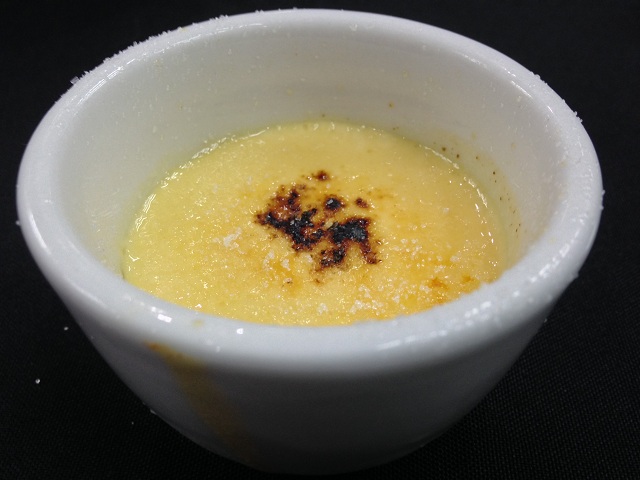
Dessert straight from the kitchen: Creme brulee
"[I]f you really want to practice [food safety], your food should always be chilled and always in a heater," she added.
The training is tailored to local needs, providing solutions that caterers or even carinderia owners would be able to relate to. "Imagine if you’re a carinderia, you don’t have heaters and you can’t afford chiller display," said Gendrano. "What should you do? We kind of have to give them options. The rule would be you have to reheat your food every two hours so as not to reach the four-hour quota when bacteria would start to grow. Or for instance, if you have raw food display, make sure that there is ice underneath, if you don’t have a chiller."
When it comes to cooling or thawing food, Gendrano advises three methods: "From frozen, put it in the refrigerator and leave it to thaw overnight—the safest way. Second is under running water which a lot of people don’t want to do because it’s a waste of water. Third is through microwave. But if it’s microwave, you have to eat it right away or cook it right away. You can’t wait for an hour or two before you cook it."
As much as possible, the team behind the Academy provides examples that would be applicable to the food business set-up of the actual participants.
Tthe Academy covers a lot of points that are useful in both the industrial kitchen and at home. But for those in the industry who aspire for additional education, try to attend any of the small-pocket events or big-scale ones of Unilever Food Solutions. The Academy could also facilitate exclusive trainings for a certain food business. “It doesn’t matter if it’s small or big, just as long as we have a chance to make it relevant to that particular group," said Gendrano. — BM, GMA News
Find out more about the Chefmanship Academy of Unilever Food Solutions by logging on to www.ufs.com.

