

 GMA Brandtalk
 Tracking
 Archives

ADVERTISEMENT
Filtered By: Lifestyle
Lifestyle
Diageo mixes it up, lends Reserve line to cocktails

Luca Cinalli mixes it up.
"Filipinos always love to have their drink," said Diageo Reserve Luxury Manager Marie Ona.
The country has started to see the shift from enjoying Diageo's products on the rocks or with one's favorite soda to mixing it up with other flavors.
"For the Philippines, we've been seeing the trend in the past few years. It started with people getting more appreciative of good food with more ingredients being available," shared Ona. "We've seen the trend develop in the food world then translating to things like wine. We've seen a lot more wine tastings and wine pairings."
"Today, we're here to celebrate the craft of cocktails. I think it's just a general hunger for better flavors, exciting flavor combinations and people being more discerning and curious," she finished.
For the event, Diageo used Johnny Walker Gold Label Reserve whiskey, Ketel One vodka, and Tanqueray 10 gin. Guests were able to go up to Cinalli and 2013 Diageo Reserve World Class Philippines Bartender of the Year winner Allan King Roxas to sample their signature cocktails.
One of Cinalli's offerings that night was the Benedetto Johnnie, which used Johnnie Walker Gold Label Reserve, Benedictine liqueur, Cacao honey, and mastica smoke.
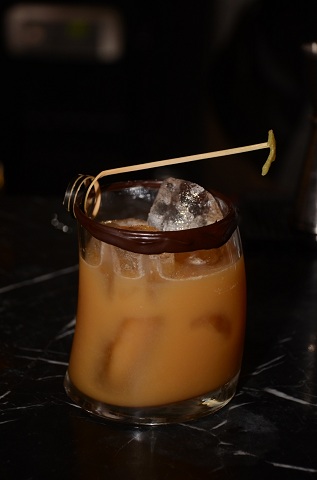
The Benedetto Johnnie.
Another offering was Nolet's Tea, which combined Ketel One vodka with jasmine tea. Dry Vermouth, chartreuse, and grass jelly were also included in the mix.
Finally, Cinalli had guests sample his Tanqueray 10 gin-based cocktail called Meditasian. The drink was made with artichokes, moka, campari, balsamic drops, and coconut oil wax.
Cinalli and Roxas tickled the Filipino palate. They recognized that Filipino cuisine and geography influenced the locals' choice of drinks.
"The Filipino taste tends to be on the sweet side, similar with food. For cocktails, it tends to be on the refreshing side because of the weather," added Ona. "In some countries, eggs and heavy cream are used a lot. Citrus, berries, sweetness are more popular around here. However, we see people being very open to new flavors."
Drinking has always been part of the Filipino social scene. And with mixology's elevation to serious culinary art status, more and more are willing to pay for a worthwhile experience.
"People want value for their money. People want a quality experience, a quality drink," Ona said. "At the same time, people are actually willing to pay more for quality. It's like when you talk to a chef to balance certain flavors, a bartender will talk the same way. It's all about a balance of flavors." — VC, GMA News

