

 GMA Brandtalk
 Tracking
 Archives

New name, new concepts at Crystal Jade Shanghai Delight
People who frequent the Greenhills shopping area think that Crystal Jade has been part of the landscape for quite some time now.
They are wrong.
While it is true that Crystal Jade has been sitting on the corner near the main entrance of V-Mall for years, it isn’t the same restaurant at all.
First, a short explanation about the franchise: Crystal Jade is the name given to all restaurants under Crystal Jade Culinary Concepts Holding, the company run by chairman Ip Yiu Tung. The restaurants run from budget stalls (not yet in Manila) to fine dining establishments, such as Crystal Jade Dining In at the Fort. Though all concepts serve Chinese food, this is where their similarity ends. Each concept has a different menu, ambiance, and target market.
“Crystal Jade is the mother brand. He wanted to categorize the different kinds of Chinese food that he can, all under the mother brand of Crystal Jade,” said Crystal Jade Shanghai Delight brand manager Kenneth Yu.
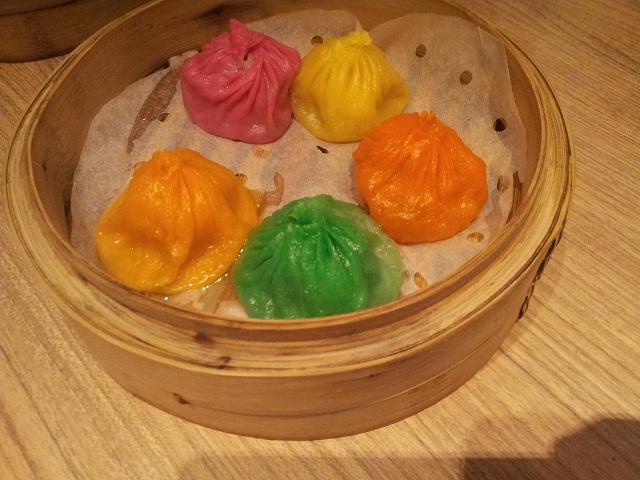
The restaurant sports a more casual ambiance as opposed to the usual Chinese restaurant (no bright white lights, for one thing), and as of the interview, is the only restaurant in the country that serves multi-flavored xiaolongbao, and one of the few that offers truffled xiaolongbao. But dimsum aside, Crystal Jade Shanghai Delight offers many dishes that will make even the most traditional Chinese grandmother proud.
The Spicy Sour Soup in Sichuan Style (P188) isn’t so spicy that you’ll need to down a glass of water after every spoonful, but is sour enough that you don’t need to augment the flavor with black vinegar, either. Strips of tofu, mushrooms, bamboo shoots, chili, egg, meat, salted mustard root, shrimp, and sea cucumber make for a hearty soup that’s thicker than a lot of its kind out there—a good thing. The warm soup is served individually, and makes for a satisfying start to a filling meal.
The Crispy Eel in “Wu Xi” Style (P288) is fun to eat. The strips are incredibly crispy, coated with a sweet glaze while underneath, still retaining the flavor of eel. It’s the kind of appetizer you order when you’re with friends, the kind that’s gone in a flash.
Another uncommon dimsum dish is the Radish Pastry (P120/ 3pcs.), fried flaky pastry enveloping shredded radish. I expected the radish to be saucy and heavily flavored, but it was quite the opposite. The warm filling is light, focusing on the radish flavor, an interesting contrast against the heavier pastry.
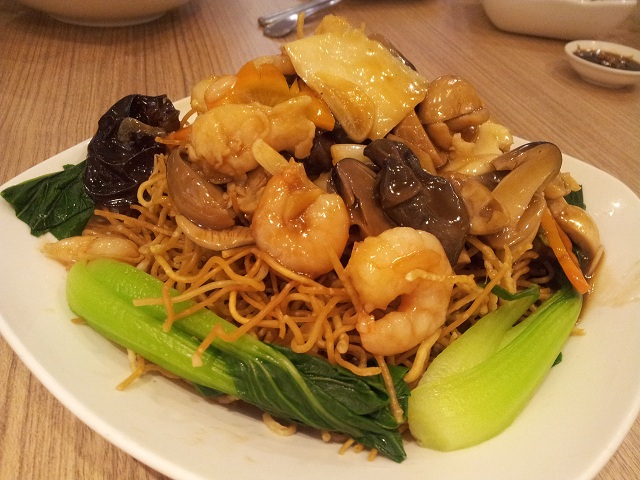
A Chinese restaurant means noodles. The Crispy Noodle with Seafood and Mushroom (P328) is a play on texture, the crisp noodles topped with warm seafood, vegetables, and mushrooms, the sauce softening the noodles somewhat, but not so much that they lose their crispness. It’s an extremely delicious dish, one worth checking out.
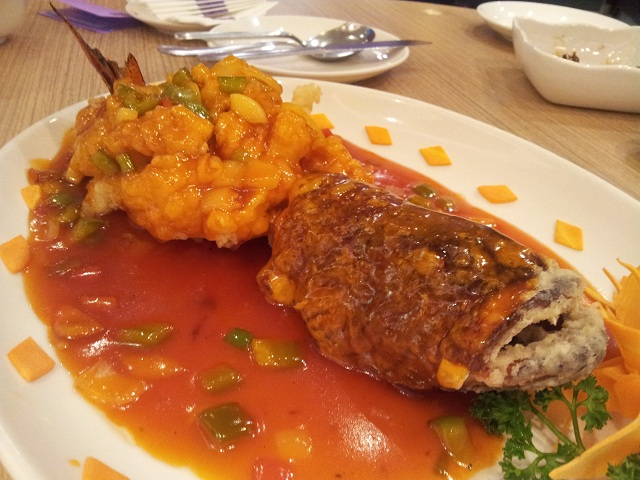
The Deep-Fried Garoupa with Sweet and Sour Sauce (P1,200) may be pricey, but you get a whole fish, cut in such a way that the meat fans out, ready to be picked by chopsticks or pulled apart by fork and spoon. The fish is crisp-fried and covered in sweet and sour sauce and vegetables. It’s a perennially popular dish, and for a certain age group, their first introduction to Chinese food.
Another Chinese home-cooking staple is the Braised Pork Knuckle served with pancake (P888), popularly known as patatim. Fall-off-the-bone pork knuckle is stewed in thick, sweet sauce. The pork itself has a smoky flavor. Eat it with rice or pancakes (steamed dough), and use the latter to mop up the sauce. This version is as good as the kind grandma used to make.
For dessert, try the Glutinous Rice Dumpling with Taro (P120/ 3pcs). It’s more subtly flavored than other Chinese glutinous rice desserts, the delicate taro and dough complemented both in taste and texture by the dessicated coconut that coats it.
The food at Crystal Jade Shanghai Delight straddles the line between authentic Chinese food and the Filipino palate well, with dishes whose flavors will please diners looking for both. “We want to maintain tradition but give it a contemporary twist. The craft of the chefs focus on the contemporary, but there are elements of the traditional,” Yu said. “I guess the bottom line is that Crystal Jade wants to focus on giving the Filipinos the true or authentic dining experience. Not just the eating but the whole cultural experience of Chinese dining.” — BM, GMA News

