

 GMA Brandtalk
 Tracking
 Archives

ADVERTISEMENT
Filtered By: Lifestyle
Lifestyle
Shangri-La’s Rooted in Nature campaign pitches local ingredients, sustainability
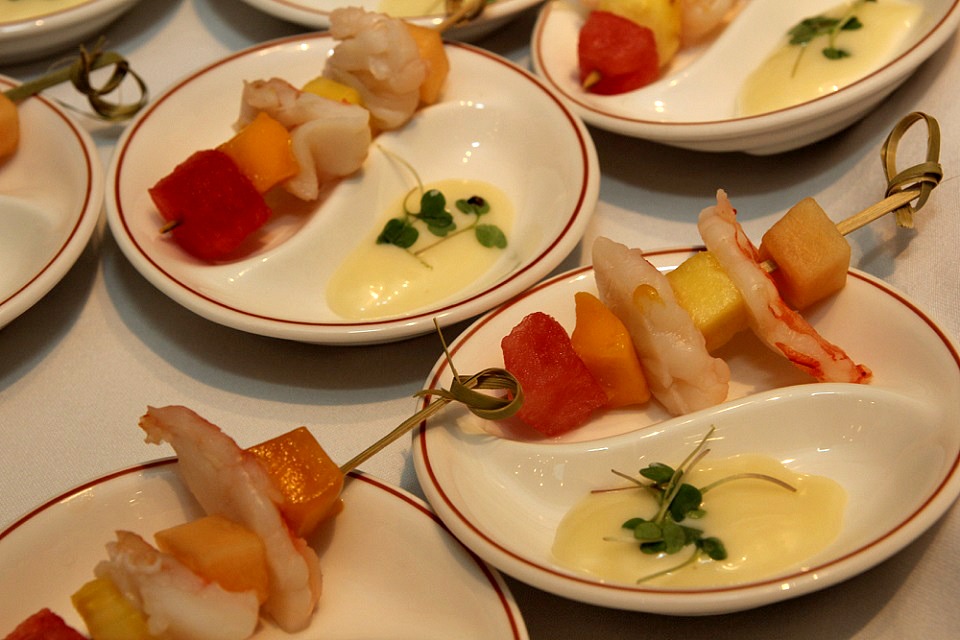
The King Prawn Salad served at the launch of Shangri-La's Rooted in Nature campaign was sweet.
Like the proverbial chicken-and-egg scenario, restaurants that want to go the sustainable route are challenged by higher costs associated with this practice; budget-conscious diners, on the other hand, opt for establishments that offer cheaper prices but may fall short on the responsibilities of sourcing and serving food in the most ethical way.
When the Shangri-La Group, with hotels and resorts in Makati, Ortigas, Cebu and Boracay, launched its Rooted in Nature campaign at the Sage Bespoke Grill at the Makati Shangri-La last week, it was a chance for the hotel to not only share culinary advocacies but to also shatter the myth that eating responsibly leaves a big hole in one’s pocket.
Each dining option in every Shangri-La property has partnered with local farmers and various artisanal and gourmet producers; each establishment has either incorporated these products in the buffet selection or introduced set meals featuring the freshest harvest sourced within the same country code.
Highlighted ingredients and products in the campaign include: organic fruits and vegetables from Tagaytay, strawberries from Baguio, pili nuts from Camarines Sur, and tuna caught using small-scale fishing by Meliomar. The basil and other herbs used in the sampled dishes, meanwhile, were grown in the small pockets of gardens on the hotel grounds. Featured at the media event were dishes from the Makati Shangri-La's restaurants: Circles, the all-day buffet restaurant, Japanese restaurant Inagiku, Chinese option Shang Palace and the hotel's newest establishment, Sage. These offer a la carte and set meals that feature big servings of local ingredients at P1,500 per person—certainly value for money.

The flavors of the Cucumber Gazpacho with Breaded Slippery Oyster and Goat Cheese did not go too well together.
Sage offered more Western preparations in the featured 5-course set. I was lukewarm towards the Shrimp Carpaccio and Tartar with Calamansi Sorbet starter as I personally like my shrimps pink and cooked instead of grey and raw. I also found the fruity flavor of the extra virgin oil poured on top too strong for the delicate taste of the shrimps sourced from Bacolod.
The Cucumber Gazpacho with Breaded Slippery Oyster and Goat Cheese got me confused on which cutlery to use. The oysters necessitated the use of a fork and a knife while the gazpacho needed a spoon to eat. The taste of each individual ingredient is good on its own, but doesn’t seem to go well when served together. A better way to highlight the goat cheese harvested and processed by the Malagos Farmhouse in Davao City would have been to remove the oysters altogether and coat the cheese with breading before frying instead.
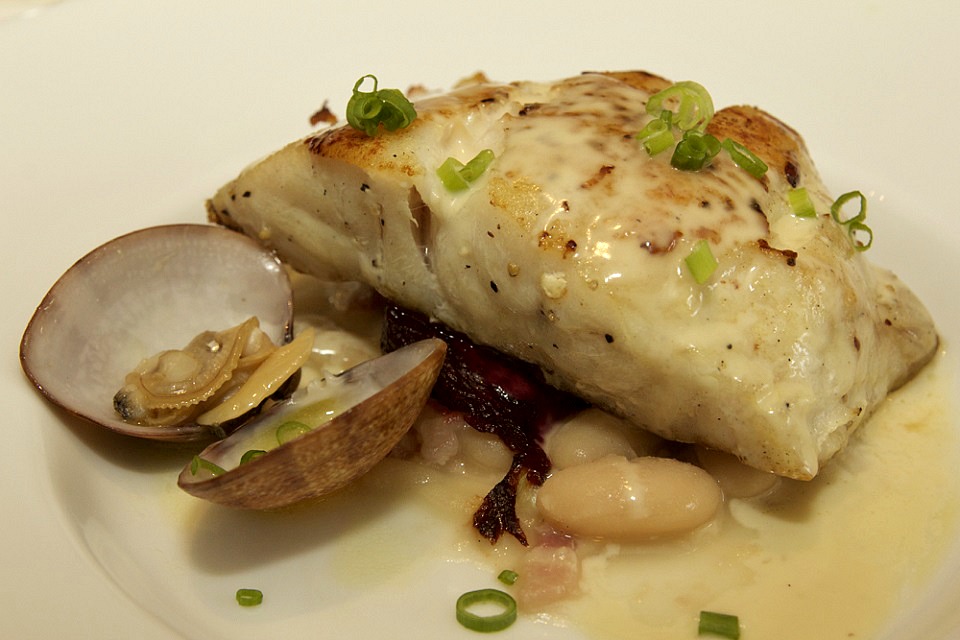
The Lapu-lapu, Beetroot and Clam was the best-received dish.
The Chicken Breast Cooked in Fresh Herb Rice Crust had potential, but needs improvement in the seasoning department. The gravy served on the side can only mask the chicken's lack of flavor for a number of bites before the taste buds get tired. The chicken, grown in Abra, could have benefited from spices, herbs and other seasonings to bring out the flavor.
The only “complaint” our group had with regards to the dessert course named Baguio’s Garden was that it looked too good to eat. Prepared by Shangri-La’s award-winning pastry chefs, the dish consists of strawberries, pistachios and white chocolate from Baguio. Rich yet not too sweet and served on a slate, the mushroom-themed presentation was as much a delight on the eyes as it was on the palate.
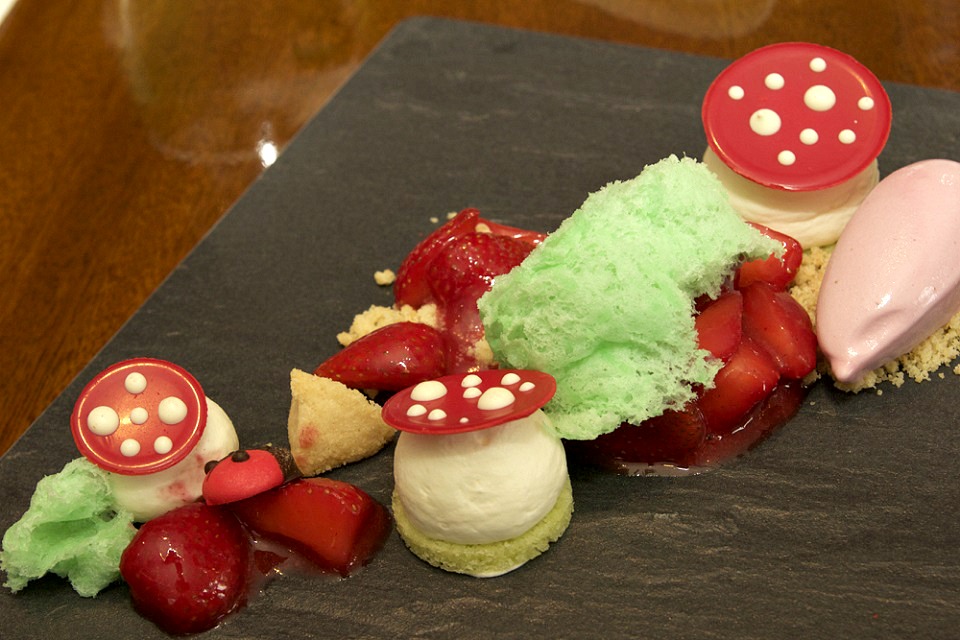
The dessert, Baguio’s Garden, looked too good to eat.
Shangri-La’s Rooted in Nature campaign runs until April 30.

