

 GMA Brandtalk
 Tracking
 Archives

Food imitating art imitating food at ‘Tapas’ exhibit
One thing visitors must make sure of before visiting the "Tapas: Spanish Design for Food" exhibit is not to come with empty stomachs. Despite not having a single edible item on display, the videos, photos and images of Spanish gastronomic delights will have everyone heading to the nearest dining establishment to satisfy their cravings.
According to exhibit curator, architect and designer Juli Capella, he chose the name Tapas due to its unique yet globally recognized and accepted stature; drawing similar status to Japanese sushi, Italian pizza, and Mexican taco. Both tapas, the food and Tapas, the exhibit also share similarities in size and variety.
The edible version, with more than 30 hot or cold, cooked or raw dishes, are usually prepared and served in small portions and small plates and are best paired with a glass of wine. The 300+ artifacts inside the Tapas exhibit meanwhile, gives visitors a glimpse of how the best Spanish kitchens incorporate industrial design, creativity, and ingenuity in preparing (Kitchen section), serving (Table), and producing and consuming (Food) the different kinds of Spanish food.
Aside from the name of the exhibit, other fascinating and must-see displays include the following:
Jamón de la Crisis (Economic Crisis Ham)
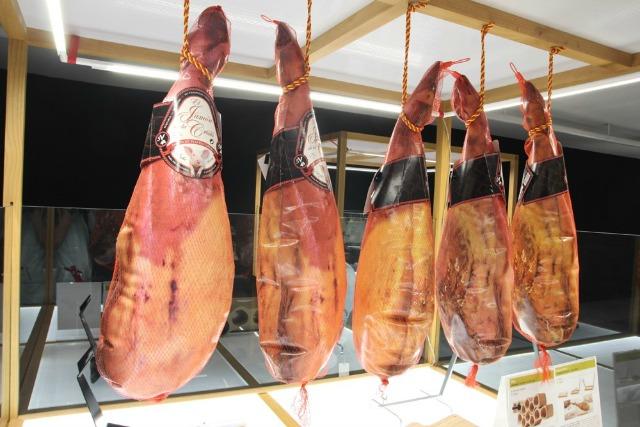
A satirical piece about the Spanish financial crisis of 2008-15, the Jamón de la Crisis (Economic Crisis Ham) is made of recyclable plastic and filled with pure, Spanish mountain air. During that period, the pricy Jamón serrano and more expensive Jamón ibérico symbolized luxury food at its finest that ordinary Spanish citizens could not afford while the whole country experienced severe economic downturn, unemployment, and bankruptcies of major companies.
Migas - Pájaros
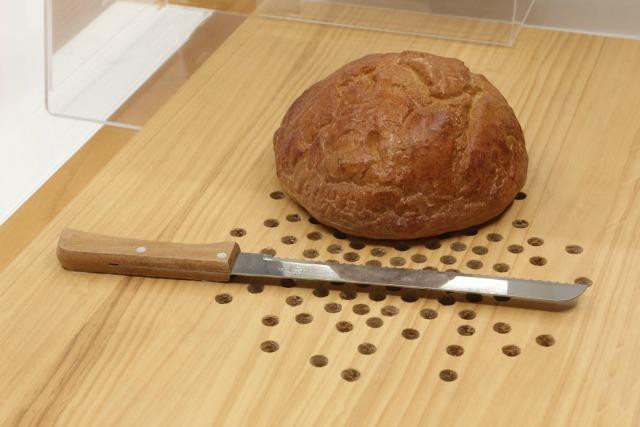
A showpiece rather than an actual commercial product. The thought behind the Migas - Pájaros is breadcrumbs left after slicing a loaf of bread falls to a funnel that feeds directly to a tube and deposits the crumbs to a feeding perch for wild birds. A strange but perfectly logical way of sharing and at the same time not wasting a single gram of food that maybe only the Spanish can think of.
Tennis Shoe
My favorite item in the exhibit as it instantly drew my attention, the Tennis Shoe is actually made from transparent resin in order to be hygienic and comply with US health regulations. Conceptualized by chef José Andrés for his Jaleo restaurant in Washington, D.C., this perfect conversation piece also doubles as a serving vessel to an order of croquetas (croquettes).
Wall of Paellas
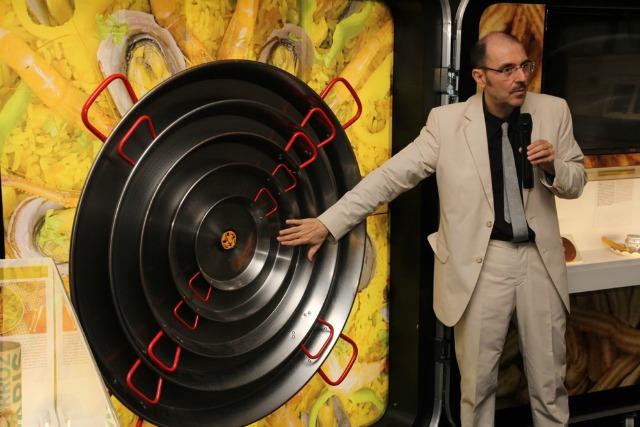
Exhibit curator Juli Capella mentioned to guests a couple of times that paella (pa-e-ya) refers not to the actual rice dish but to the flat cooking pan. The hanged paella wall starts with a tiny, toy-like pan and grows bigger and wider at every level.
There are five levels in all (excluding the toy-sized version), with the smallest three pans having two handles, and the two biggest paellas having four handles. As Capella explained, the bigger the pan, the harder and less ergonomic the paella will be for the ones preparing and serving the dish.
PlatViu
While reading the description for this piece, I swear that I felt it move subtly. It turns out that the PlatViu, made by El Celler de Can Roca dessert chef Jordi Roca, was low on battery and just needed a fresh power replacement to mimic how bread rises during fermentation. Made from silicon with an electronically-powered mechanism that causes a mysterious movement, seeing the “living” PatViu alone is worth the price of the admission ticket.
Anti-drip oil cruet
Housed in a transparent case on its own, this simple oil dispenser invented by the late Rafael Marquina has several important features: being transparent allows the users to see the contents and how much is left, easier pickup with the neck versus a handle, does not slip between the fingers, never tips over, and does not drip. Able to store either olive oil and vinegar, the anti-drip cruet was created by Marquina way back in 1961 and has since been copied all over the world.
Botijo, Bota de Vino, and Porròn
All three containers serve the purpose of sharing wine among a group of friends, without the vessel having to come in contact with the mouth. Botijo, made from ceramics, is presented in both its traditional, jar-like form and avant-garde designs, combining ceramics with the shapes of tetra packs, and water bottles.
Boot-shaped Bota (boot) de Vino makes use of goatskin or leather to store and drink delicious wine; nowadays similar functioning devices, using different materials, are used to store sports and energy drinks, and even water.
The classic porròn meanwhile, is a container made of glass with a slender neck and a broad belly. One spout allows for drinking a stream of liquid, while the other, larger one is for refilling and admitting air. A modern take of the porròn allows it to be directly placed on top of a wine bottle, like a cork, for convenient drinking and sharing.
Wine Tower
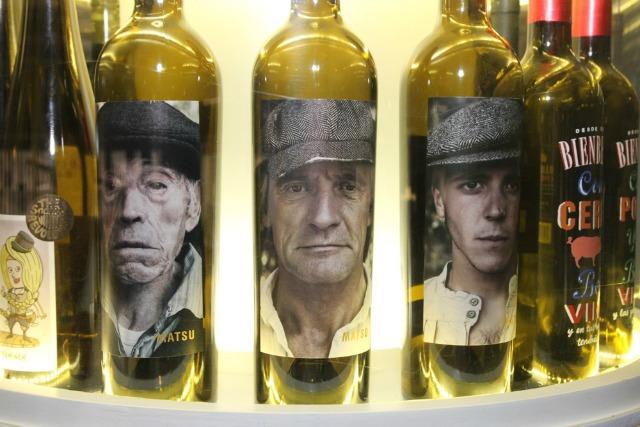
Another impressive piece is the tall, 10-foot wine tower inside the Table section. Unlike French wines that traditionally have plain, text-based labels, Spanish wines have more flair, use different glass colors and even have images that reflect their history and culture. A particular trio of bottles: one with a man in his 20’s, another in late his 40’s or early 50’s, and another one with a male senior citizen represent that age of the wines and echoes the saying that the older the wine, the better it tastes.
Chupa Chups
Believe it or not, Chupa Chups is actually an invention of Spanish businessman Enric Bernat. The candy, beloved by children, is included in the Tapas exhibit to showcase not only design creativity and marketing flair with the Salvador Dali-designed logo, but also show the elegant solution of allowing children to suck the sweet treats without the sticky consequences by combining a ball of candy with and a plastic stick.
Food Photocall
Food and social media combine for Antoni Miralda's work of art. The three-panel installation features three famous tapas: Pulpo a la Gallega (Octopus, Galician-style), Riñones de Cordero al Jerez (Lamb’s Kidneys in Sherry), and Patatas Bravas (Bold Potatoes) in graphic, Romanesque-style images of a giant octopus, a lamb’s head, and an enormous potato.
What make this piece selfie-ready is it allows visitors to go inside, place their heads in the holes, and have their pictures taken, reflecting the artist’s belief that everyone can become famous in front of the camera. —KG, GMA News
Tapas: Spanish Design for Food runs from April 1 to June 16 at the G/F Metropolitan Museum of Manila, Bangko Sentral ng Pilipinas Complex, Roxas Boulevard.

