

 GMA Brandtalk
 Tracking
 Archives

Jing Ting serves Northern Chinese cuisine
The newly-opened Jing Ting in City of Dreams Manila, a casual dining restaurant serving Northern Chinese cuisine, is easy to miss: There are more than a dozen restaurants in the building, all of which boast of inviting interiors and promising menus.
And Jing Ting looks like your typical fancy Chinese joint. But there is really more to it than meets the eye. At the casual dining restaurant, we’re treated to a different kind of Chinese food.
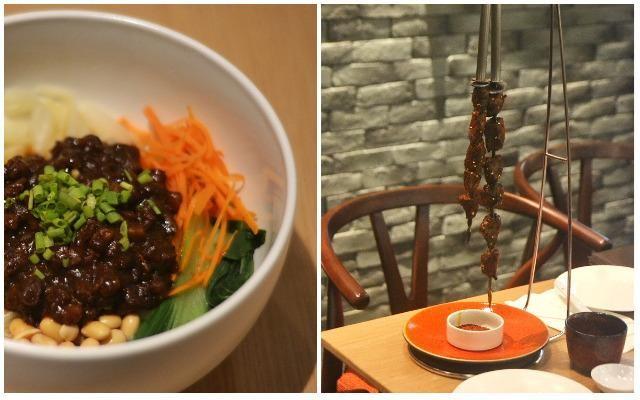
Northern Chinese or Xi’an cuisine continues to make its way to the mainstream both here and abroad, introducing a unique fusion of flavors made possible by a rich history and interesting geography.
What is Northern Chinese food?
Xi’an, an ancient Chinese capital, is the Northern and starting point of the Silk Road. The place was shaped and influenced by different cultures — think Chinese and Middle Eastern — and it’s evident in the flavors: packed with spices and seasonings, rich sauces, and bold flavors.
While Jing Ting mostly veers away from the in-your-face spicy dishes Xi’an cuisine is known for (to adjust to the Filipino palate), the flavor combinations are refreshing.
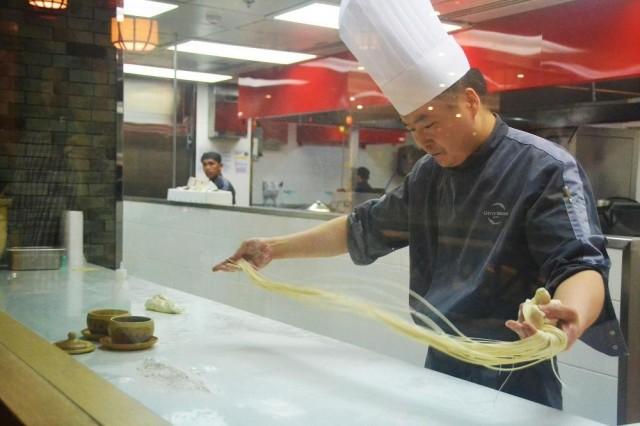
The place is headed by Chef Yang Chen Fei, who was trained by the chef of former Chinese president Hu Jintao and has 15 years of experience under his belt in five-star hotels and restaurants in China.
Xi’an noodles and dumplings
Wheat, which is abundant and one of the main crops in Norther China, is a common ingredient in most dishes (more than rice), from the noodles to the dumplings.
The Beijing Pork Jiao Zi (P378 for 8 pieces), charmingly imperfect but provides an authentic feel because it’s made in-house, was the dumpling dish that stood out.
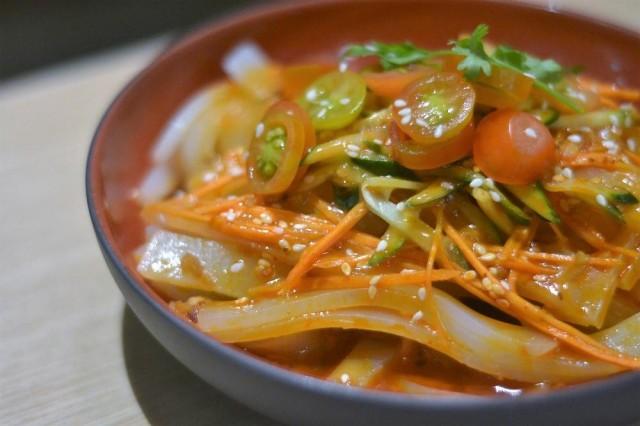
The cold shredded rice roll (P178) has layers of bright flavors that don’t overpower, but may be for an acquired taste—if you’re not a fan of sesame flavors, or anything too oily, you may want to skip this.
Jing Ting has an open kitchen that showcases the process, and the hand-pulled noodles are a joy to eat as it is to watch being made.
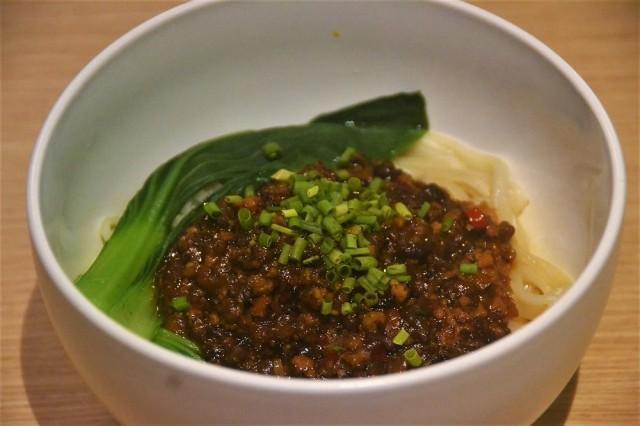
The poached hand pulled noodles with mushroom and pork (P298) pretty much shows what many Xi’an dishes are about: doused with thick and chunky sauce, spice-heavy, and extremely flavorful.
If you want something sweet and savory, try the sweet soy noodles with pork and vegetables (P268). Unlike the mushroom-pork noodles, this one isn’t spicy. It does, however, have layers and layers of flavors and textures enough to excite: soybeans, julienned carrots and cucumbers.
Meet the meat dishes
One of the most interesting items on the menu isn’t actually on the menu. The dipping sauce has a depth of flavor that the dumplings, some of which were unmemorable but perfectly decent, needed. It is delicious—a combination of the amazing Lao Gan Ma (a brand of Chinese chili sauce), chili oil, and sesame oil.
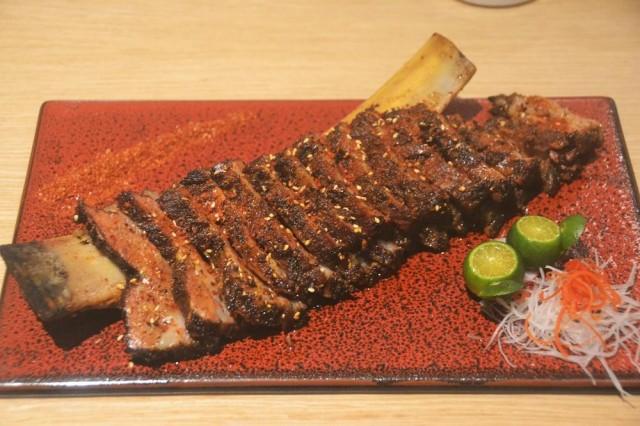
One can even use the same sauce on the other items on the menu, including the Genghis Khan roasted prime beef short ribs, which is tender and succulent. This one’s the restaurant’s most expensive item (P1,380), but it can easily be split by 2-3 people.
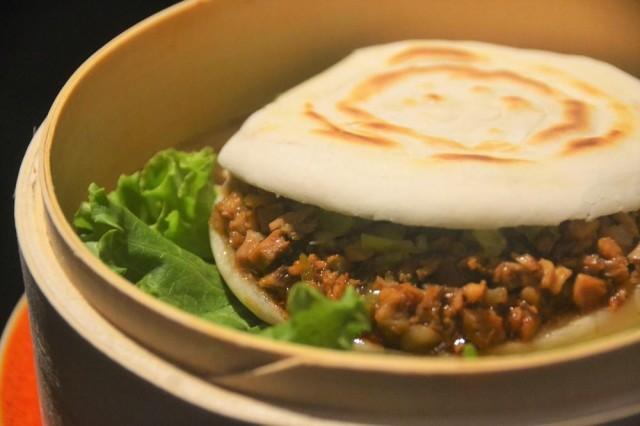
The braised pork-stuffed burger (P268) or Rou Jia Mo is a common Xi’an street food that’s perfect for a light snack, but if you’re willing to shell out some cash, the Xinjiang style cumin lamb skewer is a must-try — this one’s a classic northern Chinese dish influenced by Middle Eastern flavors.
Value for money
The location could be intimidating; it is one of the biggest hotel-casinos in Manila, after all. But one would be surprised at how reasonably priced the items are, as most of the dishes are served family-style (it’s also worth mentioning that parking in the hotel is free, so that’s one less thing to worry about).
If paired with a small bowl of dumplings, one bowl of noodles can be shared by 2-3 people, and the appetizers, some of which are filling, doesn’t go over P200. The more expensive meat dishes can easily be shared.
Is it worth the visit to City of Dreams? Yes, especially for the curious, who want to try Northern Chinese fare that’s relatively sparse in the Philippines. The familiar Chinese classics like dim sum and Yangzhou/yang chow can’t be found here — what awaits are bold, spice-heavy flavors and a rich culinary history that curious eaters must definitely try.
Jing Ting, U/G City of Dreams Manila, guest-services@cod-manila.com, +63 2 8008080

