

 GMA Brandtalk
 Tracking
 Archives

Researchers recommend stronger food safety measures
Food service eating facilities and home-prepared food are more prone to outbreak occurrences, according to a study of the 209 reported foodborne disease outbreaks (FBDOs) in the Philippines.
The research team recommends the need to officially monitor, document, and validate FBDOs to promote public health and safety.
The team also suggests that “the Department of Education and higher education institutions should strengthen their food safety measures on the food service operations and vendors within the academic premises, as well as for the Department of Interior and Local Government, along with the local government units, to re-evaluate their roles in the implementation of the food safety regulation.”
The research team, led by Dr. Maria Patricia V. Azanza of the Department of Food Science, College of Home Economics at the University of the Philippines, conducted a secondary archival data analyses on reported FBDOs, covering reports between 2005 and June 2018.
The team found that multiple implicated foods are associated in majority of the studied outbreaks. Next to multiple implicated foods with high FBDO incidences are meat-based dishes (pork, chicken, beef, and other kinds of meat either fresh or processed).
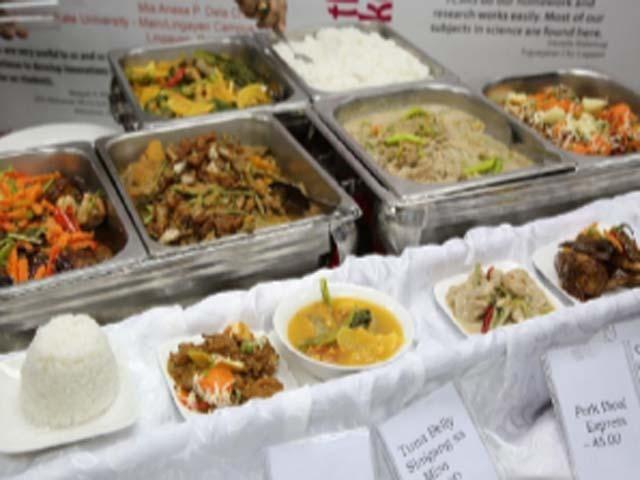
The institutionally prepared food (e.g., catering, school and work place canteens, hotel and restaurants), followed by home-prepared food (e.g., birthday, outing, funeral), shows the highest incidence involving multiple food vehicles.
Outbreaks with multiple implicated food vehicles refer to those cases that involve consumption of several types of food. No exact food vector was definitively identified as the cause of the outbreak.
What explains the high occurrence of FBDOs under the institutionally prepared category could be “the fact that these establishments cater to large number of consumers, which in turn increases the probability of FBDOs occurrence and likelihood to attract more media attention and reports.”
Of the 209 cases, there were 74 occurrences reported in food service eating facilities that include school, canteen, restaurants, and hotels, while 102 occurrences were reported in households (single and multiple households’ involvement).
Of the 74 FBDOs in food service establishments, over 50 percent occurred in small scale establishments, “specifically within school premises, while 16 percent and nine percent happened in restaurants and in hotels, respectively. The rest of the cases (six percent) were linked to food sold outside the school premises by ambulant street food vendors.”
The research also cited previous studies stating that the key health problem in the country’s street food was the absence of clean water to wash hands and utensils during vending, as well as the “minimal hygienic and sanitary practices in certain places near a university in Manila.”
The results of the study became the basis for the development of a three-year risk-based research project that was considered for funding and implementation this year by the Department of Science and Technology-Philippine Council for Industry, Energy and Emerging Technology Research and Development.
Studies pointed out that there is a high prevalence of FBDOs in developing countries due to poor sanitation. Among the unhygienic food preparation conditions cited in studies are poor personal hygiene of food handlers, restricted access to clean facilities, and lack of food storage facilities at appropriate temperatures.
According to the United States Center for Disease Control and Prevention, FBDO is “an occurrence in which at least two persons experience a similar illness resulting from the ingestion of a common food.”
------------------------------------------------
This research is published in the Philippine Journal of Science. Link to this research can be found here.

