

 GMA Brandtalk
 Tracking
 Archives

How to overcome bullying in schools, and at home
A push. A shove. Name-calling. Lunchbox snatching. Bullying in schools may start with these simple acts which, when not addressed, may lead to something worse, like what happened to my friend’s daughter in grade school. She was shoved into a cubicle in the school toilet, and her head dunked in the toilet bowl by some mean classmates. And believe me, this happened in a private school in Cavite, not some school abroad like we often see in TV shows. According to actress and parenting expert Maricel Laxa-Pangilinan, bullying involves the use of force or coercion without another’s permission. “It’s about the receiver—the recipient feels some kind of stress, tension or persuasion. It consists of verbal, physical, emotional abuse, and occurs in a variety of contexts—face-to-face, texts, even the Internet.” More importantly, she added, it happens to anyone, rich or poor. 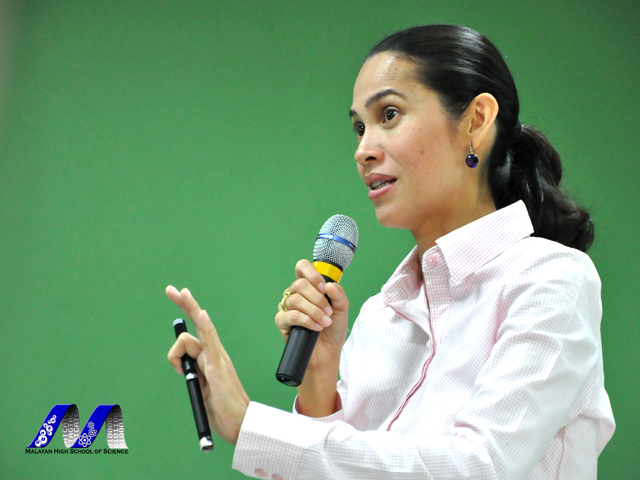 And lest you think bullying only happens in schools, she says it happens anywhere—even at home. “Kapag ang parents, nandilat sa kids, bullying din ‘yon,” Laxa-Pangilinan said during a talk before the parents of Malayan High School of Science (MHSS) students last March 17. Facts and myths about bullying Laxa-Pangilinan separates the common myths from the facts about bullying. One of those facts, she said, is that spreading rumors is a form of bullying. Another incontrovertible truth is that people who bully have power over those they bully. Meanwhile, among the widely-believed myths is that only boys bully, and reporting bullying will only make it worse. “Accept the brutal fact. Bullying is in all, experienced by all, and is done by all. Parents and teachers have bullied children,” she said. It is also not always true that teachers step in to stop bullying. “Sometimes, teachers are the perpetrators of bullying,” she says. It is often believed that those who bully are insecure and have low self-esteem. “But it doesn’t follow,” said Laxa-Pangilinan, a mother of five who holds a master's degree in family life and child development from the University of the Philippines. It is also not true that bullying only happens when there are no other people around, and that it will go away when you ignore it. “You have to do something about it,” she said. As to the belief that all children will outgrow the experience of bullying, nothing could be farther from the truth. “Some children who have been bullied have even committed suicide,” she said. And it is a myth that parents are usually aware that their children are bullying others—they usually aren’t. Finally, to those who say that nothing can be done in schools to reduce bullying, Laxa-Pangilinan’s firm admonition is, “that is a myth.” How to tell if your child is being bullied Laxa-Pangilinan advised parents to watch out for warning signs that their child is being bullied:
- Damaged or missing belongings
- Avoids certain places
- Has fewer friends
- Hurts himself or herself
- Talks about suicide
- Unexplained injuries
- Mood swings
- Runs away
- Afraid to go to school
- Becomes violent
- Has extra money or new belongings
- Frequently hangs around with bullies
- Quick to blame others
- Will not accept responsibility for actions
- Sent to principal’s office a lot
- Needs to win in everything
- Unusual power tripping
- Has a lot of unconventional friends

- Talk about bullying with your children.
- Make a stand against bullying.
- Strategize on courses of action and equip your kids properly.
- Boost your child’s self-confidence.
- Tell your child it’s ok not to be “okay” (meaning, it’s ok to be different).
- Partner with your child’s school.
- Monitor computer and social networking connections since bullying also happens in cyberspace.
- Keep an eye on your children.
- Spend time with your children.
- Provide a safe home environment.

