

 GMA Brandtalk
 Tracking
 Archives

ADVERTISEMENT
Filtered By: Lifestyle
Lifestyle
Born unhealthy? Beyond your genes is nurture vs. nature
Tall parents with short kids may wonder about the stark contrast in their children's height, but other factors need to be considered apart from genes.
Dr. Michael Purugganan, Dean for Science at New York University, said that while there is definitely a genetic component to many things, the danger is for people to overuse it.
"It's not true that everything comes from your genes. The danger there is that they'll blame everything on the genes. . .It is true that your environment has a big impact," Purugganan told GMA News Online on January 29.
For instance, height is genetically related, but nutrition is very important. "It doesn't matter if I have the genes for tall genes. If I'm not fed well, I'm not going to grow taller," Purugganan said.
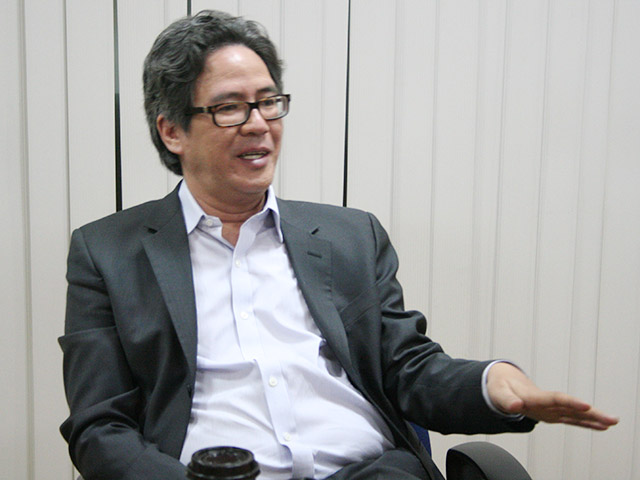
Dr. Michael Purugganan, Dean for Science at New York University and a world leader in evolutionary and ecological genomics, urges the in-depth study of Filipino genes — the Filipino genome — in an effort to "revolutionize how we see ourselves and treat our diseases." (Photo by Roehl Niño Bautista)
When it comes to nature versus nurture, Purugganan said the message is always that it's both. "Some things are very genetically determined, some things not so," he said.
The same goes for genetic diseases. "It doesn't mean you're going to get it. It just tells you the risks and whether you want to know the risk," said Purugganan, a leader in the field of evolutionary and ecological genomics.
Purugganan, who had himself genetically tested, shared that he opted not to know his predisposition to Parkinsons and Alzheimers, despite the data being available. "Some people want to know," he said, adding that such information can help people avoid risk factors for some genetic diseases.
The Filipino Genome Diversity Project
Purugganan advocates a project that would sequence the Filipino genome, which would give an understanding of what the risk factors are in the Philippines for genetic diseases such as diabetes, heart disease and breast cancer.
"We would be able to figure out what sort of mutations we have that might make us susceptible to certain diseases," Purugganan said, noting that a lot of the studies on genetic diseases are in European populations. "It's not clear whether we can extrapolate from that. . .I would suspect it won't really work, because we have our own genetic makeup," he said.
"It wouldn't take very much to do. A project that would allow you to sequence several would probably cost the price of a small house in Manila," Purugganan said. Purugganan noted that 100 would be very good, but even just 10 would be a good number. "Even just doing one would be an achievement," he said.
The 1,000 Genomes Project database contains the full genetic sequences of more than 1,000 people from 14 countries. However, the Philippines was not included in the project.
Purugganan stressed that although no immediate product would come out of a Filipino Genome Diversity Project, the amount that would be learned and the interest that people would have in it will more than make up for the cost.
"It would be valuable, it would be important, and Filipinos everywhere would appreciate it," he said. – KDM, GMA News

