

 GMA Brandtalk
 Tracking
 Archives

ADVERTISEMENT
Filtered By: Lifestyle
Lifestyle
Himig ng Kalinga: Music therapy for sick children
For most Filipino moms, singing to their children is a habit—whether to lull them to sleep, to give them comfort when the child is unwell, or to simply put smiles on their faces.
In a similar manner, pediatric patients in some of the country’s hospitals will soon be serenaded by music which aids healing.
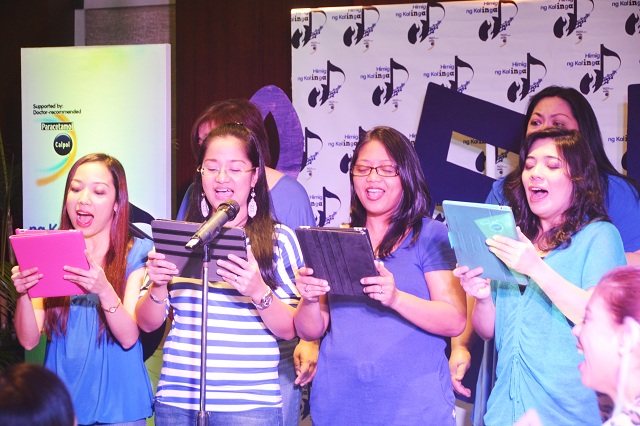
Himig ng Kalinga chorale volunteers
Last July 3, GlaxoSmithKline (GSK) Philippines launched Himig ng Kalinga, a campaign which aims to bring music therapy to sick children in the Philippines.
The project involves the use of music carts functioning as mobile therapy centers. The carts containing musical instruments do rounds of hospital wards, along with volunteers who sing for and with the patients. Familiar nursery tunes like “Mary Had a Little Lamb,” “Pamulinawen,” “Jack and Jill,” “Pen Pen de Sarapen,” as well as an original composition by renowned Filipino composer Jimmy Antiporda entitled “Gagaling Ka Rin,” are played. A trained music therapist leads the exercise.
Music and a child’s holistic development
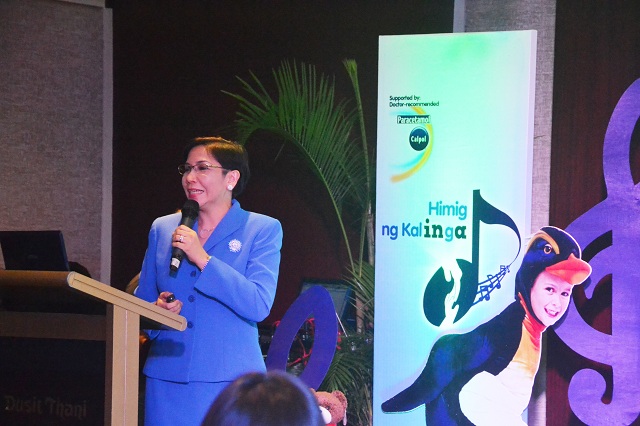
Dr. Jocelyn Eusebio said can enhance the holistic development of a child.
“Nakakaaliw po, kasi sa kabila po ng may sakit ang baby ko, parang pansamantalang nabawasan ang pag-alala ko sa kanya,” said a parent during a hospital visit.
Dr. Eusebio’s research cites the American Music Therapy Association as having said that music therapy is an interpersonal process in which a trained therapist uses the different aspects of music (such as physical, emotional, mental) to help patients improve their conditions.
Soothing tunes can be a form of relaxation; a means of escape. The therapy can distract the patient form the pain and stress brought about by the illness.
Music therapy—especially when performed live—is also said to be beneficial to premature infants. In one study, therapists played drums that mimicked womb sounds, and timed the rhythm to match the preemies’ heartbeats. Some of the results included improved sleep, slow heartbeats, and calm breathing.
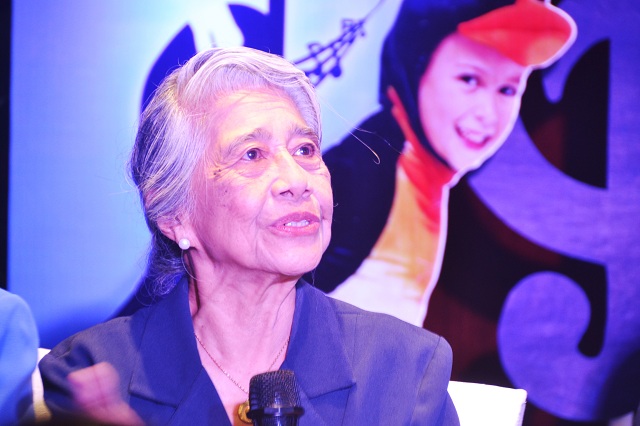
Celeste Sanchez, mother of Philippine music therapy, said that song choices should be age-appropriate.
Celeste Sanchez, who is recognized as the mother of Philippine music therapy, said that song choices should be age-appropriate. People who would like to practice the therapy should be discriminating in their music selection.
Music therapy in the Philippines
Music therapy is still a somewhat unfamiliar concept to most Filipinos, but it shouldn’t be difficult to introduce.
GSK has already visited five hospitals since the campaign started last month. A pilot launch of the activities led by TV personality Suzi Abrera was held at the Philippine Children’s Medical Center and the Cardinal Santos Medical Center.
The initiative will be brought to 22 hospitals throughout GMA and Luzon. — VC/KG, GMA News

