

 GMA Brandtalk
 Tracking
 Archives

#1MCleanToilets campaign seeks to educate public on basic toilet hygiene
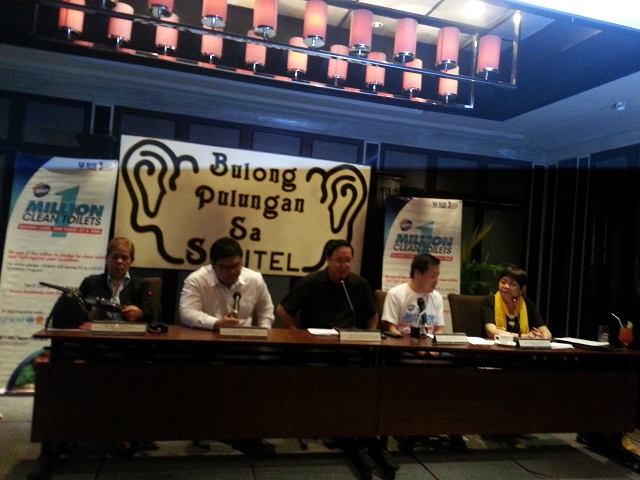
How many times have you entered a public restroom, perhaps hoping upon hope that it at least doesn't smell pungent—only to come out not having relieved yourself due to its unsanitary nature? This was only one of the many problems addressed by the most recent Bulong Pulungan at the Sofitel Philippine Plaza on Tuesday, April 8.
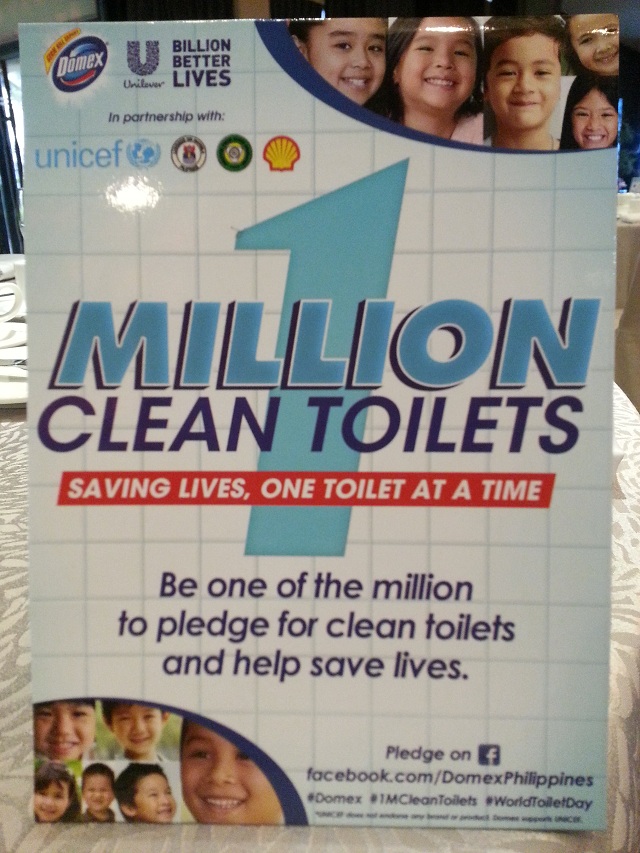
The gathering, in partnership with UNICEF and Domex Philippines for their campaign #1MCleanToilets—that's one million clean toilets—aimed to address the state of Philippine toilets both private and public and the serious consequences of a) not cleaning these properly, b) not cleaning them regularly, and c) not having a toilet at all.
Comprising the panel were Philippine Public Health Association board director Maluh Orezca, Water, Sanitation and Hygiene specialist for UNICEF Dr. Mike Gnilo, Unilever vice president for corporate affairs Chito Macapagal and Unilver Home Care marketing director Jay Go.
Toilet talk
If it seems as if toilet sanitation is such a minor problem compared to all the other problems the nation is currently facing, here are some alarming, relevant statistics:
- Over 90 percent of Philippine households are at risk for diarrhea—the fourth leading cause of child death worldwide—simply because their toilets are not being properly cleaned.
- 26 million Filipinos have no access to toilets at all, whether sanitary or unsanitary, and 70 percent of these people hail from rural areas.
- Over 7.4 million Filipinos openly defecate, sometimes near a source of water, due to this—and the number has been increasing over the past ten years.
“Our program is called Philippine Community Approaches to Total Sanitation,” he said. “What happens is, especially in Yolanda-hit areas, our facilitators go from household to household, looking for people who openly defecate, as the challenge here is to shift people's minds.”
He added, “Sometimes, you have to shock people to get them moving. Basically, the facilitators sit them down and tell them, 'I don't want to eat your shit.' In a community of 20 to 30 people, it will take only one or two or three who openly defecate to contaminate your water.”
UNICEF's goal is to build 100,000 toilets until 2016, when the program is set to end. They have so far built some 8,000 toilets, half of which were for Yolanda survivors in the hardest-hit areas of the Visayas region.
Myths and symbols
Macapagal opened the event thusly, “One million is an aspirational, symbolic number. The goal is everyone, though so many still do not have toilets.”
“The Philippines is a very, very lucky country because we take water for granted,” he added. “In Africa [where he spent four years], you have to walk for miles just to find it—and sometimes, you find only a puddle.”
“The heart of [the campaign] is sanitation,” said Go of the campaign. “We want to give Filipinos access to the best sanitation.”
He laid bare its objectives as such:
- Promoting proper awareness of hygiene
- Educating the public on the cleaning of toilets
- Reducing incidents of diseases
Meanwhile, Orezca and Macapagal noted that everyone has their own strange beliefs about toilets and sanitation—even the most well-heeled of women refuse to wash their hands after taking a pee break because they do not want to touch the faucets.
Some people also refuse to sit on public toilets because they have been told the myth of contracting the HIV virus or other sexually transmitted diseases.
Clean solutions
Orezca received a few murmurs of approval and a few volunteers sharing their experiences with paid public toilets once she pointed out that paying for toilet maintenance generally does keep the toilet clean.
“Accountability is very important,” said Macapagal. “When someone claims ownership of a toilet, they feel obliged to maintain it. Once you experience a heightened standard, you will begin to demand higher standards—even pay for it, no matter how poor you are.”
“Pag nothing is at stake, hindi sila responsive,” he added.
Knowledge of basic hygiene was also found to be sorely lacking or not implemented properly. “Kulang sa graphic education at sa paalala,” said Macapagal. “We learned everything we needed to know in kindergarten, so why are people still not doing it?”
He, Gnilo, and Go gave a few tips:
- Close the lid of the toilet when flushing, as the speed of the water is enough to create a mist that will spread the bacteria all over everything in the vicinity—including your toothbrush.
- If your household is connected to Maynilad, their people will collect the feces in your septic tank for you for free—just give them a call.
- Use specialized toilet cleaners and not proxy or fib products for cleaning the toilets, as the former contain active ingredients designed to clean off bacteria from the bowl and keep them off even after seven flushes.
- Daily cleaning of the toilet is ideal
As part of the #1MCleanToilets campaign, Domex has partnered with gas giant Shell and the Max's Restaurant chain. Beginning Thursday, April 10, there will be Domex crews regularly maintaining the public restrooms at every Shell station along both the NLEX and SLEX; the same goes for the bathrooms of Max's.
Apart from regularly cleaning toilets in the proper manner, other ways an ordinary person can help include logging onto Facebook and clicking the PLEDGE button. Domex will give P5 to UNICEF's sanitation program for every pledge made.
If one does not have a Facebook, one may also buy a bottle of Domex at the nearest store. Five percent of all the proceeds will go to the sanitation program. — BM, GMA News

