

 GMA Brandtalk
 Tracking
 Archives

Women Talk: How to avoid honeymoon cystitis and other urinary tract infections
Pamela is a 28-year-old reporter who came to see me because she had painful urination for two days. No fever was noted, nor pain on the flanks. She brought a routine urinalysis result, which showed some pus cells and red blood cells. Her menses were three weeks ago. Pelvic examination did not indicate any vaginal or cervical discharges, and her external genitalia were normal.
Upon questioning, she said she had just gotten married, and she and her new husband had just come back from a holiday. She was a textbook example of the so-called “honeymoon cystitis,” that is, an infection of the bladder after sexual contact, usually for the first few times.
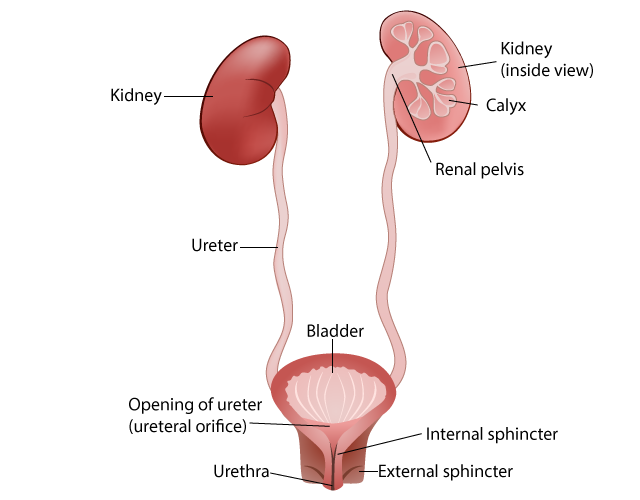 This type of pain belongs to a class of ailments commonly called urinary tract infections (UTI), which often come in through the urethra and goes up. Uncomplicated UTI include infections in the bladder (cystitis), or the opening through which urine comes out called the urethra (urethritis). At times, there are blood-borne infections that affect the kidneys; this is called pyelonephritis, which is known as a complicated UTI.
The usual complaints are painful urination, and the feeling of wanting to urinate very often (called urgency). When fever or back pains occur, the infection has involved the kidneys.
Salty diet and kidney stones
Infection could also occur when there is obstruction of the flow of the urine from the kidneys to the ureters, and then to the bladder. Most often, these obstructions are caused by renal stones. Anatomical abnormalities too, can increase the probability of backflow of urine into the kidneys.
The stones could be large but they could also be small, sandy ones. They are detected as foreign bodies, and the system will try to flush them out. The transit of these stones through the ureters causes exquisite pain, as they irritate or sometimes injure the smooth duct lining. When these stones enter the bladder, they could also cause injury. The flushing out of these stones through the small urethral opening could cause the severest of pains, sometimes causing loss of consciousness.
Kidney stones are made up of sodium or calcium salts, cholesterol, or uric acids, so an increase in the intake of these substances could lead to renal stones. The Filipino diet is usually salty (high in sodium chloride), which could be a factor in stone formation.
Why are women prone to UTI?
In general, women are prone to develop UTI because of anatomical factors. The female urethra is short, hence infections could easily enter the bladder. Also, the urethral and the anal openings are close to each other, hence bacteria from the anus (especially E. Coli, which is the most common bacteria in UTI) could easily be transferred into the urinary opening.
The anatomical diagram below illustrating the external genital parts of females best illustrates why women are prone to getting UTI.
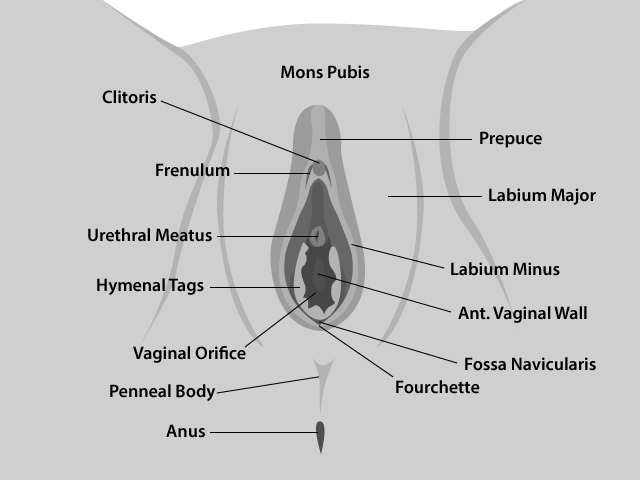
Often, vaginal or cervical infections that are accompanied by discharges easily affect the urinary tract, again because of the proximity of their openings.
Women in menopause, because of the thinning out and drying up of the mucus membranes lining the vagina and urethra, are also prone to UTI.
After sexual intercourse and because of mechanical abrasion, the urethra could become irritated and inflamed, leading to painful urination. This could develop into an infection and the microorganisms could enter the bladder.
Moreover, after a bowel movement, using a bidet with the water flushing from back to front could carry infections into the urethra as well.
Detecting UTI
The infection is diagnosed through a urinalysis, or examining the urine under a microscope. In women, the urine sample is ideally clean catch (the vulva has been thoroughly washed and wiped of secretions) and midstream (one is asked to urinate first, then catch the middle sample of the urine). The laboratory will look for bacteria or pus cells, and usually will report a quantified number per high power field.
The doctor can then advise you what antibiotic is needed for the infection. Many times the UTI is recurrent, and a C&S (culture and sensitivity) of the urine might be needed. This means a sample of your urine will be placed in culture media to see what specific bacteria will grow; simultaneously in another dish, the ability of specific antibiotics against these bacteria will be tested.
Ultrasound and image scanning may also be done to pinpoint stones, any obstruction, or anatomical abnormalities in the urinary system. A urologist (a surgeon specializing in the urinary tract and kidney problems) may also do a cystoscopy (putting in a fine tube through the urethra to take a look at the bladder), and do other procedures to treat the obstruction, especially in the ureters. A cystoscopy could also help the urologist visualize the inside portion of the bladder and other important structures of the urinary tract.
Preventing UTI
There are many helpful ways to prevent UTI. In a tropical country like ours, drinking at least two liters of water a day is important. This will help flush out bacteria and prevent their proliferation which occurs when the urine is concentrated. Avoid salty foods and dips (think bagoong, patis).
Cranberry juice has been touted as a cure for the prevention of UTI, but there is still no strong evidence for its use. There is definitely no harm in taking it, and the increased liquid intake could be beneficial in flushing out bacteria through urination.
When using a bidet or cleaning after a bowel movement, it is recommended that washing and wiping is done from front to back: that is, wash or wipe the urethra, vagina, and anus, in that order.
Urinating after sexual intercourse is also recommended. In addition, avoid using any deodorant vaginal spray or strong feminine intimate washes that could irritate the delicate mucosal lining of the vulva. Warm water is more than enough to wash this area. – With illustrations by Analyn Perez/YA, GMA News
Dr. Alice Sun-Cua is a practicing obstetrician-gynecologist at the San Juan de Dios Hospital in Pasay City.

