

 GMA Brandtalk
 Tracking
 Archives

ADVERTISEMENT
Filtered By: Lifestyle
Lifestyle
A silent danger: When blood sugar goes down while you were sleeping
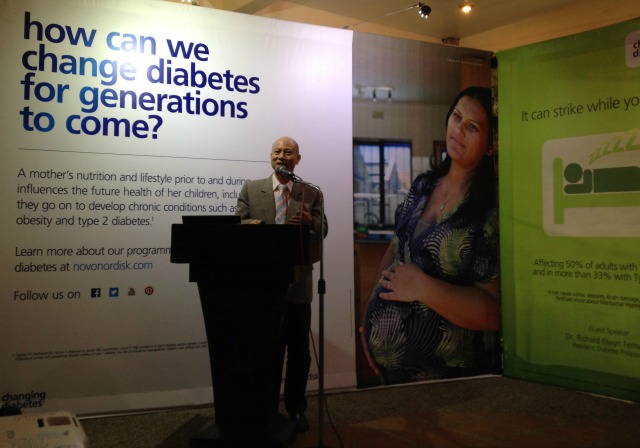
Making people—both diabetics and their families—aware of the dangers of nocturnal hypoglycemia is the best way to combat its effects, said Dr. Richard Elwyn Fernando.
“The absence of a nighttime snack when one is usually taken is one cause of nocturnal hypoglycemia,” said Dr. Richard Elwyn Fernando, president of Diabetes Philippines and consultant at St. Luke's Medical Center and Capitol Medical Center.
Nocturnal hypoglycemia, as the name implies, happens at night. “It occurs when blood glucose levels fall below 4 millimoles per liter (mmol/l) or 72 milligrams per deciliter (mg/dl). At 40 mg/dl or below, a person can be comatose... In rare cases, it may lead to death,” Fernando said during a media briefing organized by pharmaceutical company Novo Nordisk last May 27.
What makes it dangerous is that the person, being asleep, is not aware of what is happening and is not able to seek help. This poses a real concern for diabetics and their families, said Fernando.
In a previous interview, former Health Secretary Esperanza Cabral said the body needs glucose to function well. “Kailangan ng katawan ang sugar for energy, metabolism,” she told GMA News.
When the blood sugar drops to low levels, a person may experience dizziness, weakness and even fainting, Cabral said. There may also be confusion and disorientation.
Fernando said hypoglycemia may lead to complications affecting the heart (decreased heart rate, decreased cardiac output, myocardial contractility), blood vessels (stroke, myocardial infarction, acute cardiac failure, ventricular arrythmia), and brain (seizures, convulsions, coma).
While hypoglycemia may occur in both diabetics and non-diabetics alike—“kapag gutom o stressed,” Cabral said—it happens more often among the first group. In Fernando's practice, for instance, out of 100 patients, of the 30 percent of those taking insulin, one-third will complain of hypoglycemia once or twice a week, he said.
382 million: More than 382 million people worldwide have diabetes
2035: By 2035, more than half again will be added to that number.
40-59: More people in the age bracket of 40-59 have diabetes, as compared to other age groups.
4 million: Four million people have diabetes in the Philippines. Half of them may experience nocturnal hypoglycemia.
50%: Almost 50 percent of all hypoglycemic events happen at night.
50%: Up to 50 percent of adults with Type 1 diabetes may suffer from nocturnal hypoglycemia.
33%: Up to 33 percent of adults with Type 2 diabetes may suffer from nocturnal hypoglycemia.
Source: Media Briefing on Nocturnal Hypoglycemia, May 27, 2014
Types of hypoglycemia
“Hypoglycemia is dangerous for oneself and for others,” Fernando said. “There may be blurring of vision, for one.”
He added that hypoglycemia comes in different types.
One is severe hypoglycemia, in which a person needs the assistance of another. “It may require hospitalization. In rare cases, it may cause coma or death,” Fernando said.
Another type is non-severe hypoglycemia, where one's heart pounds but generally does not require assistance from another person; it can be self-managed.
Yet another type is nocturnal hypoglycemia, which may be mild or severe, he said. Almost half of all hypoglycemic events are said to happen at night.
“Half of cases (of hypoglycemia) occurring at night are severe. Many of them occur at night especially among type 1 diabetics. But type 2 diabetics who take insulin also get it,” Fernando added.
What causes nocturnal hypoglycemia?
Aside from not having a nighttime snack when one is usually taken—especially when a diabetic needs to take medicines—there are other causes why blood sugar drops after sunset, said Fernando:
1. Failure to eat on time
The timing and frequency of food intake should be balanced with the anti-diabetic regimen of a person.
2. The amount and content of meals
Fernando said it's important to eat a balanced meal. If one eats only vegetables and no carbohydrate-rich foods, there may not be enough glucose for the body's needs.
For a nighttime snack, doctors advise having one with slow-acting carbohydrates or protein; not high-fat. Some snack ideas include raw vegetables (such as carrot sticks, cucumber, and tomatoes), nuts, a small piece of wheat bread with ham or chicken slices, cheese, and apple slices.
3. Early or delayed meals
4. Increased physical activity in the past 24 hours
The effects of exercise last 24-48 hours, said Fernando, and this is why doctors recommend exercising every other day. He added that exercise should be factored in the treatment and medication plan.
5. Alcohol consumption
“Alcohol is toxic to the liver especially in large quantities. It inhibits the liver from making sugar,” Fernando said.
He explained that at night the liver makes enough sugar for the brain and for the other systems to function.
6. Alteration in the level of insulin or other blood glucose-lowering medications
Yes, hypoglycemia can be a side effect of medication, Fernando said.
In some instances, dosage of insulin or blood glucose-lowering medications may need to be decreased.
Fernando recommends monitoring of blood sugar level before going to bed and in the morning, to help prevent incidence of nocturnal hypoglycemia.
Impact, symptoms of nocturnal hypoglycemia

A call to action against nocturnal hypoglycemia was made by Dr. Richard Elwyn Fernando (third from left) with Novo Nordisk Pharmaceuticals (Phils.) Inc. officials (L-R): Carlos Jose Garcia, product manager; Jeppe Theisen, general manager; and Carole Lopez, marketing manager.
- difficulty waking up
- night sweats
- waking with a headache
- waking up tired despite a full night's sleep
- nightmares
- talking during sleep
When the individual is conscious, he or she may eat 10-15 grams of fast-acting carbohydrates (such as soda, a piece of candy, a small chocolate bar) to raise the blood sugar back to normal, Fernando said.
“Or take one-half glass of juice with sugar. Wait for 15 minutes and check the blood sugar. If needed, take another one-half glass,” Fernando explained. “Don't drink a liter of softdrinks,” he advised. The diabetic expert said some diabetics take in a lot of sugary food or drinks right away to raise the blood sugar, but this may drive it up beyond the normal range.
If the individual is unconscious, Fernando said, as first-aid treatment one can dip a finger in marmalade or jelly, put this inside the mouth of the patient—in the inner portion of the mouth, not the tongue.
Nocturnal hypoglycemia can affect quality of life and daytime activities. In fact, in a study, four out of 10 people who had an episode of nocturnal hypoglycemia report missing work the next day, Fernando said. “Following a nocturnal hypoglycemic event, a person may experience physical fatigue... His or her mood and wellbeing may also be adversely affected the next day,” he added.
Making people—both diabetics and their families—aware of the dangers of nocturnal hypoglycemia is the best way to combat its effects, said Fernando. “With education, they can react and anticipate what's going to happen,” he added. — BM, GMA News

