

 GMA Brandtalk
 Tracking
 Archives

ADVERTISEMENT
Filtered By: Lifestyle
Lifestyle
600,000 mothers to get health services to improve maternal health in PHL
Delays in accessing medical care is one of the reasons why there are still women who die before, during, and after childbirth. This is what microfinance institutions try to address in their latest program.
CARD Mutually Reinforcing Institutions, Microcredit Summit Campaign, and Freedom from Hunger are set to give 600,000 mothers with health services to improve maternal health through a program called "Healthy Mothers, Healthy Babies: Kalinga kay Inay" launched in San Pablo City on October 17.
The program aims to decrease the high maternal mortality rate in the Philippines by the end of December 2015.
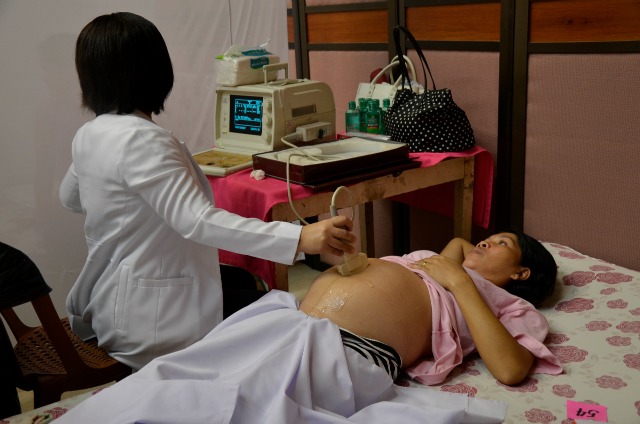 Through the program, health education and services will be given to rural areas where maternal mortality rates are the highest.
The program, which targets 600,000 mothers in the country, aims to decrease the maternal mortality rate by end of December 2015. CARD MRI
Healthy Mothers, Healthy Babies: Kalinga kay Inay was first tried out at a two-day community health fair in Palawan for 1,000 pregnant and lactating women. General practitioners, obstetricians/gynecologists, and a sonologist provided health services with no charge.
One of the goals of the program is also to help the Philippines meet Millennium Development Goal (MDG) 5 of the World Health Organization. MDG 5 challenges nations to reduce by three quarters between 1990 and 2015 the maternal mortality ratio and to achieve universal access to reproductive heath by 2015.
The Philippines has a target of 52 deaths per 100,000 live births by 2015. But in the recent MDG progress report of the National Economic and Development Authority, Economic Planning Secretary Arsenio M. Balicasan said that there is a low probability that the target will be met because of an increase in the maternal mortality ratio.
Based on the 2011 Family Health Survey, the maternal mortality ratio increased to 221 per 100,000 livebirths compared to 162 per 100,000 livebirths in 2006. —Trisha Macas/KG, GMA News

