

 GMA Brandtalk
 Tracking
 Archives

ADVERTISEMENT
Filtered By: Lifestyle
Lifestyle
WATCH: WHO campaign stresses importance of ‘First Embrace’ between mom, newborn
(Updated 8:33 p.m.) The World Health Organization Regional Office for the Western Pacific on Thursday launched a campaign highlighting simple steps that could save more than 50,000 newborn babies while preventing hundreds of thousands of complications linked with unsafe newborn care practices in the region.
Called “First Embrace,” the campaign highlights early essential newborn care (EENC), a package of actions and interventions that addresses the most common causes of newborn deaths or diseases. Among the common newborn problems are prematurity, low birth weight, and severe infection.
The Philippines has already had the "Unang Yakap" campaign in place for years, first as a pilot program in 2009, with DOH Administrative Order 2009-0025 outlining the benefits of EENC, including skin-to-skin contact between mother and newborn.
According to the WHO regional office, half of all deaths of children below 5 years of age occur within the first month after birth.
“We lose far too many newborn infants to preventable factors, such as disease,” said Dr. Shin Young-soo, WHO regional director for the Western Pacific.
“First Embrace addresses this challenge by urging women and health-care providers to take simple steps to protect babies during the crucial time immediately after birth,” he said as quoted by a WHO press statement.
“What is at stake is the future of our children, the future of our region. I encourage everyone to support this campaign and improve the lives of newborn babies now and for generations to come,” Shin said.
Transfer of warmth
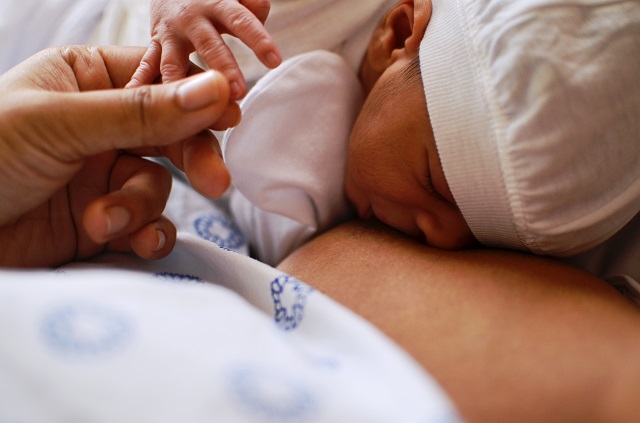 Early essential newborn care (EENC) is a series of simple and cost-effective measures designed to prevent newborn deaths by changing harmful medical practices.
The EENC can be performed in all birth settings without the need for complicated preparations or expensive technology.
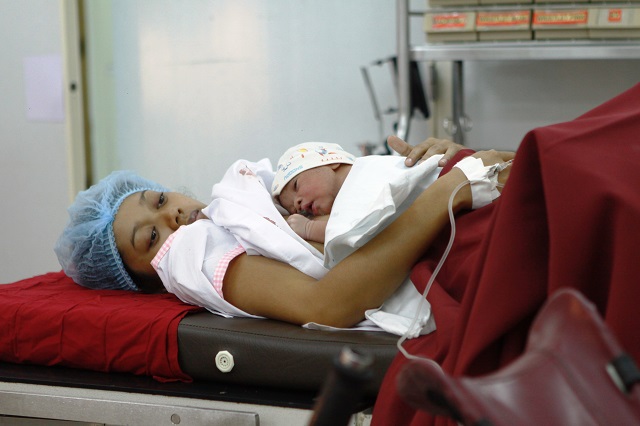
The EENC begins with the “First Embrace” or the sustained skin-to-skin contact between the mother and child shortly after birth. This simple act transfers warmth, placental blood, and protective bacteria, and promotes exclusive breastfeeding, the WHO said.
“Separation of the mother and child immediately after birth is an age-old practice. But it occurs during a crucial time when babies are programmed to look for their mother’s breast in order to breastfeed,” said Dr. Maria Asuncion Silvestre, a pediatric neonatologist and WHO consultant.
Skin-to-skin contact should be followed by proper clamping and cutting of the umbilical cord with sterile instruments.
Breastfeeding begins naturally on feeding cues, such as drooling, tonguing, rooting, and biting the hand.
Early initiation of breastfeeding is especially important because colostrum, or the first milk, contains essential nutrients, antibodies, and immune cells, the WHO said.
“Colostrum acts like the baby’s first immunization,” Dr. Howard Sobel, WHO regional coordinator for reproductive, maternal, newborn, child, and adolescent health in the Western Pacific region, said.
Other routine steps, such as the provision of Vit K, eye prophylaxis, immunizations, complete examinations, and weighing, should be performed after the first breastfeeding.
The WHO advised that these steps must be performed in proper sequence for maximum benefit.
Road map for newborn health
 Last May, the WHO and the United Nations Children’s Fund (UNICEF) released the Action Plan for Healthy Newborn Infants in the Western Pacific Region for the period 2014-2020.
Designed as a “road map for newborn health,” the action plan urged governments, United Nations agencies, and other stakeholders to support its recommendations.
The action plan recommended, among others, an improved political and social support to secure an enabling environment for EENC and mobilization of families and communities to increase demand for these approaches.
The “First Embrace” campaign seeks to engage the general public, health workers, policy-makers and civil society to champion EENC.
Health workers may be unaware of these relatively simple steps to protect newborns, the WHO said.
In addition, customs and beliefs among some communities and health-care providers may act as a barrier to full implementation of EENC, it added.
Changing practices requires a supportive environment and informed families and individuals that insist on best practices from health-care providers.
“This campaign is about taking small, simple steps to save more than 50,000 newborn lives in the Western Pacific region every year,” said Sobel. “We will also be improving the lives of millions more by preventing countless infections.” — BM, GMA News
Called “First Embrace,” the campaign highlights early essential newborn care (EENC), a package of actions and interventions that addresses the most common causes of newborn deaths or diseases. Among the common newborn problems are prematurity, low birth weight, and severe infection.
The Philippines has already had the "Unang Yakap" campaign in place for years, first as a pilot program in 2009, with DOH Administrative Order 2009-0025 outlining the benefits of EENC, including skin-to-skin contact between mother and newborn.
According to the WHO regional office, half of all deaths of children below 5 years of age occur within the first month after birth.
“We lose far too many newborn infants to preventable factors, such as disease,” said Dr. Shin Young-soo, WHO regional director for the Western Pacific.
“First Embrace addresses this challenge by urging women and health-care providers to take simple steps to protect babies during the crucial time immediately after birth,” he said as quoted by a WHO press statement.
“What is at stake is the future of our children, the future of our region. I encourage everyone to support this campaign and improve the lives of newborn babies now and for generations to come,” Shin said.
Transfer of warmth
'First Embrace' is part of WHO's campaign about early essential newborn care (EENC). Photos from the World Health Organization
The EENC can be performed in all birth settings without the need for complicated preparations or expensive technology.
The EENC begins with the “First Embrace” or the sustained skin-to-skin contact between the mother and child shortly after birth. This simple act transfers warmth, placental blood, and protective bacteria, and promotes exclusive breastfeeding, the WHO said.
“Separation of the mother and child immediately after birth is an age-old practice. But it occurs during a crucial time when babies are programmed to look for their mother’s breast in order to breastfeed,” said Dr. Maria Asuncion Silvestre, a pediatric neonatologist and WHO consultant.
Skin-to-skin contact should be followed by proper clamping and cutting of the umbilical cord with sterile instruments.
Breastfeeding begins naturally on feeding cues, such as drooling, tonguing, rooting, and biting the hand.
Early initiation of breastfeeding is especially important because colostrum, or the first milk, contains essential nutrients, antibodies, and immune cells, the WHO said.
“Colostrum acts like the baby’s first immunization,” Dr. Howard Sobel, WHO regional coordinator for reproductive, maternal, newborn, child, and adolescent health in the Western Pacific region, said.
Other routine steps, such as the provision of Vit K, eye prophylaxis, immunizations, complete examinations, and weighing, should be performed after the first breastfeeding.
The WHO advised that these steps must be performed in proper sequence for maximum benefit.
Road map for newborn health
Skin-to-skin contact between mother and newborn is very important, say doctors.
Designed as a “road map for newborn health,” the action plan urged governments, United Nations agencies, and other stakeholders to support its recommendations.
The action plan recommended, among others, an improved political and social support to secure an enabling environment for EENC and mobilization of families and communities to increase demand for these approaches.
The “First Embrace” campaign seeks to engage the general public, health workers, policy-makers and civil society to champion EENC.
Health workers may be unaware of these relatively simple steps to protect newborns, the WHO said.
In addition, customs and beliefs among some communities and health-care providers may act as a barrier to full implementation of EENC, it added.
Changing practices requires a supportive environment and informed families and individuals that insist on best practices from health-care providers.
“This campaign is about taking small, simple steps to save more than 50,000 newborn lives in the Western Pacific region every year,” said Sobel. “We will also be improving the lives of millions more by preventing countless infections.” — BM, GMA News

