

 GMA Brandtalk
 Tracking
 Archives

ADVERTISEMENT
Filtered By: Lifestyle
Lifestyle
Child mortality ‘dramatically’ reduced in NCR, says global motherhood report
The 16th annual State of the World's Mothers report by international non-governmental organization Save the Children said that child survival rates in the capital of the Philippines improved by 50 percent.
"In these countries, progress has favored the poorest urban children. As a result, survival gaps have likely narrowed. The data suggest Cambodia, Indonesia, Nepal and the Philippines have cut urban survival gaps in half – in both relative and absolute terms," the report said.
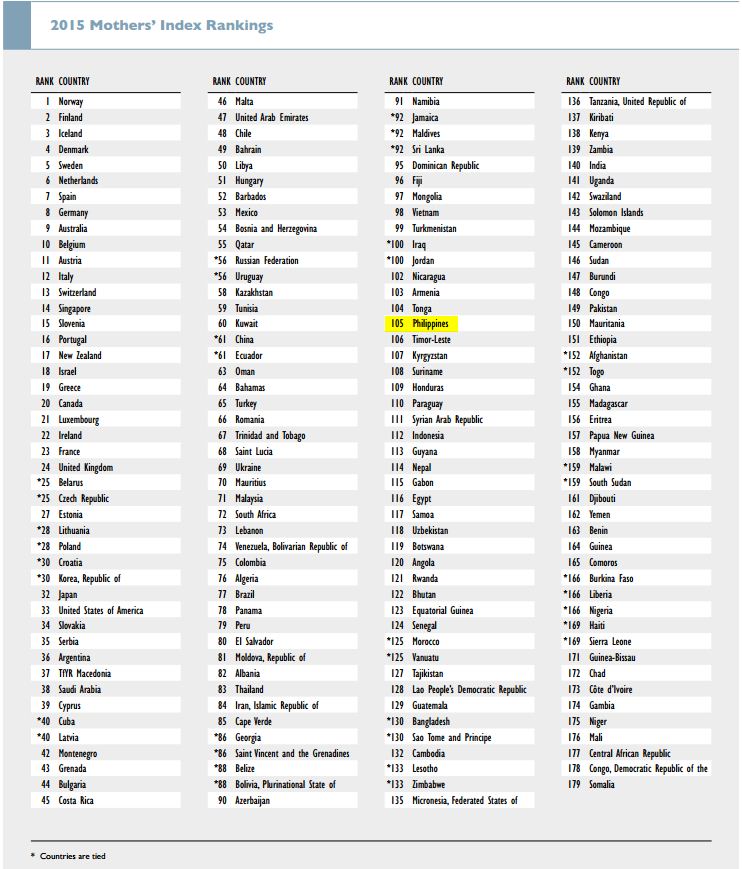
Read: Norway ranks as world's best place to be a mother; PHL 105th out of 179
Save the Children said that under-5 mortality among the poorest 20% of urban residents in the National Capital Region has been steadily declining over the years. Between 1993 and 2008, child mortality rates among the urban poor declined by more than half, from 81 deaths per 1,000 live births to 38.
Moreover, the most affluent urban 20% made relatively minor gains, with under-5 mortality moving from 20 per 1,000 births in 1993 to 19 in 2008. Thus, the poorest urban children went from being four times as likely to die to being twice as likely to die compared to their wealthy peers.
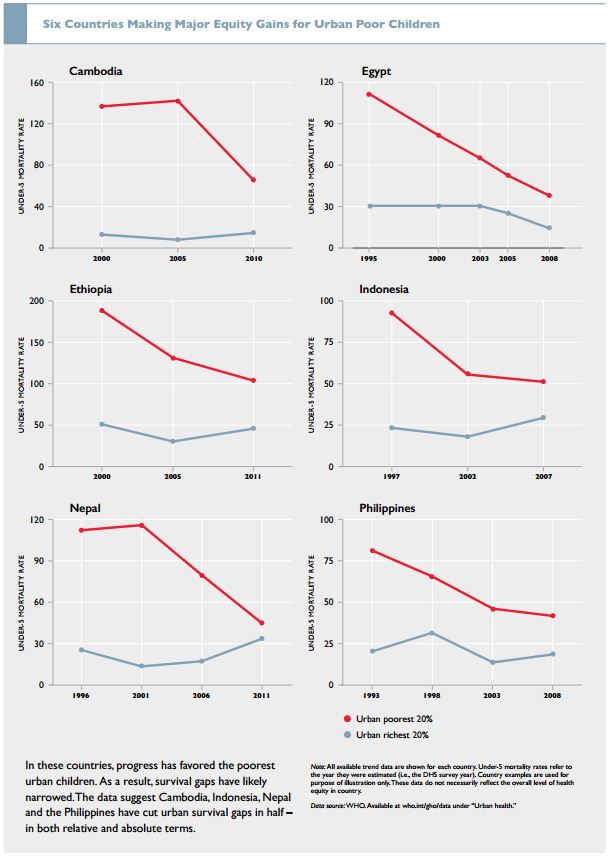
The report also noted that Metro Manila achieved about a 4% reduction in under-5 mortality per year from 1998 to 2013, which is over 40% total reduction.
The report noted that there were different factors that led to the reduction. These include improved quality of services, special programs for mothers and children, public-private partnerships, investments in frontline health workers, structural reforms, health care innovations introduced to the local government units, and sustained involvement of community-based organizations in maternal and child health care programs.
It also mentioned the government's conditional cash transfer program for poor families, the Pantawid Pamilyang Pilipino Program (4Ps), as one of the reasons why mothers in Metro Manila now have better access to health care.
Challenges ahead
However, despite the NCR's big improvement in terms of reducing child mortality, the Philippines is still ranked below 100 in the report's Mothers' Index Ratings, taking 105th place in the list of 179 countries.
Nordic countries Norway, Finland, Iceland, Denmark, and Sweden took the top 5 places on the list, while African nations Niger, Mali, Central African Republic, Democratic Republic of the Congo, and Somalia were ranked the worst countries for mothers.
The report also said that although there is improvement in the state of mothers in the Philippines, many poor people still do not have access to health services because of finances.
Save the Children also pointed out that health care costs in Metro Manila continue to rise, which is prompting more mothers to deliver at home where it's more affordable. It also cited a recent study that found the National Capital Region failed to meet national targets for maternal mortality and contraceptive use.
Breastfeeding in the metro also remains low. A recent study found that only 24 percent of young children were exclusively breastfed for the first six months of their lives, the report said.
Read: Unang yakap: Why breast is best
Moreover, a recent study said that the NCR failed to meet national targets for maternal mortality and contraceptive use. Data from the National Statistics Office also suggest that one in five infants who died in 2010 were in Metro Manila (which has 13% of the general population), although the capital has one of the lowest infant mortality rates in the country. — Trisha Macas/BM, GMA News

