

 GMA Brandtalk
 Tracking
 Archives

‘Bakit ako nahihiya?’ Ministry hopes to erase shame, stigma of HIV/AIDS
Imagine that your best friend tells you over a cup of coffee that she has been diagnosed with breast cancer. You reach for her hand across the table and reassure her that she'll beat it. In response, she encourages you to get tested, because she wants you to be safe, too.
They make movies out of these kinds of moments—and while some end in bittersweet tragedy, we know that cancer is beatable. It is still a life-altering disease, but entire communities and groups are dedicated to fighting it and giving support to cancer patients. There is no shame in getting tested for cancer.
Now, replace cancer with HIV/AIDS.
The fight for any disease is universal, according to the people behind Embracing Life Ministries and Living Waters. And to win the battle against HIV/AIDS, it should be treated as any other life-altering illness and the help should come without any judgement.
HIV/AIDS in the Philippines
The statistics show that an alarming rate of young people in the Philippines getting infected by the disease. Advocates agree that the rise in numbers means that more people are getting tested, but it's also presenting the government and other institutions in the country with the fact that the HIV/AIDS epidemic needs to be dealt with—and soon.
In a statement earlier this month, the Department of Health said 7,179 HIV/AIDS cases were diagnosed in the period from January to November 2015. This brings the total of reported cases in the Philippines since January 1984 to 29,706. Of the total number, 2,525 were already AIDS at the time of reporting, the DOH said.
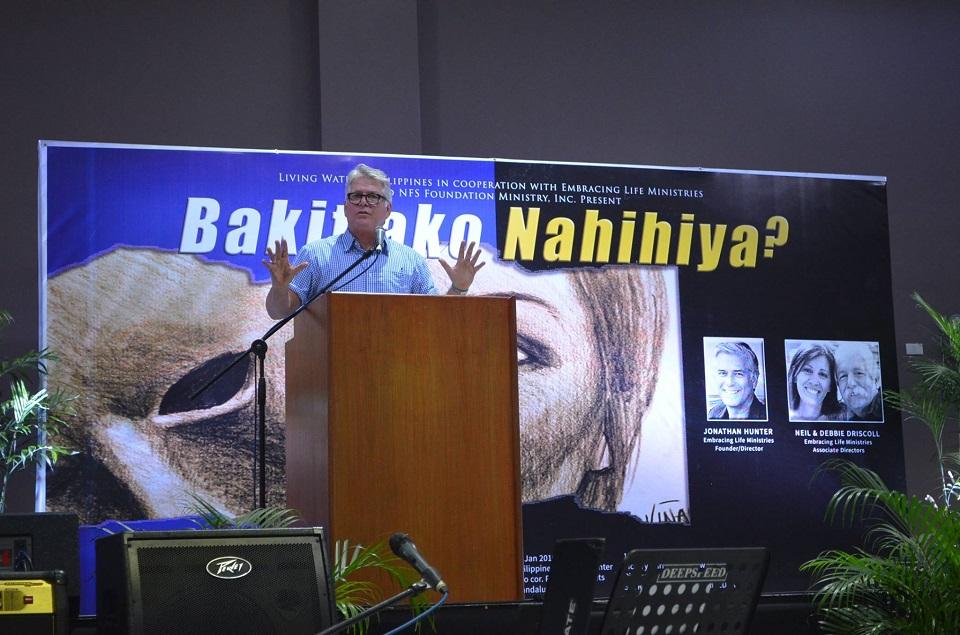
"HIV/AIDS is a chronic disease," Jonathan Hunter, founder and director of Embracing Life Ministries, told GMA News Online. Hunter knows what he's talking about: he's been living with HIV/AIDS for more than two decades, having been diagnosed in the early '90s. He says it used to be a death sentence, but now, it's just like any other disease: manageable if one has access to proper medication.
There are a number of drugs in the market now that could be affordable, he said. "There is no reason that any of the young persons [diagnosed with HIV] cannot get to the medicine," he said.
But getting the medication is not that easy in the Philippines, where the stigma of having HIV or AIDS has shown little sign of fading and where the Reproductive Health Law faces an uphill battle in terms of implementation.
"The ignorance is enhancing the shame of the disease," Benji Cruz of Living Waters added, lamenting the isolation and alienation that HIV/AIDS-positive Filipinos face on top of the disease. The country is only beginning to work on neutralizing the shame in getting tested for any kind of sexually transmitted illness.
Coming from a Christian ministry, Hunter did not directly speak about modern contraceptives, but flatly pointed out that medication for HIV/AIDS is not a form of contraception. The drugs, he says, just manage the disease—no different from insulin shots for people with diabetes.
"What we've discovered is that when you integrate these folks dealing with this illness with other people dealing with similar life crises, they realize they're not alone," Hunter said, "They are not there to compare diseases. They are there to get help and healing and a safe place."
Hunter wants to spread these words about HIV/AIDS: "It is not a death sentence."
Prayer plus practical solutions

Hunter attributes continuing to survive the illness to all the love and support that he receives from his church and community—and, of course, his doctors, too.
He explained, "About 75% of HIV/AIDS is dealing with stress and my doctor says I don't have any."
His advice?
"My word to the Philippines is: 'Chill out, Church, chill out!' Don't waste time. If there is one thing you could do, look at how some churches have evolved in the US."
Embracing Life Ministries and Living Waters are seeking to partner with local churches to help create safe places for people living with life-altering disease, whether that's HIV/AIDS, cancer, or, as Hunter said jokingly, "old age." More than a support group, they aim to equip people against the helplessness and hopelessness that comes with these illnesses. The group offers love through prayers and practical solutions like getting people more acquainted with managing their disease through medication.
"It is criminal if people are ignorant that there are clinics and there are meds that they can get," Hunter says, urging churches to utilize their network and stay true to the Christian tenets of helping and being open. Creating this safe place, he said, is a powerful sign of compassion.
"If you are a church of influence and you want to make a difference in society, you have this great opportunity to speak to the government and say, 'We are going to do this. We are going to take charge of this,'" Hunter said, painting a picture of a more welcoming institution, especially to the youth of the Philippines. "What does that say to the people? 'The Church is doing that? Wow! That's not the Church that I know, I only know the Church that points fingers.' I think that this is truly a great opportunity." — BM, GMA News

