

 GMA Brandtalk
 Tracking
 Archives

Do pimples keep appearing on one particular area of your face? Experts say what it probably means
Are your breakouts often concentrated on a particular area on your face? Maybe you’ve noticed that you’re more prone to getting recurring pimples on your chin or nose or forehead.
Does this, as a number of acne face maps you’ve probably come across online, suggest something about your overall health and/or correspond to the state of specific organs in your body?
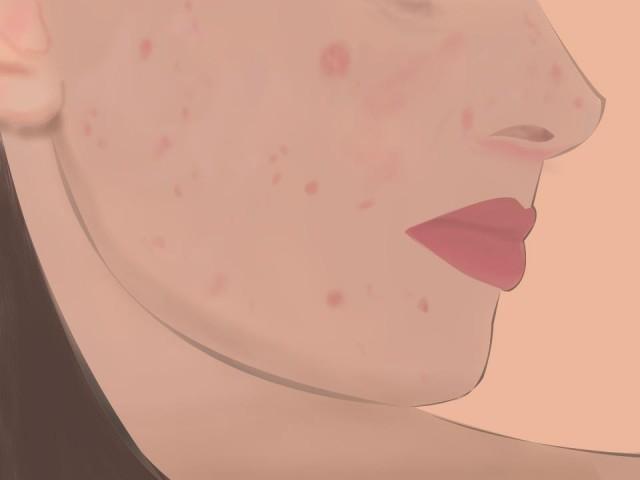
According to Dr Stephanie Sy-Chua, a fellow of the Philippine Dermatological Society, there is actually no scientific basis for acne face mapping.
But she admits dermatologists still take into consideration where on the face the patient is more prone to breakouts to deduce what might be causing them.
As Leslie Colleen Acosta Tiongson MD, DPDS, a dermatologist at Metro North Medical Center, puts it, “In order to treat and prevent acne, one must determine the factors that are involved and direct treatment and preventive measures to [address them].”
RELATED: What causes adult acne?
Forehead or Hairline
If your acne is more pronounced on the hairline, it would be best to re-examine the hair products you’re using. “If the patient is applying hair gel or pomade daily, it may help reduce breakouts if he or she discontinues using the product,” Sy-Chua shares.
The American Academy of Dermatology (AAD) points out that this is because the oil in hair products could be clogging your pores. To prevent breakouts in this area in the future, the AAD recommends looking for hair products that have “won’t clog pores, oil-free, non-comedogenic, or non-acnegenic” on the label.
T-zone
Constantly breaking out on your T-zone (i.e. your forehead, nose, and the area around the mouth)? According to Tiongson, it’s most likely due to excessive oil production. And because more oil equals clogged pores equals acne, it’s important to find solutions to combat oily skin.
One way to do that is manage your stress levels. Studies have shown that stress contributes to a spike in oil production and pushes sebum-producing cells into overdrive. The AAD also offers other simple ways to keep your skin from becoming too oily, like washing your face regularly, using oil-free products, and moisturizing daily.
RELATED: 3 myths about pimples
Cheeks
Sy-Chua notes that if persistent pimples on your cheeks is a problem, it could be due to your sleeping position and pillowcase: “If a patient has more pronounced acne on one cheek, they could be sleeping on that side of their face more often, and shifting positions might help.” You may also want to change your pillowcases more often.
Your cellphone could be another culprit. Scientists at the University of Arizona have found that your cellphone is 10 times dirtier than a toilet seat.
It could harbor acne-causing bacteria that’s transferred to your cheek every time you take or make a call, so make sure to clean your phone daily with anti-bacterial wipes…and maybe avoid bringing it with you to the toilet.
Tiongson also mentions that repeated trauma and/or irritation brought on by wearing helmets and athletic headgear on the regular can lead to breakouts on your cheeks.
Jawline and Chin
“Acne on the jawline is due to hormonal imbalance,” says Tiongson. Due to an excess in androgens, you can suffer from flareups on your jawline and chin, which may be an indicator of PCOS (polycystic ovarian syndrome), she elaborates.
Sy-Chua adds, “Scientists found that most patients that responded to hormonal therapy are those who have acne on the jawline. Hence the conclusion that if you have acne on the jawline, the cause is hormonal.”
“If hormonal imbalance is suspected, an OB consult is advised. Not all pills work for all forms of PCOS. Plus, not all jawline acne is caused by PCOS. Other hormonal problems may be causing the acne so a complete and thorough investigation is necessary,” suggests Tiongson.
RELATED: 5 things you can do to achieve clear pimple-free skin
No matter where your flareups occur the most, there are basic things you can do prevent breakouts—on any part of your face: a proper skincare routine and good personal hygiene for example.
Following your mom’s advice to “not touch your face with your hands” or “pick at your pimples” are pretty basic tips as well. “Avoidance of stress, proper diet, exercise, adequate sleep and hydration will help,” Tiongson adds.
She also recommends a diet rich in low-glycemic food (fresh vegetables, fruits, beans, oats) since high-glycemic food like white bread, soda, chips, fries, etc. can spike sugar levels and lead to inflammation and increased sebum production.
Meanwhile, Sy-Chua advises against too much dairy, “Studies show that dairy products like milk can cause acne, and that those taking more than one glass of milk daily are more prone to developing acne than the normal population.”
Finally, it’s important to see your dermatologist for professional advice and consultation. After all, Sy-Chua says, “There's no guaranteed improvement without proper treatment.” — LA, GMA News

