

 GMA Brandtalk
 Tracking
 Archives

Is there a way to prevent peklat from forming when a wound heals?
Took a nasty fall and scraped your knee? According to Dr, Stephanie Sy-Chua, a fellow of the Philippine Dermatological Society, if the wound is deep enough to reach the reticular dermis—the lower part of the skin just before the fat layer—you can expect it to form a scar when it heals.
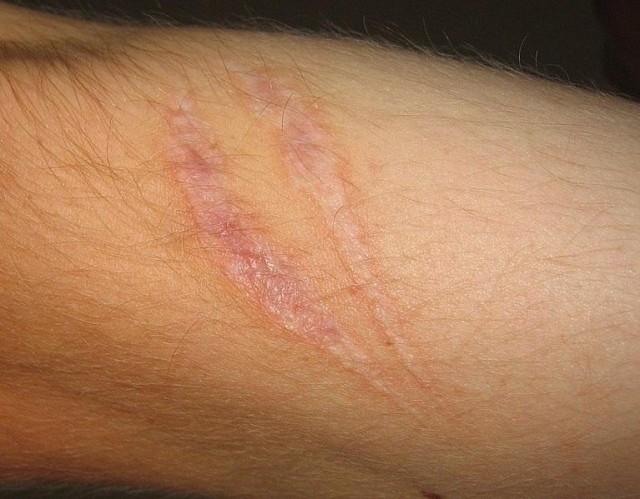
Leslie Colleen Acosta Tiongson MD, DPDS, a dermatologist at Metro North Medical Center, explains that a scar forms when there is a break in the skin (or any other organ tissue or muscle tissue) and there is a disruption in the collagen framework that keeps it intact. In order to repair the break, new collagen forms over it as scar tissue.
“Areas of the body that are more prone to trauma are at greater risk of scarring,” says Tiongson. So, for example, if you work with your hands a lot, there’s a higher chance of getting wounded in that area, and if the wound is deep enough, it may result in scarring. Similarly, if you’re into a sport or activity where it’s typical to cut, scratch, or scrape your arms or legs, then it’s more likely you’ll get a deep wound in that area, and the cut could develop into a scar.
Adds Sy-Chua, “Areas where there is increased tension like the shoulders, sternum, mandible, and arms are also more prone to scarring.”
But here's the thing: different wounds produce different scars and that's because, Tiongson explains, there are actually different types of scars.
“Hypertrophic scars are raised, but are within the borders of the original wounds. Atrophic scars are depressed and may be lighter than the original color of the skin. Keloids, on the other hand, are raised scars that extend beyond the border of the original wound and may be reddish or darker than the original skin color,” she explains.
“There’s also ice pick acne scars, which are depressed and usually the result of previous acne lesions, and box type scars, which are bigger than atrophic ice pick acne scars and are usually the result of [chickenpox],” she concludes.
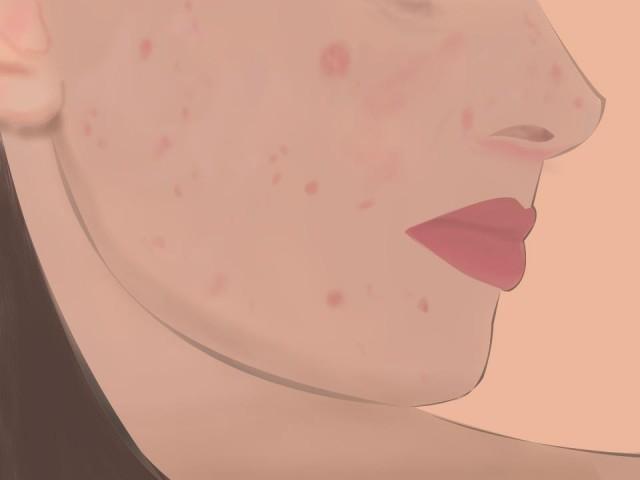
To prevent the formation of scars, she recommends using protective gear to avoid injuries and wounds in the first place, applying medication that prevent acne, and avoiding picking on existing acne and lesions. And, if you scar easily, Sy-Chua advises against getting a tattoo. “The scars are permanent,” she warns.
If, however, you’ve already scraped that knee, proper care can still help minimize the chances of developing a scar. The American Academy of Dermatology offers these useful tips:
1. First of all, keep your wound clean by washing it with mild soap and water to disinfect it and remove debris.
2. Keep the wound moist. That’s right, moist. We’ve been led to believe (mostly by well-meaning moms and titas) that airing the wound out will help it heal faster. But it turns out wounds that form scabs take longer to heal! Instead of letting the wound dry out, the AAD recommends putting petroleum jelly to lock in the moisture.
3. Cover the cut with an adhesive bandage. If you can get your hands on silicone gel sheets or hydrogel bandages, that would be better. Sy-Chua points out, “Silicone is effective in making the scar look nicer. Silicone hydrates the stratum corneum, regulates fibroblast production, reduces collagen production, and modulates fibroblast synthesis. It is most effective when the scar is new, within two to four weeks of trauma, and less effective if the scar has been there for a year or so.”
4. Change the bandage daily to keep the wound clean while it heals.
5. For wounds that require stitches, follow the proper care outlined by your doctor and the schedule for when to get the stitches removed.
6. Lastly, apply sunscreen to the wound when it’s healed to reduce red or brown discoloration and help the scar fade faster.
Sometimes, though, your best efforts aren’t enough and you still end up with a scar. Don’t be disheartened; consult your dermatologist to explore the treatments that are available to you.
Sy-Chua reveals that topical vitamin C (creams, serums, etc.) are quite effective. “Vitamin C helps in improving the appearance of scars [thanks] to its a.) anti-inflammatory, b.) anti-oxidant, c.) collagen synthesis, d.) whitening properties.”
She agrees with waht studies have shown: silicone (creams, oitments, gels, and sheets) is successful in treating scars.
For keloid formers, Tiongson recommends intralesional steroid injections, cryotherapy, surgery, silicone bandages, compression, or a combination of these treatments.
“We don’t know why [some people are more prone to keloids], but [we do know that] it is more common in Asians and dark-skinned races,” says Sy-Chua. “Treating keloid is challenging because the response to treatment varies individually,” she notes.
But she does agree with Tiongson that intralesional steroid injection is the main course of action. "If unresponsive, there are other options that can be discussed with your dermatologist,” she says.
As for scar discoloration, Sy-Chua remarks, “You may or may not develop post inflammatory hyperpigmentation with scars. [If you do,] it can be treated with lightening ingredients prescribed by your dematologist.”
Tiongson adds that on top of topical medications, chemical peeling, and laser treatments can also be explored to address more stubborn discoloration. — LA, GMA News

