

 GMA Brandtalk
 Tracking
 Archives

Raising a fast learner

Raising a child can be compared to building a house – except it’s a house that asks you a hundred questions a day, loves toys, and gives the best hugs. Like any solid structure, a child’s development needs to start with a good, strong foundation to support future growth and stability.
And while we often track a child’s growth, much of the emphasis is on physical development such as measuring their height and weight. But how do we track the development of their brain?
Playtime with a purpose
According to Dr. Josie Eusebio, Developmental and Behavioral Pediatrician and President of the Asia Pacific Pediatric Association, a child’s brain produces over a million new neural connections every second during the first few years of life. By age 2, their brain is already half the size of an average adult’s brain. By age 3, it’s up to 80%.
With that kind of rapid brain development in the early stages of life, it is important to monitor not just their physical milestones, but also cognitive, emotional, and language skills.
One of the most effective ways is tracking their milestones through purposeful playtime activities, such as:
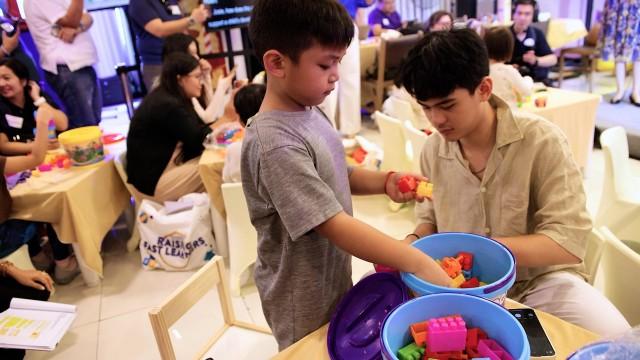
-Building blocks to develop motor skills, simple problem solving, and creativity
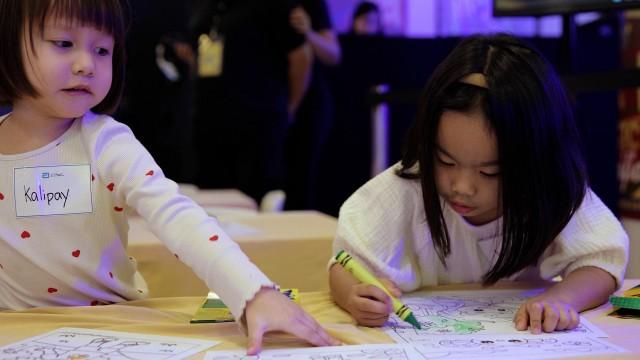
-Tracing shapes or figures to strengthen fine motor kills, attention span, as well as language abilities as kids identify and recall names of shapes and other figures
-Matching games to build recognition and differentiation of forms while developing their motor skills
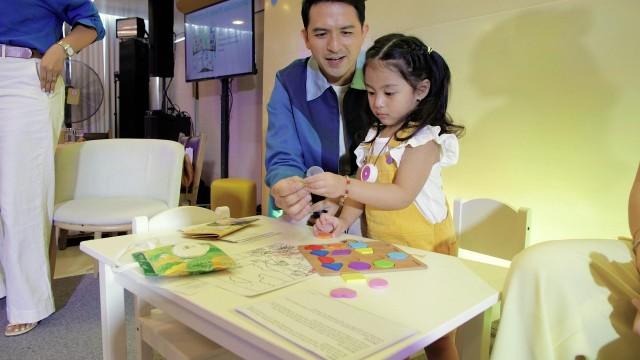
These simple activities can help show the progress of a child’s development and help further hone essential skills, such as holding or gripping objects, finding out how to use simple tools, observing a child’s dominant hand, and even learning how a child manages frustration in the process. Parents play a key role during these moments. By supervising, staying present, and asking open-ended questions like “What is it that you built?” or “What shape is this?”, they help stretch their child’s thinking and make play more meaningful. What looks like simple play activities is actually practice that can prepare them for more complex skills. It is not just fun, it is fundamental.
These are a few ways to check if your child is meeting key developmental milestones. For a more detailed guide, consult your pediatrician. Identifying any delays early on gives your child the best chance to grow, learn, and thrive.
Food for the brain
As children build their skills through play, nutrition helps physically build their brain. The balanced diet of Go, Grow, and Glow foods may seem cliché, but science says that this essential advice has not changed.
Dr. Jose Dimaano, Jr., Nutrition Medical Director for Pacific Asia at Abbott, explains that while carbohydrates, protein, fruits, and vegetables are needed to keep children nourished, healthy fats are also essential because the brain is mostly made of fat. Adding gangliosides, a fatty lipid that can be found in dairy and other foods, can help support faster learning and higher IQ.
Similac GainSchool supports early brain development with science-backed nutrition, including key nutrients like gangliosides. Recognizing the connection between nutrition and early brain development is crucial because the right support at the right time helps raise fast learners. This is exactly what Similac GainSchool aims to provide.
Supporting a child’s growing brain can feel overwhelming, but it is also one of the most fulfilling parts of parenting. The best way to make it easier is to lead by example. Choose healthy living, make time for movement and creativity, and encourage them to explore and experience the world.
In building your child’s body and dreams to be strong as a home’s foundation, remember to incorporate play, nutrition, and love. With these, they will grow strong, confident, and ready to reach the stars!
Similac GainSchool is available in supermarkets and drugstores nationwide.

