

 GMA Brandtalk
 Tracking
 Archives

Rise in HFMD cases due to better reporting, not an outbreak — DOH
The Department of Health (DOH) on Monday clarified that the rise in Hand, Foot and Mouth Disease (HFMD) cases this year is largely due to improved reporting, and not because of a dangerous outbreak.
In an interview on GMA’s Unang Balita, DOH spokesperson Assistant Secretary Albert Domingo said most of the cases logged in 2025 remain “suspect” and not laboratory-confirmed.
“Nung unang makita ko ang balita, bilang isang doktor, bakit biglang 7 times pataas? Nakita ko sa detalye, tumaas ang reporting natin. Nasa 94% ng mga kaso natin ay tinatawag na suspect at hindi pa nako-confirm," he said.
(When I first saw the report, as a doctor, I asked why cases suddenly rose seven times. Looking at the details, reporting has increased. About 94% of our cases are considered suspect and not yet confirmed.)
He added that increased vigilance from schools, daycare centers, and communities helped boost reporting, which is vital in tracking the spread of the virus.
Domingo stressed that HFMD is not fatal and usually resolves on its own within 7 to 10 days.
“Hindi natin masasabing outbreak. Mas maraming kaso, oo, totoo iyon pero ang case fatality ng Hand, Foot and Mouth Disease ay mababa," he said.
(We cannot say there is an outbreak. There are more cases, yes, but the case fatality rate of Hand, Foot and Mouth Disease is low.)
Regions with the most cases
According to DOH data, Western Visayas (Region VI) has the highest number of HFMD cases.
It is followed by MIMAROPA, Central Luzon (Region III), the National Capital Region (NCR), and CALABARZON.
How it spreads
Domingo explained that HFMD, caused by the Coxsackievirus A16, is highly contagious but not life-threatening.
“Virus siya, ang pangalan ay Coxsackievirus A16 pero hindi dapat mabahala… less than 0.1% ang case fatality rate. Sadyang mabilis lang siyang makahawa.”
(It is a virus called Coxsackievirus A16, but there is no need to worry… the case fatality rate is less than 0.1%. It only spreads quickly.)
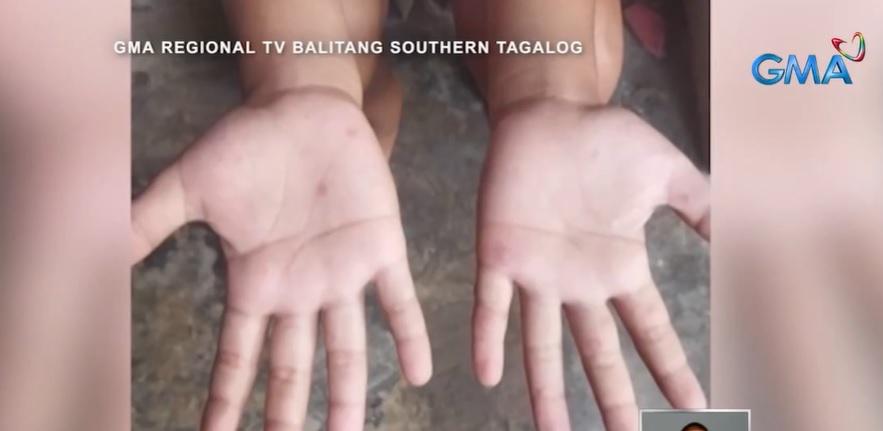
The infection is commonly transmitted among children through droplets, saliva, and contact with contaminated surfaces in schools and daycare centers. Symptoms include rashes or blisters on the hands, feet, and mouth, along with fever.
While children are most affected, adults can also catch the disease.
“Lahat ng edad, tinatamaan niyan... maski mga teacher o mga magulang ay pwede siyang matamaan," he noted.
(All ages can be infected… even teachers or parents may contract it.)
No vaccine, but preventable
Currently, no vaccine exists for HFMD. Domingo emphasized preventive measures such as regular handwashing, disinfecting frequently touched surfaces, and temporarily isolating sick children.
“Wala. Maski sa US walang bakuna… sapagkat kusa siyang gumagaling after 7-10 days at hindi nakamamatay," he added.
(None. Even in the US, there is no vaccine… because it heals on its own after 7–10 days and is not deadly.)
On Saturday, DOH reported 37,368 cases of the contagious viral illness as of August 9 this year.
Half of the recorded cases were young children aged one to three years old.
Last year's count during the same period was 5,081—drastically lower compared to the current tally.
The number of cases has continued to spike sharply this year. From January 1 to February 22 alone, the DOH already found 7,598 HFMD cases—nearly three times more than the cases during the same period in 2024.
HFMD is a contagious disease that can be acquired by touching the eyes, nose, or mouth with hands that have contacted objects contaminated with the virus.
Its symptoms include fever, mouth sores, sore throat, and rashes on the palms and soles of the hands.
The DOH advises that should a child develop these symptoms, they should stay at home for seven to 10 days or until the fever subsides and the sores are dry. — Sherylin Untalan/LA, GMA Integrated News

