

 GMA Brandtalk
 Tracking
 Archives

Secrets of the compost
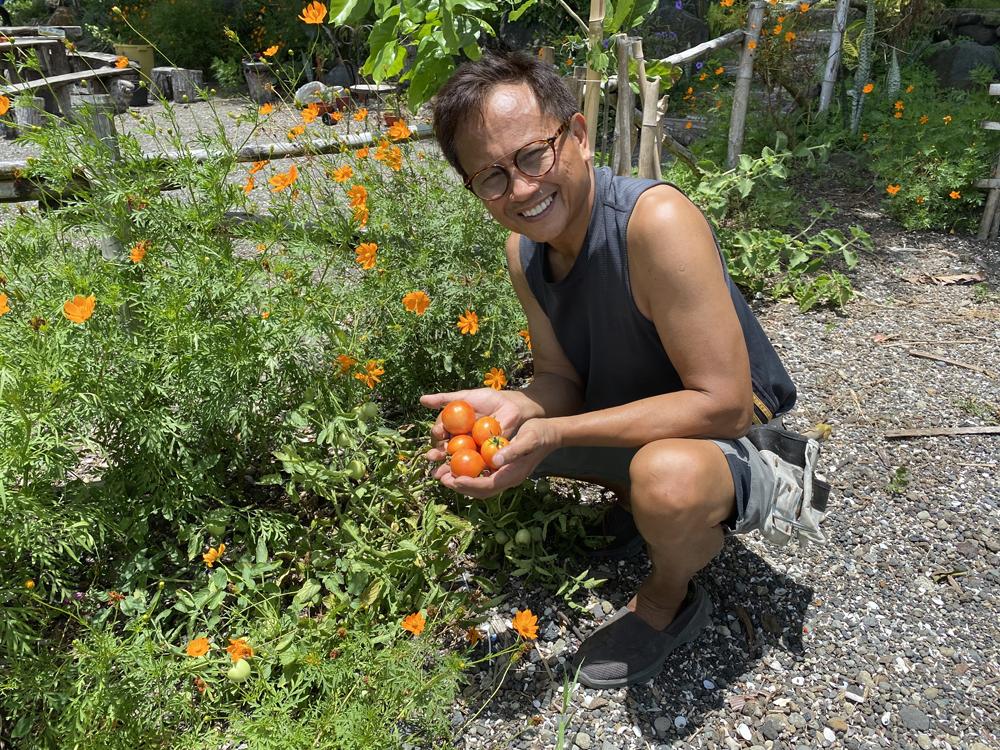
Plant dads inspect their children. That’s what I do every morning now in the modest pocket gardens surrounding my house, and whenever I need to take a break from anything. Sometimes this horticultural convert needs to take a break from gardening to do everything else.
So it was the other day when I pruned some drooping flowers off my orange cosmos to enable new growths to multiply. But as I looked inside the mini forest of cosmos stems, I noticed green and red globes hidden from plain view.
They were beautifully plump tomatoes that I never recalled planting. And what an odd place to grow them, in the shady understory of a riotous row of flowers. Even rookie halamen like me know that tomatoes, needing strong direct sunlight, are not expected to thrive in the shadows of anything.
So these well-nourished babies somehow found a key to a happy life in such disadvantaged conditions.
After pondering this mystery for a moment, I realized the answer was in the compost.
When the orange cosmos (aka “cosmic orange”) were fragile babies themselves, I transplanted them to a bare sandy spot. But first I dug little holes that I filled with home-grown compost.
Like many households that try to be ecologically correct, ours has turned composting into somewhat of an obsessive craft like soap-making. But what we make is basically super soil, a process that begins with segregating food scraps in the kitchen and at the dining table.
Meats and fish that don’t end up as part of our pets’ diets go into a small “bokashi” drum where these are fermented using “inoculated bran” (I’ll save the appetizing details about this for another “adventures in composting” story). One bokashi byproduct is a nutrient-rich tea for our gardens.
Vegetable and fruit scraps, however, go into a small pen where these are mixed in with swept-up leaves. There the decomposition is speeded up by a voracious species of earthworm called African night crawlers. That may conjure in some vile sensations of creepiness, but these creatures are actually uber useful agents of efficiency, quickly turning what’s considered garbage elsewhere into one of the most important substances on the planet: rich, fertile soil.
Naturally decomposed food scraps blend with what’s known as vermicast, or worm poop, the outcome of the worms’ digestion of whatever organic matter is in the compost pen. In addition to containing numerous nutrients, vermicast helps soil absorb and retain moisture. It’s our compost’s secret sauce.
What we actually practice at home is lackadaisical composting, far from cleanly separating the soil byproduct from stray raw or semi-decomposed matter. Rather than rot, some fruit and vegetable seeds naturally find this environment a kind of paradise.
After one sumptuous meal featuring plump heirloom tomatoes, some of their seeds inevitably ended up in the compost, where they got mixed in with the vermicast and super soil used to fill the flower beds for orange cosmos. The rest is a bit of micro natural history captured in the beginning of this story.
This entire process, with its surprising denouement hidden amid the flowers, cannot just be a simple nature narrative, not in the age of Covid.
In our uniquely distressing time, with death and the fear of it all around us, there is something reassuring about composting, and about gardening in general. What is considered waste is transformed scientifically, but also magically, into a life-sustaining force.
One can’t help but see a metaphor in that for what some have termed our “wasted year” (and counting). A year of canceled weddings, graduation ceremonies, and vacations trips. A year when anxiety sapped our energy for other things, when tragedy and physical suffering befell many.
For many, plants have become a refuge, our ornamentals at home the new subjects of our fond attention. It’s a handy diversion. Plants keep us company. Some of us even talk to them.
Moreover, it’s a low-risk chance at nurturing life when so much seems hostile to it. Even a grocery run these days can fill one with dread. But a short, safe stroll to your home garden, or even to the pots on your window sill with its variety of hues and fresh leaves, can instantly lift your spirits.
Each plant has individual traits, almost like people. Some like it sunny, others do not; some will wither but others will thrive if you take them out of their pots and transfer them to a garden. Gardeners I know swear that plants can have hurt feelings, “nagtatampo,” when you take them out of their comfort zones.
My plant guru Arman told me that some bougainvilleas like to be stressed, as in severely deprived of water in a kind of botanical sadomasochism, before responding to a hose with an overnight burst of color.
As fulfilling as growing plants can be, it’s obviously not in the same league as raising children or even pets. But neither is the heartache.
Gardening allows decline and demise without the emotional wreckage of other kinds of loss. The life cycles of many plants are much faster and so death is frequent. But each fallen leaf is an opportunity for regrowth. Each rotting plant enriches the earth. Just as in human life there is such a thing as post-traumatic growth, and not just PTSD.
When a bright cosmos the color of sunsets is done spreading joy, it slowly wilts and turns brown before its diligent plant dad pulls it out and carries it and other carcasses to the compost pen. There it can begin to decompose with kitchen detritus and the occasional heirloom seeds that came with a hearty salad.
If its plant dad is lucky, he’ll find in the earth where the carcasses came from not bare soil, but the delight of the day, and something nutritious and totally unexpected for lunch. — LA, GMA News

