

 GMA Brandtalk
 Tracking
 Archives

Could online selling be the future of bargain shopping?
After everything COVID-19 has done to our wallets, many of us are looking to score great deals this holiday season.
But how can we make that happen when many of us are too scared to get out of the house, much less pay a visit to our favorite malls, tiangges, and flea markets?
Mall sales tend to attract heavy traffic, long lines, and a terrifying flurry of shoppers ready to wrestle.
And so, it seems to us that our trusty shopping apps and suki online sellers are going to help us play Santa more than ever.
The more obvious form of bargain shopping is diving into online "mega-sales," which are really hard to miss.
Online shopping giants like Shopee and Lazada have already kickstarted the year-end shopping season off with the “9.9” sale where, according to Shoppee over 12 million items were sold in the first hour. And then of course there are the 10.10, 11.11 and 12.12 following suit.
But if you're still iffy with just viewing photos and reading reviews, may we interest you to attend a live selling?
Live selling
Live selling is when online shops go the extra mile and showcase their products live.
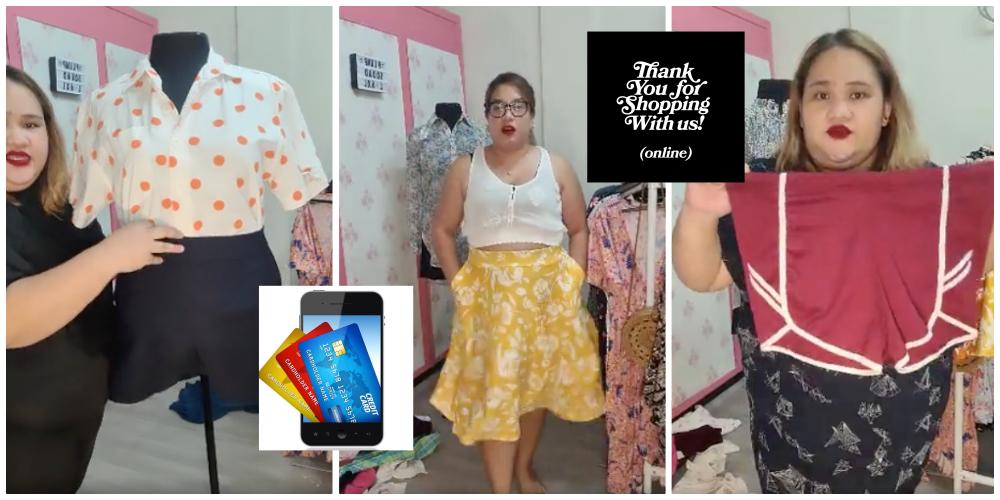
It's like those concert livestreams that have become super popular during quarantine expect this time, a tindera is front and center to literally showcase her product — what sizes, available, colors, the product's special features, etc — on livestream.
This way, potential buyers can learn more about the purchase and, at the same time, interact with the seller with whom you might be able to work something out.
For example, Plump Squad who specialize in plus size clothing, hold weekly livestream sessions on Facebook to showcase their new batch of products on hand.
Their livestreams reach the hundreds, so can you imagine facing all those people at a physical store, all of them asking about prices and availability?

But, being big girls themselves, store owners Rhian and Mariecris understand that some clients are more comfortable in purchasing a garment if they see it being modeled on the same body type.
Rhian, who has been doing this for a year, finds that regular customers who know what they want tend to communicate it very clearly, therefore helping the seller fulfill their wish lists.
A livestream can recreate that fast-paced environment you get in an actual store, only the bargaining happens through comments of private message. There's also no cash and receipts, only online payment and screenshots.
You might even get so in the moment that your heart flutters when the seller calls your name with an irrevocable "Sayo na!"
Live selling is slowly creeping up on popularity that there is a growing vocabulary that goes with it.
On top of the universal “HM” (How much), “mine” (meaning, you'll buy the item. The item is yours), "pa-mine" (Often uttered by the online seller, encouraging interested parties to buy and therefore own the product), and “SB” (Sure buy) have become universal, telling us how big online selling is getting.
There are also "MOD" (mode of payment), "LP" (last price), "SF" (shipping fee) which are often accompanied by the friendly "sis" (sister).
The 'new normal' holiday shopper
Get proof of payment, wait a couple of days, and you’ll have whatever it was you ordered minus the whole survival story of having to sit through traffic, wait for hours in line, and elbow through a sweaty crowd to make it out of the store.
Be honest: This is not how everyone pictured their annual Christmas shopping to go, but COVID-19 has made a massive impact on our finances and shopping habits.
According to a recent study shared by Facebook Philippines, a “COVID-led economic downturn” is expected to impact consumers’ purchasing habits with 99% of shoppers in the Philippines agreeing that the pandemic will have an impact on their personal/household finances.
The study also found that 8 out of 10 (82%) Gen X and "boomers" have spent more time on mobile during the pandemic — with almost as many (76%) also shopping online.
We've also seen many big brands step up their online game since the lockdown, but many small and first-time business owners have also dipped a toe in online selling as an alternative source of income.
Facebook said as many as 180 million businesses were using the social networking platform's tools as of August.
The platform also estimates that there will be 310 million digital consumers in Southeast Asia by 2025, suggesting that online spending will outpace the growth of digital consumers by a factor of three.
The Philippines, in particular, is expected to have the third largest population of digital consumers in Southeast Asia by 2025, so making that conscious and proactive shift to digital has been considered to be critical to further success in the future.
At this point, it's too soon to say if or when things go back to normal in Philippine retail. What we do know is there have been a lot of reasons for consumers to prefer online shopping even before COVID-19 happened.
Digital shopping platforms have allowed us to live in a world where you can get what you want by just sitting at home, browsing through your phone, and commenting code words like “mine” on a photo.
And now, online shopping is seen as a dominant trend in consumer behavior because of the safety and convenience it provides during a health crisis.
"The pandemic will likely boost e-commerce as more consumers stuck at home have turned to utilizing digital platforms," marketing communication expert Joseph Emil Santos from De La Salle University-Manila explains.
Online shoppers are advised to be very careful and vigilant this holiday season.
"Because of the recession, there will be devious people online who will take advantage of naive consumers. Monitor the prices being given online, don’t just accept the offering without properly researching other offerings. Appreciate the ratings and reviews of other consumers," Santos said.
It's also important to remember your wants vs. your needs given. — LA, GMA News

