

 GMA Brandtalk
 Tracking
 Archives

ADVERTISEMENT
Filtered By: Lifestyle
Lifestyle
Of ginkgo leaves and poets
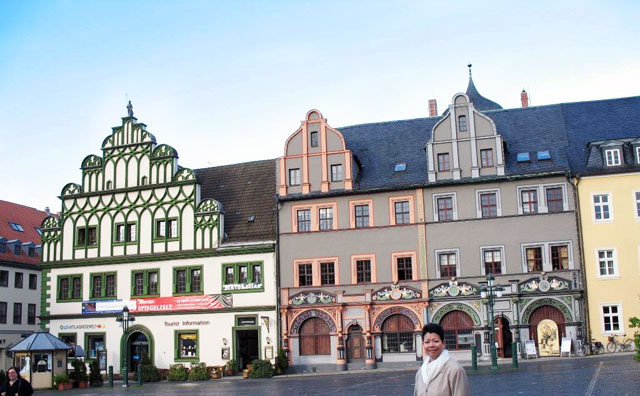
Weimar, Germany 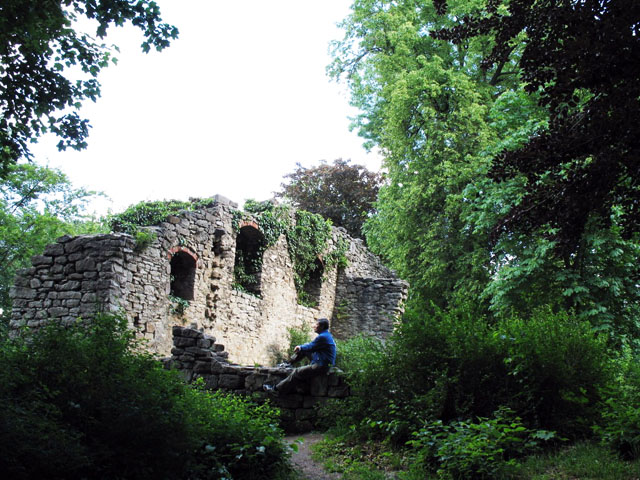 We found the Ginkgo Biloba poem on a large poster around the city center, where shops selling gold and silver-plated ginkgo leaves abound. Earrings, pendants, rings... the leaves were given prominence; in one shop there was even a replica of the poem written in Goethe’s hand with a photo of his lover, Marianne von Willemer, to whom he dedicated the poem in 1815. Below the handwritten poem were two carefully pressed ginkgo leaves, graphically showing the “one in double” image (one leaf but with two “petals”) that the poem described. Alex and I were immediately enchanted by the Marketplatz: the wide, cobble-stoned plaza, the neo-Gothic town hall (Rathaus) dominating the area with its imposing façade: arched, medieval windows, colorful large flags, a large gold clock at the center, and a turret to cap it all. Across it were the Tourist Information Bureau, which was kind enough to give us maps with walking routes around Weimar, and the Cranachhaus, an edifice where the renowned painters, father and son Cranach the Elder and the Younger, lived. Both half-timbered buildings were eye-catching: the Tourist Info was housed on the street level of a four-story white building with green trimmings, its façade looking like a fairy-tale castle. The Cranach house had four stories as well, with dormer rooms below the eaves. The elaborate decorations on the front walls showed mermen and mermaids, carved shells and flowers, with a curved, decorative lintel on all four doors. The sun was still high at 7:30 in the evening, and we had time to go around some more. A nearby park showed an interesting installation art: A reclining figure of a bearded giant in black marble, half-submerged in the sand. It was this whimsical take on life that we found captivating in Weimar, the energy of its youthful population that surprised us in what we otherwise thought would be a serious city full of Goethe’s and Schiller’s thoughts. Further on we encountered the most-photographed statues in Weimar, that of the two philosophers and poets, standing side by side. It was in front of the Deutsches Nationaltheater which housed the Staatskapelle Weimar (Weimar State Chamber Orchestra). Many operas and plays were staged here, including those written by Goethe and Schiller. The next morning we woke up early for the 8 AM First Friday Mass, an almost 30-year devotion to the Sacred Heart that saw us searching obsessively for Catholic Churches wherever we were in the world. We had made the rounds the day before and looked up the churches mentioned in our guide book, the Jakobkirsche (St. Jacob’s Church) and the Stadtkirsche St. Paul und Peter (Church of St. Paul and Peter), also called the Herderkirsche (Herder Church), but discovered they were not Roman Catholic.
  A kind gentleman at the reception of our hotel, the Kaiserin Augusta Hotel along Carl-August Allee, finally told us to check out Herz-Jesu Kirche (Heart of Jesus Church) about six blocks away. Indeed, at first glance, we knew this was the church: the architecture looked “right” and “reassuring:” it had a beautiful rose window, a familiar dome, a belfry with a big cross on it, and the shape of the building showed it had an apse and a nave within. We rejoiced upon reading the name closely, with the words “Catholic Church” below it. Thus we heard Mass with the locals that morning, even if there were only about 20 attendees. Before the Mass we noticed that the chalice was placed on a small table at the center of the aisle, so people could put in communion wafers into the chalice. Seated at the back pews, Alex and I looked at each other and he said yes, kindly put in a host for me as well. I got up and gently scooped out two hosts from the tray and put them reverently into the chalice. Later, to our chagrin, when other parishioners came in, we realized that there was a small silver tong covered by a starched linen handkerchief on the table, which the locals used to pick up the hosts to put them onto the cup. Alex and I couldn’t help but hide our faces in our hands and laugh quietly at our ignorance. Nobody though, complained about the two Asians unused to local ways! Feeling light and merry after Mass we went off to discover a “must-see” in Weimar: the Park der ander Ilm which Goethe himself landscaped and built in a sprawling area by the River Ilm. We approached the huge park through a romantic-looking stone bridge, with masses of small red and yellow flowers greeting us on all sides, the area covered with tall trees and fresh-smelling grass. A small tributary of the river flowed under this bridge, and the serene atmosphere, the soft breeze, and the delicate morning sun were enough to give us pause and listen to the silence. It slowed our hearts down, we who had been on our own in this trip through Germany, running hither and yon, wanting to discover the wonders of the new country. Standing on that bridge we felt that it was enough to just be there, and that there was no need to hurry.
 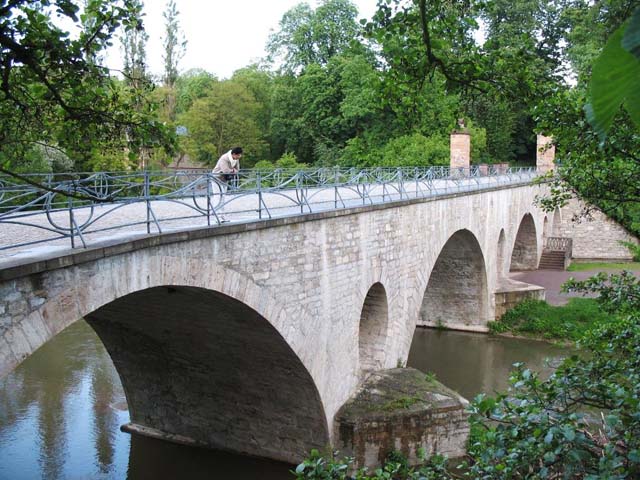 That somehow set the pace for the whole day, as we meandered slowly in the park, bending down to look closely at the flowers. We saw that there were remains of a crumbling wall in one nook, which our book said was part of a theatre prop. Lingering at the Soviet cemetery too, gave us time to think about the fallen Russian soldiers who defended Weimar against the forces of Hitler. The sun-dappled tombstones were mute testimonies of the ravages of war. Further on we encountered the Garden House that Goethe built, a wooden structure amidst the trees and flowers, and it was not difficult to imagine the poet and philosopher writing serenely under the warm Weimar skies. Just nearby was the Franz Liszt house, where the composer spent some years of his life. It must have been around 2 PM when we emerged from the park, spiritually refreshed but physically hungry. We sauntered over to the Marketplatz in search of food and found a weekend flower market instead, joining the locals in admiring the fresh petunias, gardenias, and roses for sale. We also saw the Hotel Elephant again, a historical place because Hitler used to give his speeches from its balcony. Further on we espied an itinerant Wurst seller and settled for a Bratwurst each. The sausage was wrapped in a soft brötchen (bread), the latter small and petite, as if it were there simply to hold the long, juicy sausage. We enjoyed this repast seated on the bench in a shady portion of the park, listening to soft birdsongs. Another walk around the city made us feel like locals, passing by buildings that had become so familiar to us, until we reached the University Library. Outside, a gigantic wooden chair was exhibited, and Alex certainly looked Lilliputian beside it. Somehow, without saying anything, our footsteps brought us back to the stone bridge where the River Ilm quietly flowed. We wanted this to be the image that Weimar evoked: the romantic arches that supported the bridge, the soft breeze cool against our cheeks, the serenity of it all. – YA, GMA News
Dieses Baums Blatt, der von Osten Meinem Garten anvertraut, Gibt geheimen Sinn zu kosten, Wie’s den Wissenden erbaut… -Ginkgo Biloba Johann Wolfgang von Geothe
“This tree, entrusted by the East,/ Unto my garden-ground, doth show/ A leaf whose hidden sense can feast/ their hearts who are skilled to know...” (A leaf from the ginkgo tree, A remembrance of Weimar. Edward Dowden, translator). Thus started the lyrical poem of philosopher, poet, botanist and scientist Goethe on the ginkgo, an oriental plant with yellow leaves in winter. My husband Alex and I were in Weimar, in the Thüringen area in Germany, the “green heart” of the country. Indeed, it was right smack at the center if you look at the map, and the countryside was lush and green. Goethe, Schiller, and Herder, well-known poets, philosophers, and playwrights were just some of the notables that lived here, and quiet Weimar was justifiably proud to remind us of this, again and again. Quiet reflections below the crumbling walls in the Park an der Ilm
The colorful Stadthaus on the left and Cranachhaus on the right
Contemplating the River Ilm on a lonely bridge

