

 GMA Brandtalk
 Tracking
 Archives

ADVERTISEMENT
Filtered By: Lifestyle
Lifestyle
The magic is real at Isabela's Bambanti Festival
It was one of the headiest experiences I ever had.
My harness was strapped to a zipline, on a hill in the Ilagan Sanctuary – a nature park in Isabela's capital town. The second I looked ahead, I saw the field below me, and the forest cover just ahead. The landing platform was about 270 feet away. I hesitated, then the operator gave me a push.
I closed my eyes as I slid down the line. A jolt from the speed brakes and it was all over.
Isabela is not known for adventure activities such as this. The province's corn fields makes it the national leader in corn production and a strong agrarian sector. But it also contains one of Asia's largest hydroelectric dams, the Magat Dam, and the only round belfry in the country, the St Matthias Church in the Cagayan border town of Tumauini.
The province's topography ranges from plains to mountains, and a Pacific coast with still-pristine beaches ready to welcome, among others, surfers to test the waves.
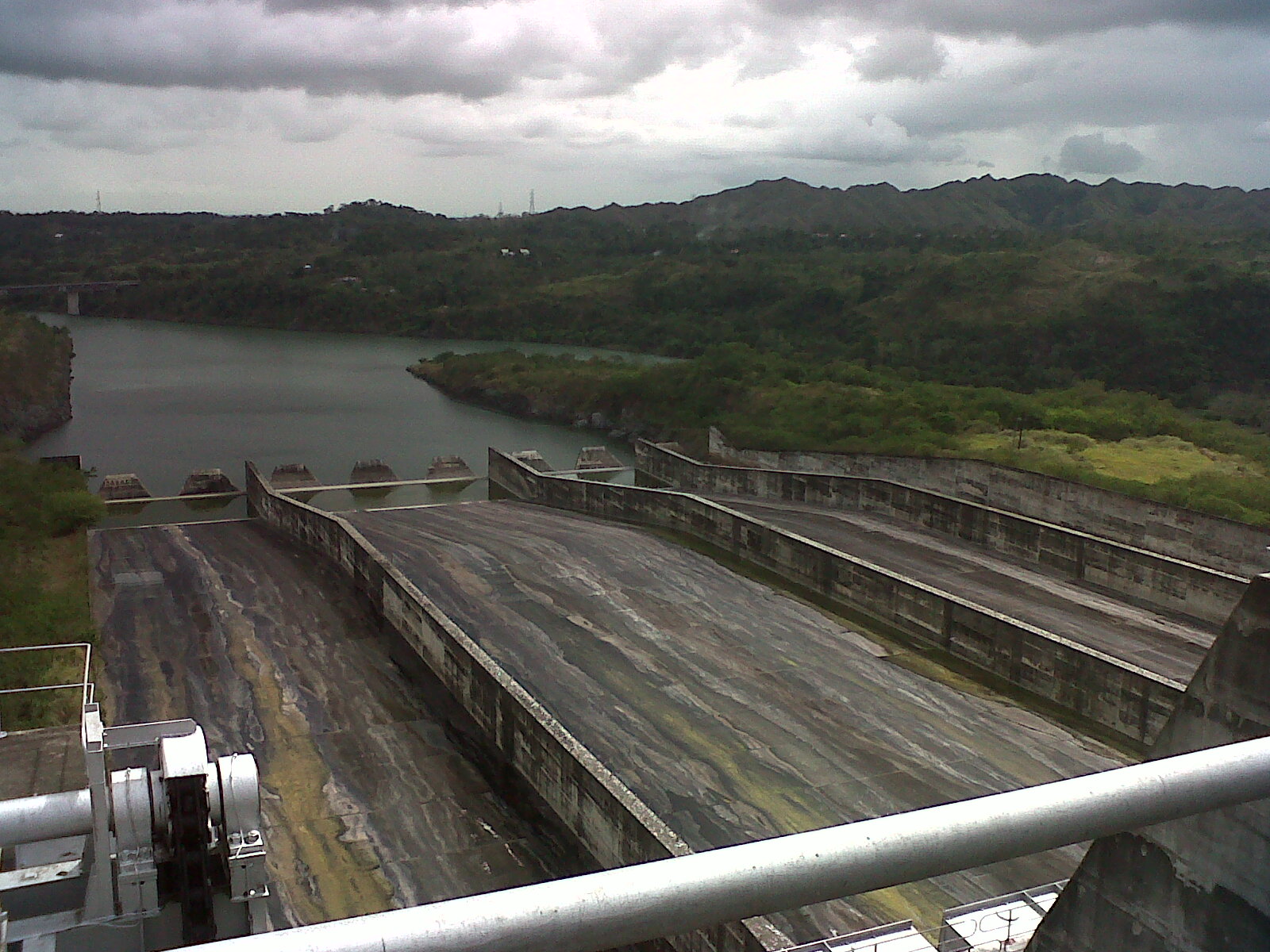
Isabela's mighty Magat Dam. (Photo: Ren V. Aguila)
People of note include the Vice President, as does COMELEC Commisioner and former governor Grace Padaca. A past winner of Asia's Top Model search hails from Ilagan who was, before becoming a model, working the fields like some of her kababayans.
I have seen drum and lyre bands here that can do samba beats (or variations thereof) with the same lively feeling as the likes of Manila's drum group Brigada. They were performing as part of a competition in the second Magical Bambanti Festival, staged in Ilagan last week.
The scarecrow as a symbol of peace
The bambanti, the Ilocano word for scarecrow, is a feature of the lowland plains in the province, meant to scare away birds that feed on the corn and rice crop. The scarecrow is a symbol of protection and peace, but the idea is to make it a symbol of welcome.
“We wanted to have a festival that was inclusive,” said Tonypet Albano, head of the Festival's organizing committee, “because most of the festivals here were about saints and our Muslim and [Protestant] brothers were excluded.”
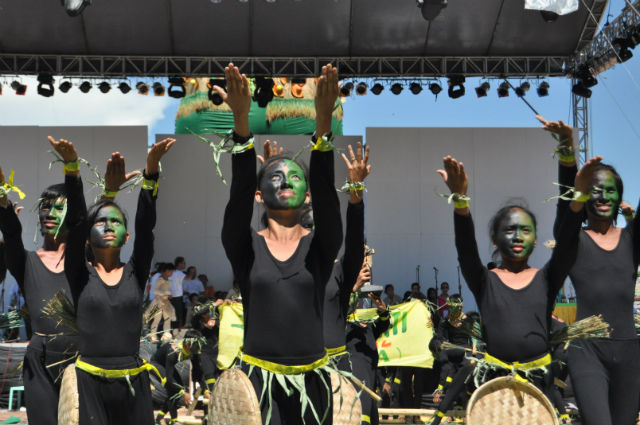
Corn and agriculture are recurring motifs in the celebration. (Courtesy of Isabela Govt.)
The original timing of the festival, which coincided with Isabela Day in May, was moved to January because of the coming election season, and will remain in January for the foreseeable future.
The festival's aim is to promote the province as both an area for potential business investment and tourism.
Every part of Isabela had a booth in an agri-business fair at the Provincial Capitol grounds in Ilagan, where products ranging from glutinous rice delicacies, to lemongrass soap, to pancit Cabagan noodles (more on that shortly), and even yoghurt were sold to eager customers from Isabela and points beyond.
Every part of Isabela had a booth in an agri-business fair at the Provincial Capitol grounds in Ilagan, where products ranging from glutinous rice delicacies, to lemongrass soap, to pancit Cabagan noodles (more on that shortly), and even yoghurt were sold to eager customers from Isabela and points beyond.
The small enterprises are part of an initiative to encourage an entrepreneurial spirit among locals to match potentially large external investments in the agricultural and tourism sectors. Among these was a substantial 10,000 hectare agricultural project to grow rice for South Korea, a point about which I was deeply concerned given the state of rice self-sufficiency in our country.
Smooth roads, great food
As part of efforts to promote tourism, we were taken to different parts of Isabela that could easily be reached on the province's smooth road network. We not only visited the Ilagan sanctuary, but also the town of Tumauini, with the belfry previously mentioned.
We also got to visit Magat Dam and a nearby nature park in the town of Ramon. The provincial government emphasized that local tourism officers were available to help out visitors; it also helps that the province's roads are quite smooth (There are indeed plans to build more hotel rooms to accommodate what they hope is a four-fold increase in visitors).
We also got to visit Magat Dam and a nearby nature park in the town of Ramon. The provincial government emphasized that local tourism officers were available to help out visitors; it also helps that the province's roads are quite smooth (There are indeed plans to build more hotel rooms to accommodate what they hope is a four-fold increase in visitors).

Tumauini's round belfry at St Matthias Church was built in 1707. (Photo: Ren V. Aguila)
The Festival itself featured several talent competitions, where groups from different towns and cities in the province showed off both their talent and what their towns contributed to the Isabela economy.
But what was most astonishing was the food. There were native sticky rice and cassava preparations that were sweet to the taste; there was grilled corn that, unlike some of the stuff available here in Manila, did not stick to the teeth.
There was the pancit Cabagan noodles. Albano was especially proud of this when he hosted a brief merienda for the media.
“My great-grandparents pioneered the recipe,” he said, noting that it was an adaptation of recipes they brought in from China. The dish was a big hit with us; we had two varieties, one with seafood and another with pork and chicken, to please most audiences.
At some point, I would love to come back here.
It would be nice, for example, to spend more time exploring the Cagayan border towns, especially San Pablo with its church ruin, or to visit the Pacific coast, something that the governor was very excited to tell us about, or to spend more time learning about the province.
For someone who has not been to the country's north-east, I had a lot of catching up to do. – KDM, GMA News

