

 GMA Brandtalk
 Tracking
 Archives

ADVERTISEMENT
Filtered By: Lifestyle
Lifestyle
The cliffside houses of Amalfi
Amalfi, Italy
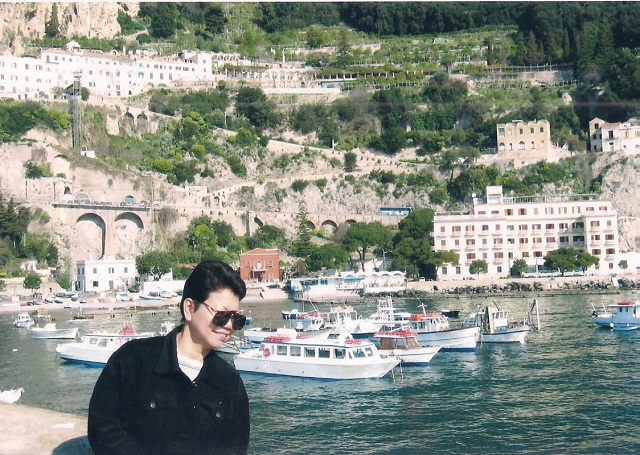
When my husband Alex and I took the blue SITA bus from Positano to Amalfi, we were quite intent in watching the changing moods of the Tyrrhenian Sea to our right. After about 45 minutes, we turned our heads to look at the other side, and we caught our breaths. Whitewashed stone houses, hundreds of them it seemed, looked defiant and clung precariously to the cliff sides of Monte Cerreto. We were in Amalfi!
Going down at the Piazza Flavio Gioia (the inventor of the mariner’s compass), we turned east and started walking towards Atrani, a town by the sea about one kilometer away. We were advised that accommodations were less expensive in Atrani, so Alex and I booked ourselves into a “hotel” called A’Scalinatella. It was a cool and breezy walk through a long pedestrian road with the sea to our right. We reached the town after 20 minutes, and found one of the owner brothers in his house, ready to hand us the keys.
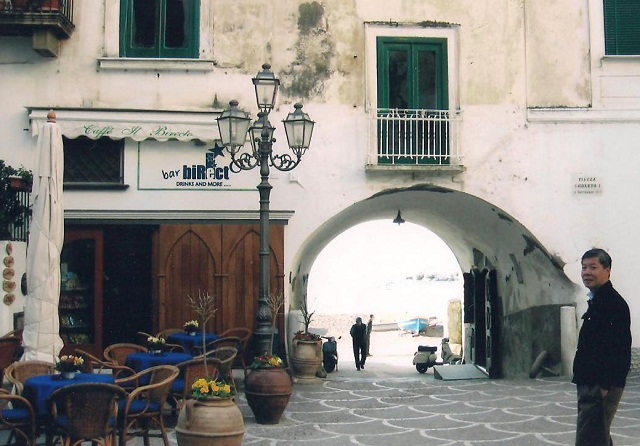
Were we surprised that they had prepared a big house for us! We had to climb about ten wide steps to reach the main door, in full view of everyone in Piazza Umberto. It was a fully-furnished, old stone house with four beds, a huge wooden table, two closets, with a refrigerator, an oven and gas range, and complete eating utensils. The bath was at the rear with the washing and drying machines. Looking out of the window that was accessible after climbing concrete stairs, we discovered that there was a small balcony with the piazza in full view, and a belfry just above us, the bells pealing every 15 minutes!
We went back to Amalfi on foot and midway found a beautiful lookout, where one could simply sit on the wooden benches, and watch the sea. To the left was Atrani, and to the right, Amalfi.
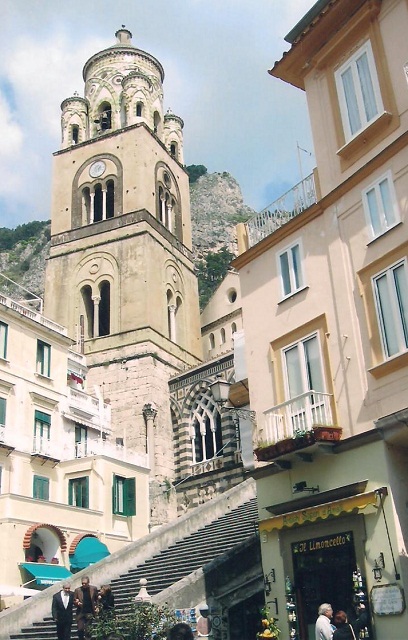 The center of town in Amalfi was the Piazza del Duomo, under the shadows of the graceful and ornate Duomo di Sant’Andrea (Cathedral of St. Andrew). There were colorful, geometric designs on the cathedral’s façade, and it was topped by a turret with four smaller ones that looked as if gold mosaic covered them. These details and the pointed archways made the Moorish influence unmistakable.
There was a wide staircase leading to the cathedral door made of bronze, said to be crafted in Constantinople in 1066. We went in for a short prayer, and beheld the breath-taking gold Byzantine-style icon of St. Andrew. There was an old cemetery nearby; the Chiostro del Paradiso (Cloister of Paradise), again with its pointed archways; a church museum with sculptures, and the church’s treasury. Underneath this museum was the crypt of St. Andrew the Apostle, to whom the church was consecrated.
At the piazza outside we joined the crowd of young people milling around the Fontana di Sant’Andrea, with an interesting 19th century marble sculpture of a nude female, water coming out of its nipples. Alex and I slowly wound our way around town, discovering winding paths in the commercial areas. We walked into the “Lo Scugnizzo” Snack Bar where we had cups of strong coffee and chocolate cornettos—buttered puff pastries shaped like cones. In front of this was a fish shop with an interesting mural outside: a painting of fishermen casting their nets to the sea, with different kinds of fish jumping and swimming in the foreground.
We tried to look for the Museo della Carta (Paper Museum) and found it housed in a 13th century paper mill, which had interesting exhibits on how paper was made complete with water-powered machines. The museum shop sold journals made of hand-made local paper, which was thick and elegant.
At the esplanade, we joined the locals who were watching the waves from the shore. From the sea we could see the beautiful houses perched on the mountain side, many of them quite elegant: a hotel looked as if the Parthenon was transplanted here, what with its long, tall columns! Spring also meant sprucing up: we saw locals painting and cleaning their boats, getting them ready for summer. Even with the cold temperature (around 120C) we found many bathers on the beach, stretching themselves on the light-colored sand and enjoying the gentle sun.
We walked until the end where many benches were ready for our tired feet. Panoramic views of the sea and sand could be enjoyed from this side, and calling my mother from a nearby phone booth was a delight. We regaled her with the view, and she laughingly joined us even if only in her mind. We got some salty pancetta from a deli shop, and found very sweet mandarinetti (Mandarin oranges) at a roadside stall. We had them with soft, fragrant pan de molino full of watermelon and sunflower seeds smelling of olive oil, and they made for a filling dinner, indeed!
The next morning saw us rising early for Sunday Mass. We were asked to go to one of the coffee shops a few steps from the house, and found breakfast ready: freshly-baked croissants with jam and honey, sliced oranges and cantaloupes, and all the fragrant, strong coffee that we wanted. The ten o’clock Mass with a children’s choir was well-attended, and many well-dressed locals were there.
In the Marina Grande later we saw elderly gentlemen sitting on benches, with their berets and canes, looking elegant, conversing with each other. The days passed quietly, with Alex and I enjoying a lot of tranquil walks along the shores of Amalfi. One time, one of the brothers came in and warmly greeted us, as if we were simply family that came to visit.
Atrani must indeed be a small place: when we were ready to leave a few days later, brother Filippo told us to simply leave the keys on the keyhole, he would come back for them later! – YA, GMA News
When my husband Alex and I took the blue SITA bus from Positano to Amalfi, we were quite intent in watching the changing moods of the Tyrrhenian Sea to our right. After about 45 minutes, we turned our heads to look at the other side, and we caught our breaths. Whitewashed stone houses, hundreds of them it seemed, looked defiant and clung precariously to the cliff sides of Monte Cerreto. We were in Amalfi!
Going down at the Piazza Flavio Gioia (the inventor of the mariner’s compass), we turned east and started walking towards Atrani, a town by the sea about one kilometer away. We were advised that accommodations were less expensive in Atrani, so Alex and I booked ourselves into a “hotel” called A’Scalinatella. It was a cool and breezy walk through a long pedestrian road with the sea to our right. We reached the town after 20 minutes, and found one of the owner brothers in his house, ready to hand us the keys.
Were we surprised that they had prepared a big house for us! We had to climb about ten wide steps to reach the main door, in full view of everyone in Piazza Umberto. It was a fully-furnished, old stone house with four beds, a huge wooden table, two closets, with a refrigerator, an oven and gas range, and complete eating utensils. The bath was at the rear with the washing and drying machines. Looking out of the window that was accessible after climbing concrete stairs, we discovered that there was a small balcony with the piazza in full view, and a belfry just above us, the bells pealing every 15 minutes!
We went back to Amalfi on foot and midway found a beautiful lookout, where one could simply sit on the wooden benches, and watch the sea. To the left was Atrani, and to the right, Amalfi.
The center of town in Amalfi was the Piazza del Duomo, under the shadows of the graceful and ornate Duomo di Sant’Andrea (Cathedral of St. Andrew). There were colorful, geometric designs on the cathedral’s façade, and it was topped by a turret with four smaller ones that looked as if gold mosaic covered them. These details and the pointed archways made the Moorish influence unmistakable.There was a wide staircase leading to the cathedral door made of bronze, said to be crafted in Constantinople in 1066. We went in for a short prayer, and beheld the breath-taking gold Byzantine-style icon of St. Andrew. There was an old cemetery nearby; the Chiostro del Paradiso (Cloister of Paradise), again with its pointed archways; a church museum with sculptures, and the church’s treasury. Underneath this museum was the crypt of St. Andrew the Apostle, to whom the church was consecrated.
At the piazza outside we joined the crowd of young people milling around the Fontana di Sant’Andrea, with an interesting 19th century marble sculpture of a nude female, water coming out of its nipples. Alex and I slowly wound our way around town, discovering winding paths in the commercial areas. We walked into the “Lo Scugnizzo” Snack Bar where we had cups of strong coffee and chocolate cornettos—buttered puff pastries shaped like cones. In front of this was a fish shop with an interesting mural outside: a painting of fishermen casting their nets to the sea, with different kinds of fish jumping and swimming in the foreground.
We tried to look for the Museo della Carta (Paper Museum) and found it housed in a 13th century paper mill, which had interesting exhibits on how paper was made complete with water-powered machines. The museum shop sold journals made of hand-made local paper, which was thick and elegant.
At the esplanade, we joined the locals who were watching the waves from the shore. From the sea we could see the beautiful houses perched on the mountain side, many of them quite elegant: a hotel looked as if the Parthenon was transplanted here, what with its long, tall columns! Spring also meant sprucing up: we saw locals painting and cleaning their boats, getting them ready for summer. Even with the cold temperature (around 120C) we found many bathers on the beach, stretching themselves on the light-colored sand and enjoying the gentle sun.
We walked until the end where many benches were ready for our tired feet. Panoramic views of the sea and sand could be enjoyed from this side, and calling my mother from a nearby phone booth was a delight. We regaled her with the view, and she laughingly joined us even if only in her mind. We got some salty pancetta from a deli shop, and found very sweet mandarinetti (Mandarin oranges) at a roadside stall. We had them with soft, fragrant pan de molino full of watermelon and sunflower seeds smelling of olive oil, and they made for a filling dinner, indeed!
The next morning saw us rising early for Sunday Mass. We were asked to go to one of the coffee shops a few steps from the house, and found breakfast ready: freshly-baked croissants with jam and honey, sliced oranges and cantaloupes, and all the fragrant, strong coffee that we wanted. The ten o’clock Mass with a children’s choir was well-attended, and many well-dressed locals were there.
In the Marina Grande later we saw elderly gentlemen sitting on benches, with their berets and canes, looking elegant, conversing with each other. The days passed quietly, with Alex and I enjoying a lot of tranquil walks along the shores of Amalfi. One time, one of the brothers came in and warmly greeted us, as if we were simply family that came to visit.
Atrani must indeed be a small place: when we were ready to leave a few days later, brother Filippo told us to simply leave the keys on the keyhole, he would come back for them later! – YA, GMA News

