

 GMA Brandtalk
 Tracking
 Archives

ADVERTISEMENT
Filtered By: Lifestyle
Lifestyle
Barcelona in wintertime, like a jewel in the sun
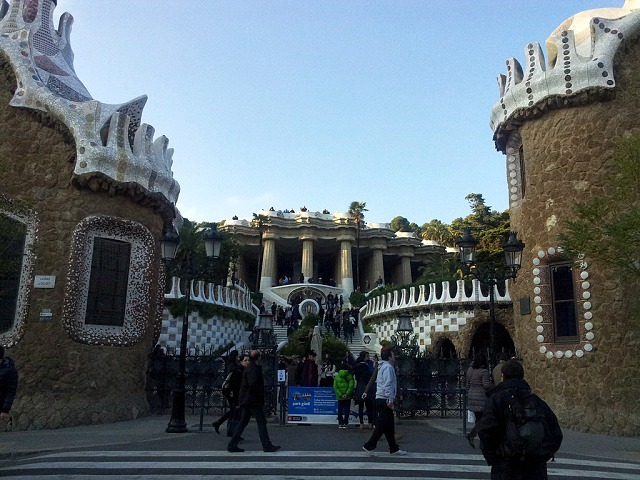
Barcelona has a very distinctive look, thanks in large part to the work of architect Antoni Gaudi. Above, one of Gaudi's projects, Parc Guell.
Barcelona, the capital of the autonomous community of Catalonia in northeast Spain, is a popular destination during the summer. Between May to October, when the sun shines bright, it has perfect beach and sightseeing weather. But what people are starting to realize is that Barcelona in the winter is beautiful too, and offers a different experience from the more popular warmer months.
For one thing, there are fewer tourists. The city is still alive and packed with people, with stores open until late and restaurants serving diners in the wee hours of the morning. Winter in Barcelona means temperatures that range from 14° to 5° C, shifting from mildly chilly to quite cold as the day wears on—an excuse to bust out your winter gear.
The city is an art and architecture lover’s dream. While architect Antoni Gaudi and artist Joan Miro are the two that first come to mind when you mention Barcelona, the city is also home to sculptures by Frank Gehry and Roy Lichtenstein, as well as lots of interesting street art. It is also full of galleries and boutiques, as well as access to both beach and mountains. No matter what time of the year you find yourself in Barcelona, there are some places that are worth visiting.
La Rambla. Stretching 1.2 kilometers, La Rambla is a pedestrian mall and one of Barcelona’s hotspots for both tourists and locals. It’s always crowded, and visitors have been warned to be wary of pickpockets, but it’s still a good place to shop and people-watch. There’s a Miro mosaic in the road, so it would be good to look down once in a while just to make sure you haven’t just walked on it and missed it.
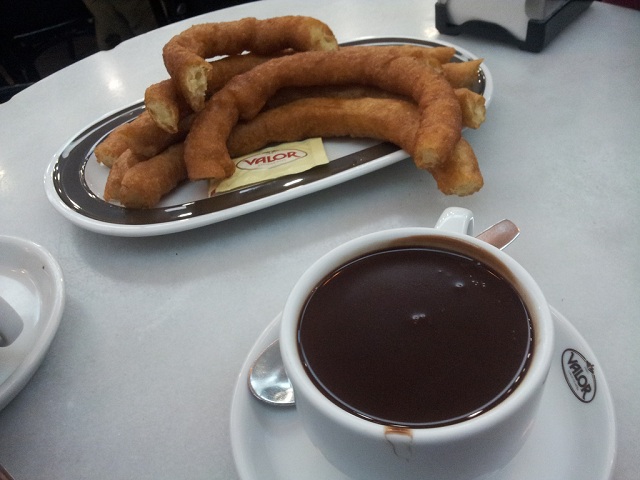
Barri Gotic. Off to one side of La Rambla is Barri Gotic, or the Gothic Quarter. The center of old Barcelona is filled with small, winding streets that are begging to be lost in. Wander into shops, find nourishment in a nearby cafe (there’s a Valor Cafe somewhere that serves the most sublime churros con chocolate) or restaurant or bar, or admire the buildings, some of which date back to medieval times.
 Barcelona Cathedral. While in Barri Gotic, stop by the Barcelona Cathedral. The Gothic cathedral is the seat of the Archbishop of Barcelona. Constructed from the 13th to 15th centuries, the cathedral is dedicated to St. Eulalia, the city’s patron saint, whose body is entombed in the cathedral’s crypt. Entrance is free, but certain areas are restricted out of respect to worshippers.
Gracia. Residents will tell you that Gracia is the coolest district in Barcelona. There is truth to this. The area attracts a bohemian crowd, and is filled with restaurants, cafes, and bars that offer terrace dining in the district’s many plazas at night. When I asked my friend, who lives in the area, for restaurant recommendations, he said, “Walk into any restaurant. It’s bound to be good.” And he was right. Not only do the restaurants here serve good food, they’re reasonably priced as well, and are more frequented by locals than tourists. Dining al fresco costs more than dining inside a restaurant, something to bear in mind if you’re on a tight budget. Walk onto Gran de Gracia, the main road outside Gracia, and you are immediately in a shopping area where you can find three Gaudi buildings along the way.
Parc Guell. Perched on top of El Carmel hill in the Garcia district is Parc Guell, a Gaudi-designed urban confectionery that stretches over 17.18 hectares of rolling landscape. The front gates, often described as gingerbread houses, are a sight to behold. It is also here that you can find Gaudi’s famous salamanders, as well as Gaudi’s old house, now a museum. There’s an entrance fee to get into the park’s main area, but parts of Parc Guell are still free, including access to the stone cross at the park’s highest point, which offers a majestic view of Barcelona. Prepare to do a lot of walking, and walking uphill at that, but the view—not to mention the sense of accomplishment—is worth it.
Castell de Montjuic. Montjuic, which means “Jewish Mountain,” is a flat-topped hill that overlooks the city’s southwest side and harbor. You can get to the mountain by bus, metro, or on foot, but a more fun way is to take the metro to the Paral-el Station and hop on the funicular that will take you to one of two cable car stations (about €7 one way and €10 back and forth) that move up and down the mountain. The castle is actually a fort that at one point served as a prison, Jose Rizal being one of its inmates. There’s also a cafe and souvenir shop, just in case you get peckish while you’re up there.
Barcelona beaches. If you like walking, Barcelona’s beaches are worth visiting, even in winter. Sure, there are no sunbathers or swimmers, and only a few of the beachside cafes are open, but you get less of a crowd, a spectacular view of the ocean, and lots of exercise. Take a breather in a nearby restaurant (check out the menu first, as some of them can be horribly overpriced) and order a Clara, a local shandy that’s part beer, part lemon soda and watch the day go by. There are few things in life as simple and as satisfying.
For one thing, there are fewer tourists. The city is still alive and packed with people, with stores open until late and restaurants serving diners in the wee hours of the morning. Winter in Barcelona means temperatures that range from 14° to 5° C, shifting from mildly chilly to quite cold as the day wears on—an excuse to bust out your winter gear.
The city is an art and architecture lover’s dream. While architect Antoni Gaudi and artist Joan Miro are the two that first come to mind when you mention Barcelona, the city is also home to sculptures by Frank Gehry and Roy Lichtenstein, as well as lots of interesting street art. It is also full of galleries and boutiques, as well as access to both beach and mountains. No matter what time of the year you find yourself in Barcelona, there are some places that are worth visiting.
La Rambla. Stretching 1.2 kilometers, La Rambla is a pedestrian mall and one of Barcelona’s hotspots for both tourists and locals. It’s always crowded, and visitors have been warned to be wary of pickpockets, but it’s still a good place to shop and people-watch. There’s a Miro mosaic in the road, so it would be good to look down once in a while just to make sure you haven’t just walked on it and missed it.
Barri Gotic. Off to one side of La Rambla is Barri Gotic, or the Gothic Quarter. The center of old Barcelona is filled with small, winding streets that are begging to be lost in. Wander into shops, find nourishment in a nearby cafe (there’s a Valor Cafe somewhere that serves the most sublime churros con chocolate) or restaurant or bar, or admire the buildings, some of which date back to medieval times.
A rib vault ceiling looms above worshipers in Barcelona's 13th century Gothic cathedral.
Gracia. Residents will tell you that Gracia is the coolest district in Barcelona. There is truth to this. The area attracts a bohemian crowd, and is filled with restaurants, cafes, and bars that offer terrace dining in the district’s many plazas at night. When I asked my friend, who lives in the area, for restaurant recommendations, he said, “Walk into any restaurant. It’s bound to be good.” And he was right. Not only do the restaurants here serve good food, they’re reasonably priced as well, and are more frequented by locals than tourists. Dining al fresco costs more than dining inside a restaurant, something to bear in mind if you’re on a tight budget. Walk onto Gran de Gracia, the main road outside Gracia, and you are immediately in a shopping area where you can find three Gaudi buildings along the way.
Parc Guell. Perched on top of El Carmel hill in the Garcia district is Parc Guell, a Gaudi-designed urban confectionery that stretches over 17.18 hectares of rolling landscape. The front gates, often described as gingerbread houses, are a sight to behold. It is also here that you can find Gaudi’s famous salamanders, as well as Gaudi’s old house, now a museum. There’s an entrance fee to get into the park’s main area, but parts of Parc Guell are still free, including access to the stone cross at the park’s highest point, which offers a majestic view of Barcelona. Prepare to do a lot of walking, and walking uphill at that, but the view—not to mention the sense of accomplishment—is worth it.
Castell de Montjuic. Montjuic, which means “Jewish Mountain,” is a flat-topped hill that overlooks the city’s southwest side and harbor. You can get to the mountain by bus, metro, or on foot, but a more fun way is to take the metro to the Paral-el Station and hop on the funicular that will take you to one of two cable car stations (about €7 one way and €10 back and forth) that move up and down the mountain. The castle is actually a fort that at one point served as a prison, Jose Rizal being one of its inmates. There’s also a cafe and souvenir shop, just in case you get peckish while you’re up there.
Barcelona beaches. If you like walking, Barcelona’s beaches are worth visiting, even in winter. Sure, there are no sunbathers or swimmers, and only a few of the beachside cafes are open, but you get less of a crowd, a spectacular view of the ocean, and lots of exercise. Take a breather in a nearby restaurant (check out the menu first, as some of them can be horribly overpriced) and order a Clara, a local shandy that’s part beer, part lemon soda and watch the day go by. There are few things in life as simple and as satisfying.
Churros con chocolate at Valor Cafe to combat the nip in Catalonia's winter weather.
La Sagrada Familia. Mention Barcelona and the first thing that will come to mind is La Sagrada Famila, Gaudi’s yet unfinished masterpiece. Construction began in 1882, and is predicted to be completed somewhere between 2026 to 2028. There’s a €13 fee to enter, but just viewing it from the outside is enough to give you a sense of its grand majesty. Getting there is easy via Metro, as there’s a same-named stop dedicated to just that. This was the only thing on my Barcelona must-see list, and remains so. I didn’t have to enter the basilica to know that if this was the only thing I saw in Barcelona, no matter what time of the year it may be, it would make me very happy. — BM, GMA News

