

 GMA Brandtalk
 Tracking
 Archives

ADVERTISEMENT
Filtered By: Lifestyle
Lifestyle
Morning walk among the flowers of Adelaide in South Australia
It was spring time and cool (190C). We were in South Australia, my husband Alex and I, enjoying the beautiful climate in Adelaide, its capital city. It was our first time to visit, and we were eager to explore this sunny, vibrant city with so many flower gardens abloom in each street corner.
We were staying at the South Terraces, and just across was the Kurrangga Park, a huge green expanse with large gnarled trees. Many students from schools around us, notably the Pulteney Grammar School which was the nearest, played football and squash, and we could hear their excited shouts and laughter. In one corner of this park was an enclosed area with swings, slides, and monkey bars for the little ones, who were there in the mornings with their teachers.
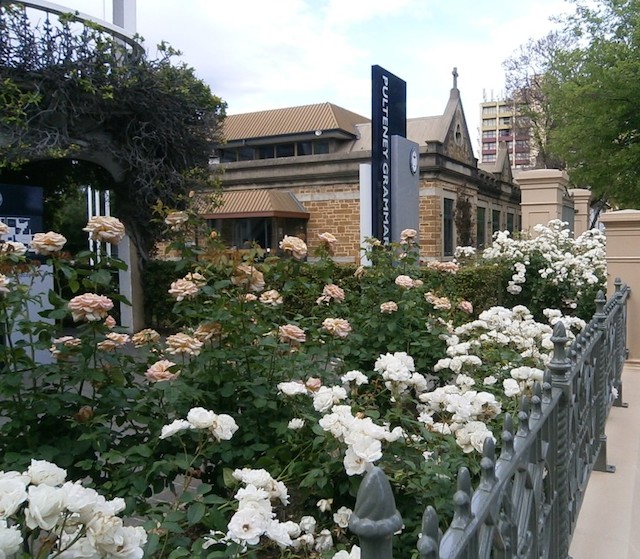 A block away was the wide avenue called the King William Street, and it seemed to straddle the city, all the way to the North. Why don’t we simply follow this and see what we shall encounter, we asked ourselves, feeling adventurous. And so we did. We passed by several brick houses, and in one a profusion of white, red and pink roses bloomed. We had to stop, look, and smell the flowers.
 Adelaide was named in honor of the queen consort Adelaide, wife of King William IV. It was founded in 1836 for free settlers, and its first surveyor-general, Col. William Light, planned it as a grid with a central commercial center. Around this was parkland, and even inside the grid were large pockets of grass and trees. Indeed, an early “green” engineer-planner! The center thus had become an orderly, planned urban settlement, although the sprawl in recent years had of course gone beyond this original plan.
Adelaide was also founded with a strong vision for religious tolerance, so people of different religious persuasions had come and set up their churches in Adelaide. Our guide book told us that as of last count, there were at least 23 active churches, and this included Anglicans, Catholics, Pentecostals, Baptists, Greek Orthodox, Lutheran, Presbyterian, Quakers, Uniting Churches, Seventh Day Adventist, and even a church for The Salvation Army. No wonder Adelaide is also called The City of Churches!
We reached the 19th century sandstone building that was the Supreme Court, and took time to inspect its façade, including that of the Magistrates Court beside it. Walking further, a large sign at the intersection said “Central Market” and “Chinatown.” We followed the direction, and after a while found ourselves in front of a red, three-pagoda entrance with the Chinese characters for “Chung Hua Men,” literally, Chinese Door, but to paraphrase, “Welcome to Chinatown!” White stone lions sat on both sides to ensure luck and fortune.
Needing no further invitation, we walked around the area and found many Chinese restaurants that lured patrons with their displays of roast ducks hanging behind glass windows, and huge signs in Chinese tempting passersby with their lip-smacking offerings. A smiling young Asian lady invited us in Mandarin into her shop, and soon we were surrounded by wallet-friendly give-away gifts for friends back home: metallic key chains with Australian aboriginal motifs, fridge magnet boomerangs, shirts and mugs.
After walking some more we hit the Central Market, with stores just opening. We were literally plunged into a sea of fresh produce and food! Such an endless variety of fruits and vegetables, like a wholesaler’s paradise, but I noted a young man who simply bought one apple and walked away, munching the red fruit. One whole shop was dedicated to selling only cheese, another to lettuce, tomatoes, and cabbages, and still another, honey.
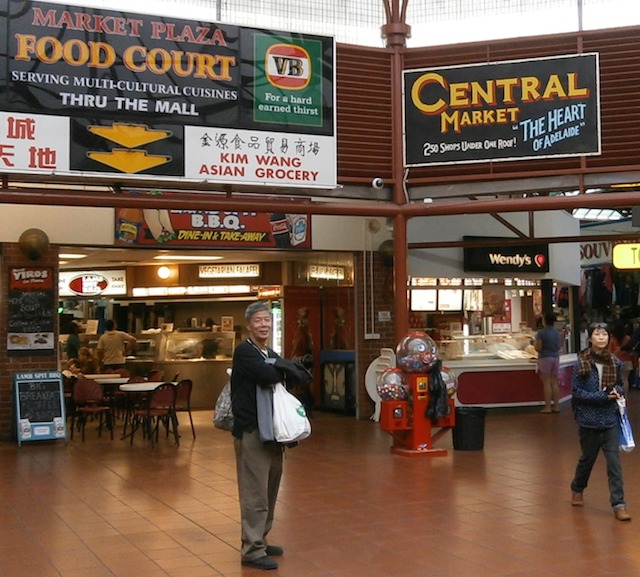
We were overwhelmed, and just walked around slowly, a bit dazed. A sign in one corner boasted, “Come Inside! We have 650 shops!” To one side were clothes and gift shops, batik, shoes, jewelry, in all their resplendent colors and variety.
To catch our breath we sat down for cappuccinos in one of the coffee shops called Perfect Cup, and enjoyed the chocolate sprinkles on top of the foam. This was the Australian cappuccino we knew, large and satisfying.
After resting awhile, we resumed our exploration and reached Victoria Square, a large expanse of green park done in 1837, named after then-Princess Victoria; a month after the square’s unveiling, she suddenly found herself ascending the British throne when her uncle died.
The statue of Victoria was in the middle of the square, but from afar (as there were repair works and we couldn’t really get a closer look), the center of attention was the beautiful fountain and its sculptures. The flowing water represented the three rivers that nourished Adelaide, and the designs were very interesting. The Aboriginal Man and Ibis represented the River Murray; the Woman and Black Swan, the River Torrens; and the Woman and Heron, the River Onkaparinga. This fountain commemorated the visit of Queen Elizabeth II in 1963.
When we raised our eyes towards Wakefield Street, we saw the Gothic spires of a cathedral standing majestically against the cerulean sky. We went over and discovered that this was the Cathedral Church of St. Francis Xavier, with its beautiful rose window, tall spires and unique stone patterns. It was dedicated to the Jesuit saint and patron of missionary countries and the first bishop of Adelaide, Francis Murphy. Because of its immensity, the cathedral took some time to build. But today we could only gasp with awe at its soaring height and pointed arches, and the interplay of colors that came in through the stained glass windows.
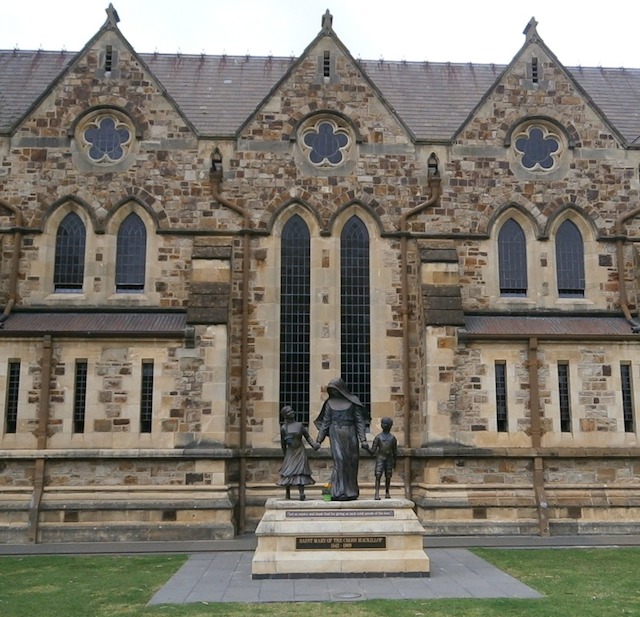
Outside, we saw the beautifully-rendered statue of St. Mary McKillop, Australia’s first saint, as she smilingly held hands with two children.
Without our realizing it, it was lunch time, and like homing pigeons, we went back to Chinatown for some huge platters of char-siu (asado pork) rice with omelette and some roast duck. After such a strenuous morning, we certainly felt we deserved this delicious and humongous lunch. —YA, GMA News
Without our realizing it, it was lunch time, and like homing pigeons, we went back to Chinatown for some huge platters of char-siu (asado pork) rice with omelette and some roast duck. After such a strenuous morning, we certainly felt we deserved this delicious and humongous lunch. —YA, GMA News

