

 GMA Brandtalk
 Tracking
 Archives

ADVERTISEMENT
Filtered By: Lifestyle
Lifestyle
Chengdu’s lazy, clever pandas fake pregnancy for more food, less exercise time
CHENGDU CITY, China - Giant pandas are said to be lazy—it is even believed these adorable creatures turned into bamboo-eating vegetarians because they were too lazy to hunt.
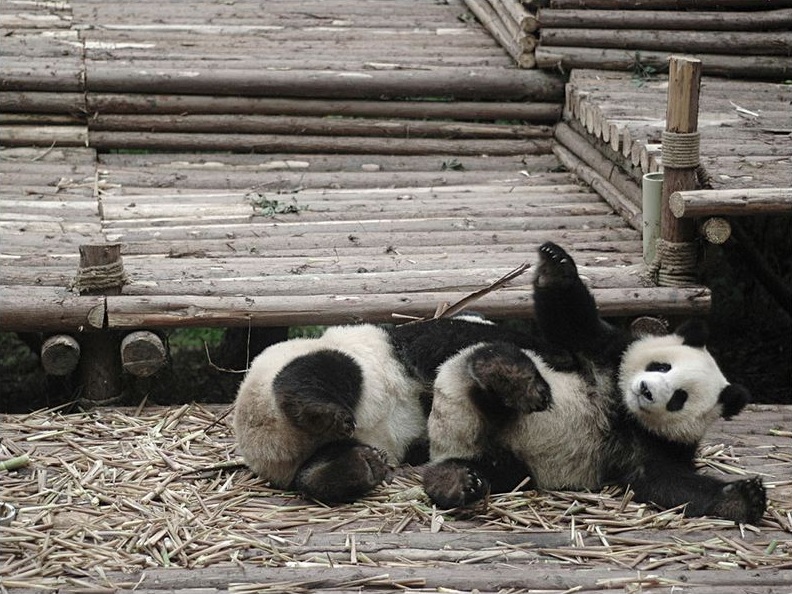
Chengdu's cutest and most famous inhabitants have a habit of faking pregnancy to get more food.
Female pandas at the Chengdu Research Base of Giant Panda Breeding in Sichuan province have apparently been pretending they are pregnant in order to receive more food and get out of having to do more exercise.
According to a caretaker, pregnant pandas in the breeding center are pampered and treated like queens, with their own air-conditioned suite and a bigger supply of bamboo, fruit, and buns.
With these conditions, you couldn't blame the pandas for carrying on with the charade.
"Most of them act like that because they know if they act pregnant, they get more food, no exercise—they just lay there, sitting there, and sleeping. And keepers treat them like a queen," said the caretaker.
She explained that if pandas show the initial signs of pregnancy, they are immediately transferred to their own suite and given nicer things.
The bears may have noticed the nicer set-up that comes with being pregnant, so they mimic the traits shown by pregnant pandas.
However, despite the ongoing trend, caretakers continue to be fooled—as they would only know if the pandas are really pregnant, well, during the actual birthing.
"In spring, we let them mate naturally or sometimes we use artificial insemination," said the caretaker. "After a few weeks, some are like walking like they are pregnant to fool us, but some are truly pregnant so we have to wait. We can't tell right away, we have to wait until July or August to see if they are truly pregnant."
The caretaker explained that panda pregnancies are three months long, with the bears giving birth to one or two babies every time.
"In another place, they got three babies, but they are already very lucky," she said, noting that the breeding center currently has 70 giant pandas—more than any other center in the world.
With pandas being an endangered species, the caretakers take every possible pregnancy "very seriously," even if it means getting fooled by the fakers.
At the center, the panda survival rate is 90 percent, higher than in the wild (50 percent), said the caretaker.
"In the wild, it is difficult for them to survive. Mother pandas can only take care of one baby. Even in this park, mothers can only take care of one baby; she chooses the bigger one and we take care the other, smaller one, and put in an incubator to stay warm," she said.
Tourist hotspot
As they are China's national treasure, pandas are fortunate enough to benefit from government-supported preservation efforts.
The investment has paid off, with the center welcoming at least one million tourists per year, the caretaker said.
The breeding center is open daily from 7:30 a.m. to 6 p.m., and the entrance fee is RMB58.00 (about P424.00) per person.
Aside from giant pandas, the center also houses red pandas (which actually belong to the raccoon family), swans and peacocks, with the site being a former peacock habitat. — BM, GMA News

