

 GMA Brandtalk
 Tracking
 Archives

ADVERTISEMENT
Filtered By: Lifestyle
Lifestyle
Sailing on the River Torrens in Adelaide
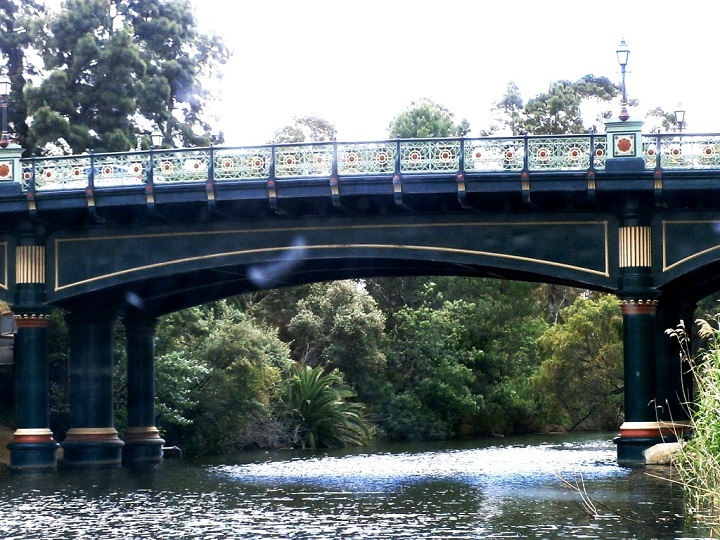
The old green bridge on the River Torrens
We were in Adelaide, South Australia, my husband Alex and I, enjoying the balmy late spring weather. Fortified by a delicious lunch of pork asado omelet and roast duck in a Chinatown restaurant, we sallied forth into the early afternoon, eager to continue tracing the wide avenue called King William Street which we had abandoned temporarily when we turned towards the enticing signs of the Chinese food shops near the Central Market.
Adelaide is a walker’s paradise, as Alex and I slowly discovered. We saw the 19th century sandstone buildings of the Town Hall, and the General Post Office. Further on was a huge, three-storey castle-like edifice at the corner of Beehive Corner, and on top was the sign, “Haigh’s Chocolate.” Indeed, the chocolate factory had been around since 1915; and for chocolate lovers like us, this was indeed paradise! Their bestsellers were chocolate truffles, and it was difficult not to buy a little more of the mouthwatering confections.
We passed by the city’s big commercial center called the Rundle Mall, where we discovered the Adelaide Arcade. In it were one-of-a-kind gift shops selling arts and crafts, and some high-end clothing stores. The old-world charm of its architecture somehow evoked a time when shopping was a leisurely activity, and where people had all the time to slowly browse through the colorful merchandise.
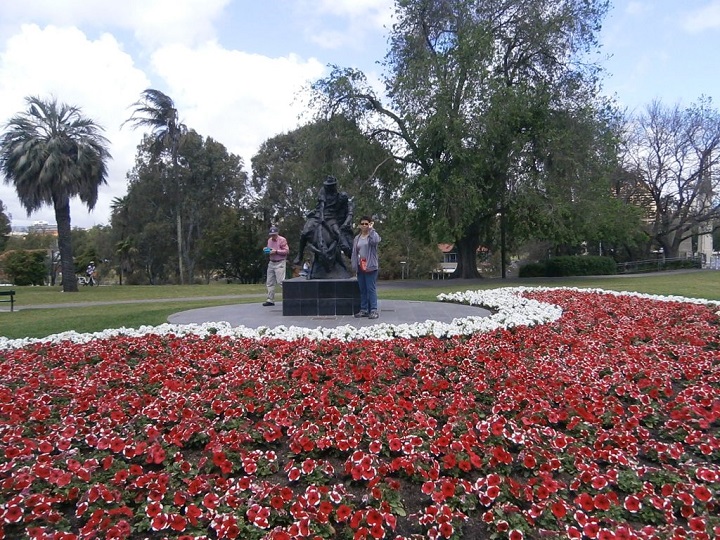
A carpet of red and white flowers around the Australian Defense Force Health Service Memorial
We finally reached a bridge and realized we were at the banks of the River Torrens, the main water source of the city. Boat rides were offered, and the one that caught our interest was the Popeye boat ride, which promised a 40-minute cruise to and from Elder Park. This park was a huge grassy knoll just off the Adelaide Oval Stadium, where one could simply loll on the grass; or sit on a bench and look at the tree-lined river bank. An antique-looking gazebo offered a respite from the sun, and from there one could see young children feeding a group of black swans and white terns by the water’s edge.
Alex and I lost no time in scrambling up the Popeye, where the kind captain smilingly led us down towards our seats. There were only six of us, so we almost had the boat to ourselves. As the boat slowly sailed on, a public address system pointed out places of interest. We passed by Federation-type houses, with their lacy wrought-iron porches and decorative eaves. Across the river, university students pedaled from the school grounds, and many young people were sprawled on the grass, reading and talking with friends; some, with headphones, were on their backs smiling into space. Others had hampers of food and drink, eating and laughing, enjoying this cool, sunny day with good friends.
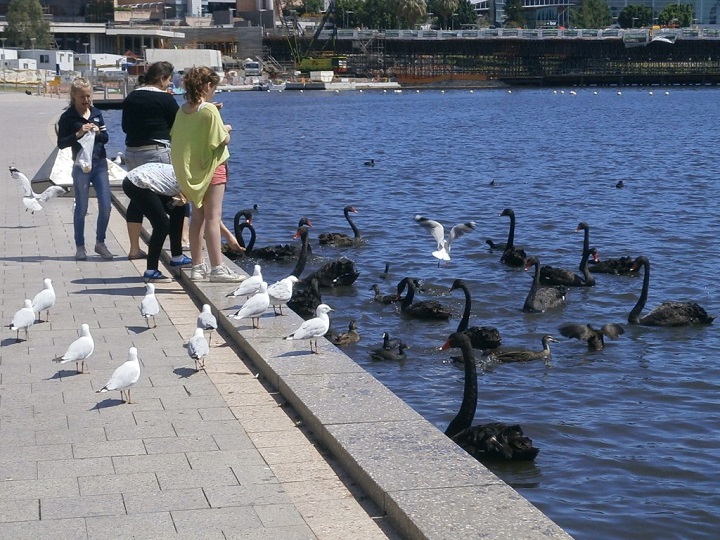
Feeding the swans and the terns
As we continued, an old metal bridge materialized, with large round green pylons, and white, lacy wrought-iron sides not unlike those of the Federation houses. On the river banks, too, were large ferns and some weeping willows with their ends gracefully touching the river surface. At this time we saw cormorants standing at attention, and deduced that there must be some fish to be caught in the river, for the large birds to be there. Some pelicans and swans, too, were swimming briskly beyond the bend.
All too soon, the boat made a curve, and we saw the familiar city skyline. Below this view, and bobbing quietly on the waters were several origami-like paper boats. They looked so placid and calm, reminiscent of the paper boats we used to make as children. When our boat came near, I noted that there seemed to be some written lines –poetry, perhaps?– on the origami boats, a verisimilitude indeed of using recycled paper for this folding art! The boats were made of metal sheets, and many waterfowls were swimming happily around it.
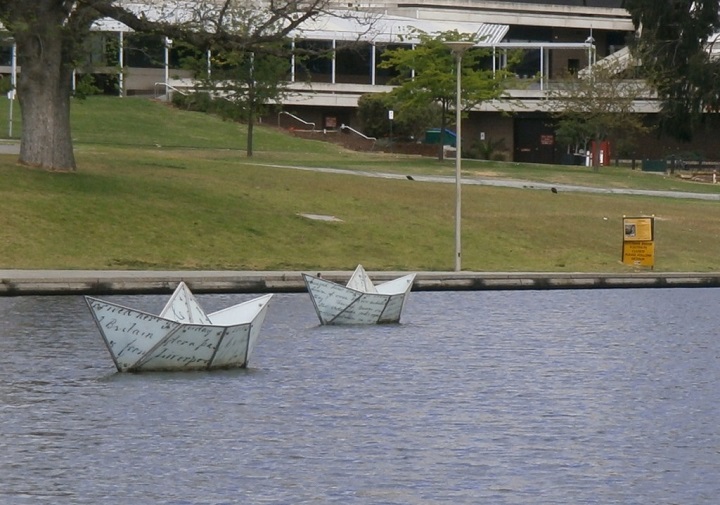
The origami boats on the river
We slowly wound our way back to the city, taking in the interesting folded metal sculptures at the entrance of the Adelaide Festival Centre. — BM/KG, GMA News

