

 GMA Brandtalk
 Tracking
 Archives

ADVERTISEMENT
Filtered By: Lifestyle
Lifestyle
Broke in Osaka: Eating, shopping and getting around on a budget
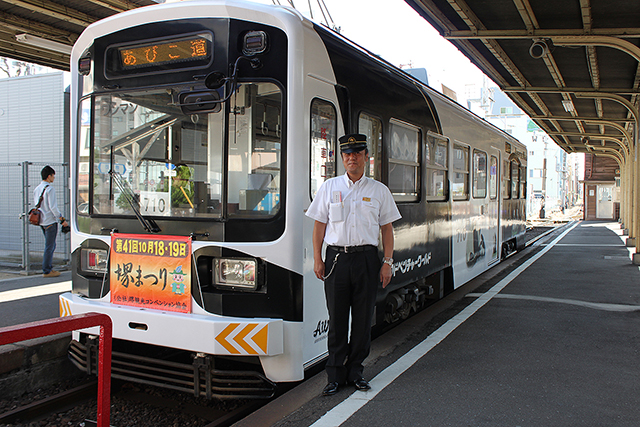
A clean, efficient, well-run and affordable tram awaits passengers in Osaka. Danessa Rivera
Getting there
We got our tickets last February at the annual travel show at the SMX Convention Center in Pasay City. It wasn't as attractive as our earlier trips, but P16,274 for two people—buy one, take one—was still a decent deal. Budget airlines are starting to address the Filipino demand for flights to Japan, with Airasia announcing that they will also introduce flights from Manila to Tokyo and Osaka later this year.
Contrary to some reports, Filipinos still need visas to go to Japan. The embassy is now a bit more lax in granting visas, with applicants just needing proof that they can finance their trip. Japan doesn't allow people to go directly to the embassy to apply, and instead relies on a handful of agencies to do such. I got mine through Attic Tours, who offers this service for P1,680. Just present your application form with your employment certificate, income tax return, and bank certificate. For students and those traveling with parents, just present a notarized Affidavit of Support from the parent/guardian who will be funding the trip, along with their bank certificate.
Where to stay
Japan is listed as one of the most expensive countries in the world and it can be. This is where ample research plays a big part. If you're just looking for a clean place to rest your head, there are a lot of options. Japanese hostels and business hotels are in abundance. For our trip to Osaka, we stayed at the Hotel Chuo, around 30 steps from a subway station. We booked a day before through Agoda and still got a good deal at P890 a night. The room was small but very clean, with an airconditioner, TV, and refrigerator. The bathrooms are spotless and showers are as hot as you want. Heated automated toilets were staple, too, making it a treat. Internet was fast, and there's free coffee and tea at the reception area.
What to eat
Truth be told, we went to Osaka hungry for food more than culture. One or two temples would suffice, so we spent most of our money on food. For starters, we went to Dotonbori to have the famous Ichiran Ramen. Usually, there's a line of people outside because it's that good. For ¥790 (around P280) we had the best ramen we've ever had. It was bold, rich, and flavorful, with the noodles done according to one's taste. Ordering is a breeze, too, because there's the machine outside showing you photos of the offerings along with the price. Just slip your money in and press a button, and give the ticket to the service people once seated.
Osaka is extra special because it is the birthplace of Kaiten Sushi, or conveyor belt sushi. A lot of establishments offer this all around the city, and we tried Kura Sushi in the Namba area. Each plate had two pieces of sushi, and was sold for ¥100 a plate. That's just P36 per sushi! If you don't want the ones going around, there's also an LCD screen on top in each counter where you can search through the photos and pick one that you like. They had salmon, prawn, and even bacon sushi topped with cheese. Even for 10 plates containing 20 pieces, that's just P380.
Walking around Osaka can be tiring, and those who want to eat in transit can visit any of the bread shops around the city. Most of them are found in busy train stations, serving some of the softest bread filled with cream. Each piece is around P68 and is very filling. The shops serve free water, making it a super sulit snack.
Getting around
Japan has one of the most efficient public transport systems in the world. The train system looks complex, but honestly easy to get a hang of. Buses from the airport to the city usually cost ¥1,200 but the Yokoso Osaka ticket sells for ¥1,500 and comes with a one day pass for downtown Osaka trains. It requires prior purchase through the website, but is very much worth it given the extra pass.
Those who have time and energy to comb through most Osaka destinations may opt for the Osaka Amazing Pass, which sells for ¥2,300 for one day and ¥3,000 for two days. It gives access to a lot of popular Osaka destinations like the Osaka Castle, Umeda Sky building, and a lot of its museums, but for those who just want to eat and shop from point A to point B might want to opt for the more affordable Osaka Visitors' ticket for ¥550 a day for unlimited rides on Osaka subways and buses.
For the more adventurous, the Hankyu Tourist Pass sells for ¥700 for one day and ¥1,200 for two days. It gives you access to ancient Japan in Kyoto, and to mouthwatering beef in Kobe.
One important thing that should still be considered is the language barrier. To some, getting lost is part of the charm of traveling, but for others, the most efficient way to get around is still preferred. Maps are everywhere and are very helpful, but I saved a lot of time because I had pocket wifi with me. Some locations in Japan do offer free wifi, but not everywhere. So to avoid getting frustrated and getting lost when you're feet are tired, I recommend renting a pocket Wi-Fi here in Manila. I got mine from Attic Tours for less than P500 a day. Unlike signing up for unli roaming with your local carrier, the pocket Wi-Fi can accommodate several gadgets, so you and your travel companions can stay online without worry.
What to do
Prior to discovering Japan, my go-to place for shopping was Thailand, where plain v-neck tees for P100, collared printed shirts for P300, and skinny jeans for P200 are in abundance. Surprisingly, Japan prices aren't so far off. The Philippines has been bombarded by discount clothing stores like Forever 21, Uniqlo, and H&M, but we still don't have Japan's best bang for buck clothing store: GU.
Skinny jeans for P600, shorts for P300 more, and tops for less than P500 are available in four to five floors full of choices. GU is part of the Uniqlo group, and is actually Uniqlo's more affordable sibling. Yes, there's a more affordable version of Uniqlo, and it's all over Japan.
But still, there's so much to love about Kansai. Kyoto is most charming, with hundred-year-old homes neatly lined up. There are a lot of tourists and it can get crowded, but it's worth marveling at how the Japanese kept the integrity of their old buildings while letting commerce thrive. Shops are everywhere selling souvenirs to green tea ice cream to meals, but they still conform to the design of ancient Tokyo. Geishas and wannabe geishas roam around, and tourists can join the fun by dressing up as well. There's just so much to love, and the weather and people make it so easy to take it all in. — BM, GMA News

