

 GMA Brandtalk
 Tracking
 Archives

ADVERTISEMENT
Filtered By: Lifestyle
Lifestyle
BROKE IN NEGROS OCCIDENTAL
From feasting in Bacolod to diving in Danjugan
During our brief, four-day trip to Negros Occidental, we visited famous historic places in Silay City, ate our hearts out in Bacolod City, conquered the seven falls in Mambukal Mountain Resort, and explored the wild and unspoiled beauty of Danjugan Island.
All in four days, and and all for just under P10,000 each.
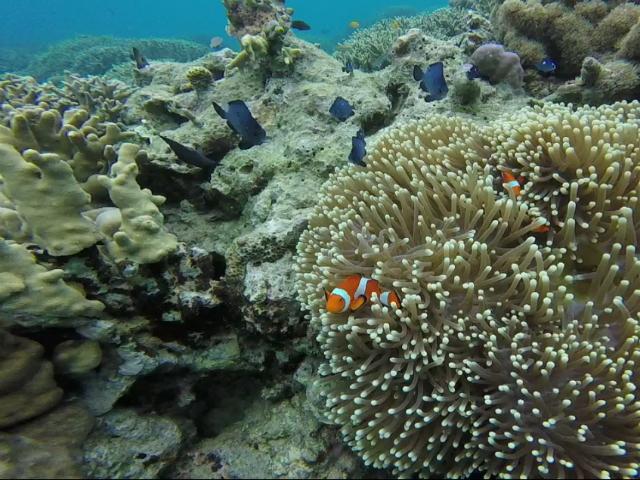
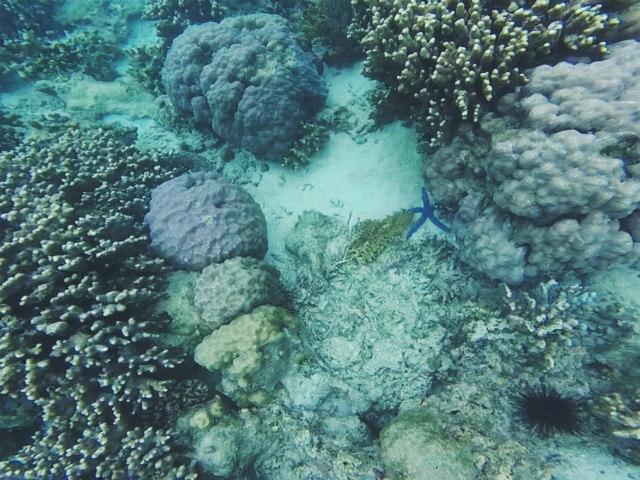
We found Nemo while snorkeling off Danjugan.
Getting there
To score cheap tickets, keep an eye out for seat sales. Remember, the earlier you book, the cheaper your ticket will be!
I booked six months in advance with Cebu Pacific, so I got my Manila-Bacolod round trip ticket for just P1,153.
Tip: Seat sales usually start at midnight, when most people are fast asleep. Wait for the clock to strike 12 to get first pick!
First stop: Bacolod City
From the airport in Silay City, we took a cab to our hotel on Lacson street in Bacolod City for P400. Prices can go up, depending on your hotel's location.
Note: Cabs in Silay and Bacolod prefer to have fixed rates. Be ready to haggle!
If you're traveling alone, and not so willing to pay that much, you can take the shuttle to your hotel for only P150. Just make sure to ask the barker if the shuttle will pass by your hotel.
Where to stay
There are many budget hotels in Bacolod City, but we stayed at Go Hotel since it's on Lacson Street, where most of the famous restaurants are just a short walk or a jeepney ride away. Prices per night at Go Hotel ranges from P688, P888 (weekdays) to P1,088 (weekends).
Since we arrived early in the morning, we couldn't check in our hotel room right away, so we had to leave our baggage at the hotel's locker room. We paid P50 to have our bags checked in.
Sights to see
After we dropped off our bags, we decided to have merienda at the famous Calea Pastries and Coffee on the corner of Lacson and 15th Streets. But when we got there, it was still closed.
Since most of the restaurants were also still closed at that early hour, we decided to walk around. We passed by the Capitol Park and Lagoon, which is reminiscent of Manila's Rizal Park.
It was a bit hot that day, so we decided to proceed to San Sebastian Cathedral. On our way there. we passed by Negros Museum on Gatuslao Street.
The museum has a charming cafe with a bit of a European vibe. I could have stayed there all day, drinking wine and eating artisan sandwiches while looking at the beautiful artworks by local artists on the walls.
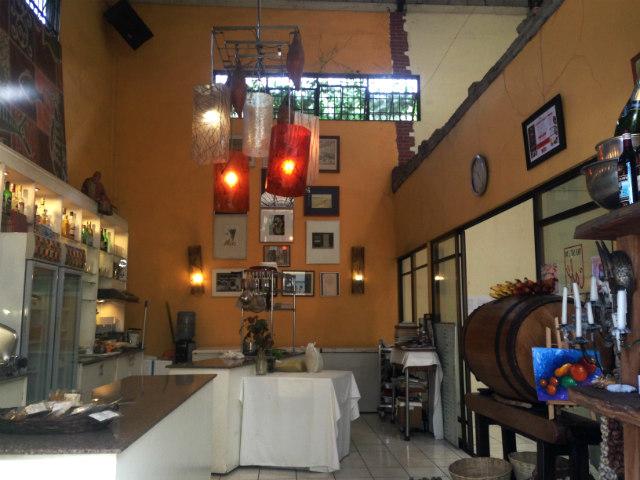
The admission fee to the museum itself is P100, and is open from 10 a.m. to 8 p.m., Tuesdays to Sundays. When we asked for how much the tour guide fee is, the cashier at the entrance just said, "Kayo na po bahala kung magkano ibibigay."
Unfortunately, when we got there, no tour guide was available, so we decided to just go around on our own.
The museum features contemporary artworks by local artists showcasing the province's rich culture and history—particularly its sugarcane industry.
Also in the museum is the Jose Garcia Montelibano Gallery of International Folk Art and Toys. Tucked away in a dimly-lit, quiet air-conditioned room inside the museum, the gallery features 3,000 dolls and toys collected by Negrense jetsetter Mara Montelibano in her 25 years of travels to more than 60 countries.
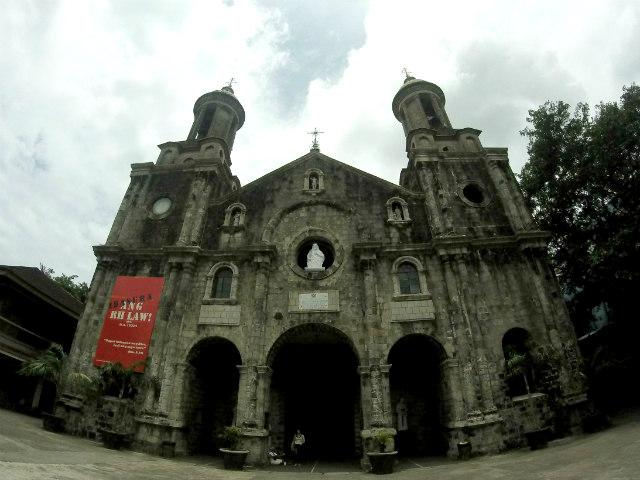
It was almost noon when we finished going around the museum, so we rushed to San Sebastian Church on Rizal Street. When we got there, we knew that the long walk was worth it as the facade and the interiors of the church, built in 1876, were just absolutely stunning and well-preserved. We lit a candle and briefly offered our thanksgiving prayers.
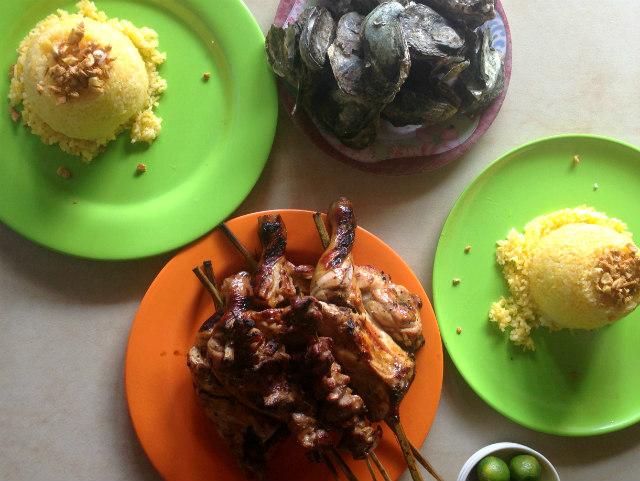
By the time we were done, we were famished! We decided to go straight to Manokan Country, an entire street of restaurants selling Bacolod's famous chicken inasal. Any restaurant there is good, but the most famous one is Aida's Chicken for their sweet marinade.
For less than P200 each, we were able to enjoy chicken inasal, garlic rice cooked in chicken oil, and fresh talaba. Don't forget to ask for sinamak vinegar for your inasal, and extra chicken oil for your rice. It was just inasal heaven as we ate our hearts out.
As they say, there will always be room for dessert! So despite being full, we decided to go back to Calea for some cakes and coffee.
From Manokan Country (located at the reclamation area, near SM City Bacolod), we rode a jeepney to Calea for just P7.
At Calea, a big blue door greeted us as we were ushered inside the crowded cafe. We ordered three of their best-selling cakes: Chocolate Cake (P90), Fruity Cheesecake (P90), and the White Chocolate Cheesecake (P95).
The first two cakes were moist and well-made, but the White Chocolate Cheesecake was the clear winner. Who would have thought that cheese cake and white chocolate would be so good together? This is definitely one to try.
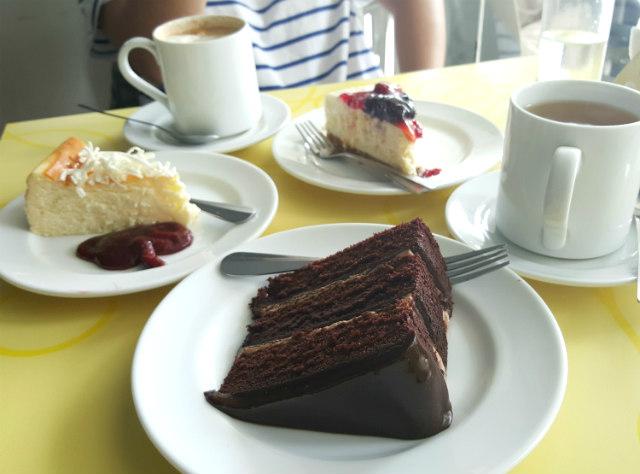
Photo: Kenwin Francisco
We were a bit tired and sluggish afterwards, so we went back to our hotel to check in and rest for a while.
Second stop: Silay City
It was already 3 in the afternoon when we headed for Silay City.
Getting there
From Bacolod City, you can take a jeepney to the Bacolod City North Terminal to catch a bus to Silay for only P12.
But since we were tired from earlier, we decided to avail of our hotel's tour package. We had to haggle with the driver to give us a discount, and in the end, we agreed to pay P800 for the whole trip to Silay. This amount is not bad if there's at least four of you sharing.
We arrived at Balay Negrense on Cinco de Noviembre street at around 4 p.m., only an hour left before its closing. Entrance fee was P60.
Note: Balay Negrense is only open from Tuesdays to Sundays, and closed on Monday and holidays.
Balay Negrense was built by sugar baron Victor Fernandez Gaston in 1897, when Silay City was considered the economic and cultural center of Negros Occidental. Gaston was the son of Yves Leopold Germain Gaston, a Frenchman who revolutionized the sugar industry in Negros.
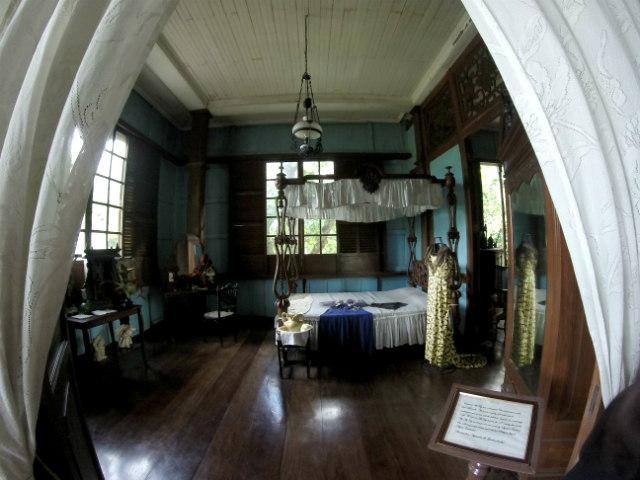
At the time, the two-storey, 12-room house was considered one of largest in the area.
After Victor's death, his heirs could no longer maintain the cost the house's upkeep, so they cooperated with the Negros Cultural Foundation to turn it into a museum. In 1994, the home was declared a Heritage House by the National Historial Institute, and has since been a popular tourist attraction in the province.
Creepy moment: During our tour, I saw a shadow go into one of the rooms. I was a bit confused since there were ropes blocking the tourists from going inside. I went to check, but there was no one there. *shiver* When I got back to our hotel room that night, I checked our photos during our trip. In one of the "mirror shots" I took in one of the bedrooms, I saw the face of a lady behind me. Without thinking, I immediately deleted the photo. *shiver*
It was after five when we were done going around the house, and unfortunately, all the other heritage sites had already closed. We decided to go straight to The Ruins in Talisay City to catch the sunset.
When we got there, I immediately understood why it is one of the most popular and most photographed destinations in Negros Occidental. The Ruins was absolutely stunning, especially in the late afternoon light.
The Ruins was built by sugar baron Don Mariano Ledesma Lacson for his Portuguese wife Maria Braga. Unfortunately, in the early part of World War II, guerrilla fighters had to burn it down so it would not be used as headquarters by the Japanese forces.
But what remains is absolutely stunning. And even on a weekday and with an entrance fee of P95, the place was packed with tourists.
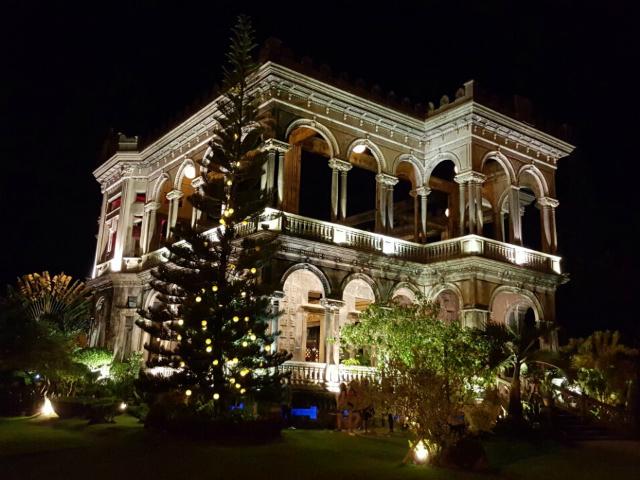
Photo: Kenwin Francisco
After taking a million photos of the place (and having our own mini-photo shoot), we decided to go back to the hotel. We were supposed to go to the Old Pala-Pala Market on San Juan Street in Bacolod for really cheap seafood, but we were already so tired, as well as still full from our lunch and dessert.
Third stop: Mambukal Mountain Resort
Mambukal Mountain Resort is just a 35-minute drive from Bacolod, passing through Murcia town.
A taxi driver had offered to take us to Mambukal and back to our hotel for P1,500, but since we were on a limited budget, we decided to commute.
At around 9 a.m., we took a jeepney (P7) to the northwestern side of the Libertad Public Market, where the terminal of the mini buses to Mambukal are located. The trips to Mambukal (P35 each) start at 7:20 a.m. The last trip back from Mambukal leaves at 4 p.m.
When we arrived at the terminal, we had to wait for an hour for the non-air conditioned mini-bus to be filled. During the entire trip, there were at least two stopovers, where we waited for at least 30 minutes.
When we got to Mambukal, it was already noon, and we knew that we would not be able to enjoy the place and make it on time for the last trip, so we contacted the taxi driver to pick us up later in the evening. After haggling, we agreed to pay P900 for him to pick us up and bring us back to Bacolod.
After settling our ride back, we paid P50 for the entrance fee, and had lunch at the canteen.
It was around 1 p.m. when we decided to start our hike to the Seven Falls.
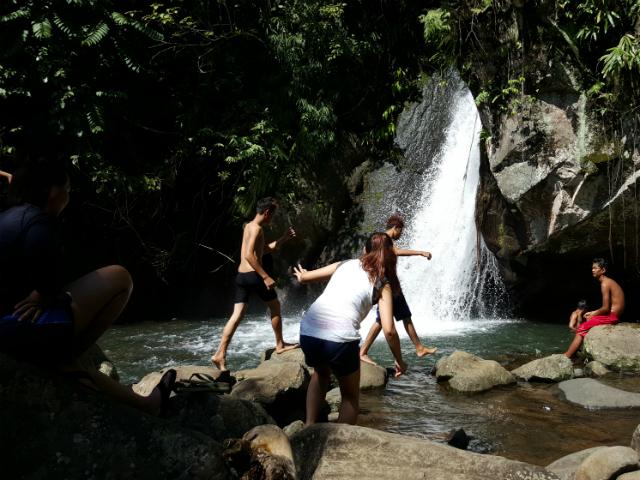
Photo: Kenwin Francisco
Note: Make sure to sign your name in the resort's visitors log book at the jump-off point for your safety.
At entrance to the Seven Falls, there are several men offering habal-habal rides for only P50 each. We decided to avail that to cut our hiking time in half. The ride was smooth at first, but turned rocky after a while. We almost fell several times, but the driver was used to the terrain so there were no accidents.
We first trekked to the farthest of the seven waterfalls. When we got there, we immediately plunged into the water to cool off after the tiring hike.
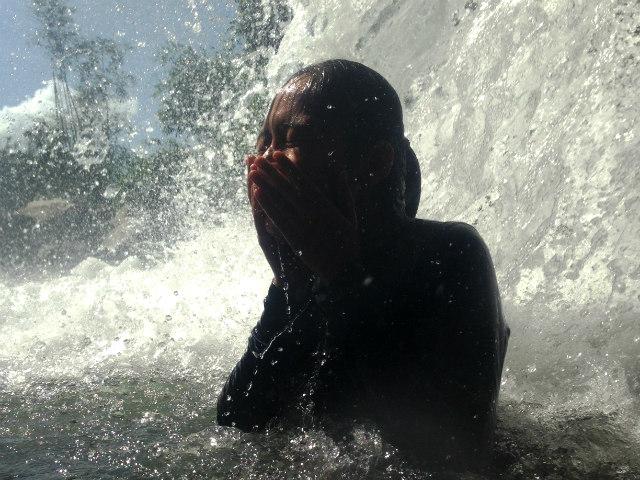
Tip: Instead of tsinelas, wear hiking sandals as the hike to the falls can get a bit slippery.
We then headed straight to the sixth waterfall. By the time we got there, we were all so tired, but none of us dared to go swimming. In order to get to the swimming basin, we needed to make a more than 10-foot dive from the cliff. Instead, we just took pictures and breathed in the cold air.
We breezed through the rest of the waterfalls. We were not allowed to swim in four of them, but the trek was easier than before.
By the time we got back to the jump-off point, we were exhausted. There were other activities to do in the resort, including wall climbing, ziplining, canopy walking, and boating in the lagoon, but we decided to just spend the rest of the day relaxing in the hot sulfur bath house (P100).
It was around 7 p.m. when we got picked up.
Tip: If you're on a bigger budget or just want to maximize the day, take the P1,500 package deal. Since there were five us in our group, we could have paid just P300 each and arrived at the resort earlier.
When we left, we headed straight to Sharyn's Cansi House to try another Negrense specialty. Cansi, a soup dish made of boiled bone, beef shank or bone marrow, was only P240 each, good for 2 to 3 people.
After dinner, we rode a tricycle (P10 each) to Felicia's Pastry Cafe and Steak Room on Lacson Street, just across Calea. They say the chocolate cakes (P90) at Felicia is much better than Calea, but we couldn't tell much because the cakes they gave us were rock-hard from being inside the refrigerator for so long. But aside from that, the taste was pretty good.
Fourth stop: Danjugan Island
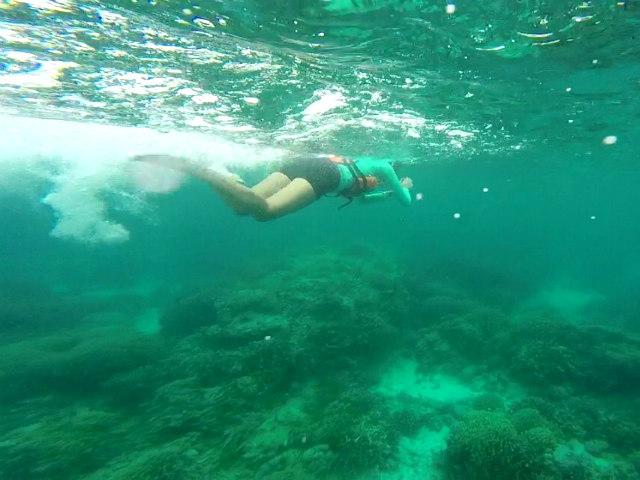
Many tourists head to Sipalay City for some "vitamin sea," but we decided to head to the marine reserve and wildlife sanctuary Danjugan Island in Cauayan for a different kind of experience.
Prices are a bit steep at P2,750 per person per night, but it was absolutely worth it. Included in the package were our overnight accommodations, three meals and two snacks, boat transfers, boat tour around the island, trekking and snorkeling guide, unlimited use of kayaks, and free use of snorkeling gear.
How to get there
Make sure to book your stay weeks in advance. The Philippine Reef and Rainforest Conversation Foundation, Inc., which manages and preserves the island, only allows a limited number of visitors per day.
We left our hotel at around 2 a.m. Since it was still dark out, we took a cab to the South Ceres Bus Terminal on Lopez Jaena Street for just P150 for the five of us.
Trips from the terminal start at 2:30 a.m. We took the bus bound for Hinoba-an (P180 for non-airconditioned bus, and P250 for an airconditioned bus). The four-hour bus ride had multiple stops, so we asked the conductor to drop us off at the Crossing Remollos-Quadro de King.
We got there at around 6 a.m. Danjugan boatmen met us and we walked to the shore, where our boat was waiting. The boat ride to the island is only 20 minutes or so.
Unspoiled beauty
When we got to the island, we were in awe. It was just paradise—a rain forest and beach rolled in one. And since it was off-peak season, we were the only guests there.
We were ushered to our treehouse cabana. It had mattresses, pillows and insect nets for each of us. We could have stayed there all day, listening to the waves crashing onto the shore, the rain drizzling, and the birds chirping. It was so relaxing.
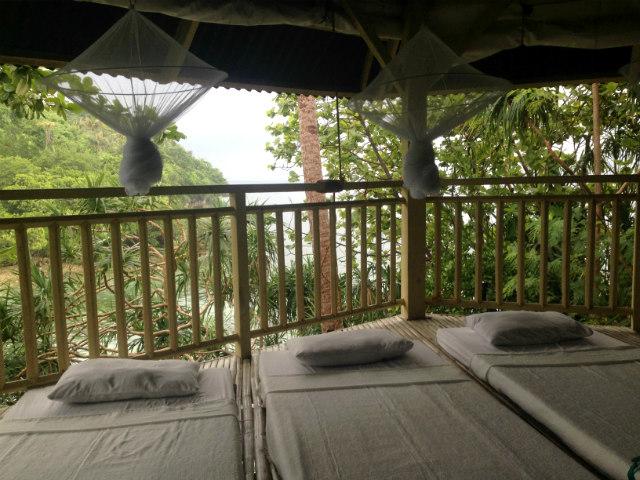
But we had to first attend a short briefing about the island. During the orientation, we were told that the island is home to 72 species of birds, including sea eagles. It also has bats. The island also has a wide array of marine life in its waters (including its five lagoons), with a recorded 579 species of fish and 244 specifies of corals.
The guides also explained that electricity and running water is limited, so we needed to conserve it. While they use solar power for electricity, water was being delivered from the mainland.
After the briefing, we spent the day kayaking, snorkeling, and trekking.
At night, it was almost pitch black, except for three lights: one in the dining room, another over the staircase, and the third in our cabana. It was a surreal moment as we ate in almost total darkness, with our other senses heightened.
Despite the dark, we were oddly comforted by the sounds of nature around us.
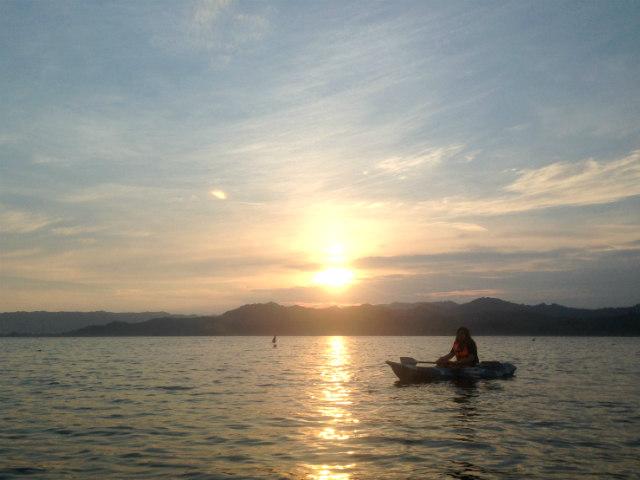
The next morning, we woke up before dawn and headed to the sea. We rode kayaks as we waited for the sun to rise. This was my favorite moment as it was all so serene. This was also the perfect way to end our paradise trip, as we made our way back to Bacolod that morning.
Pasalubongs
We arrived at around 3 p.m. in Bacolod. Since we were on a time crunch as our flight was at later in the afternoon, we decided to just buy our pasalubongs in Robinsons Mall.
When we got to the mall, we headed straight to Bongbongs, the famous pasalubong store, where we bought famous local delicacies like piaya, butterscotch, caramel tarts, and barquillos. Since they ran out of napoleones, we headed to the mall's supermarket to buy Quan's Napoleones (P207 per box).
There's also a Calea inside the mall if you want to take home a box of cake.
From the mall, you can take the shuttle to the airport for P150 each. But since we were rushing, we just took a cab for P400 after haggling.
Till next time, Negros Occidental. — BM, GMA News

