

 GMA Brandtalk
 Tracking
 Archives

An unplanned pilgrimage to the Manila Cathedral for the Jubilee Year of Mercy
I really wasn’t planning to visit the Manila Cathedral, formally known as the Minor Basilica of the Immaculate Conception, nor was I aware that it is one of five Metro Manila churches designated as jubilee churches in the Extraordinary Jubilee Year of Mercy.
Since I was in the vicinity, the Palacio del Gobernador Condominium to be specific, and finished my transaction early, I wanted to take a snapshot of the exteriors of the cathedral. I was surprised though to find the right-most gate open to the public.
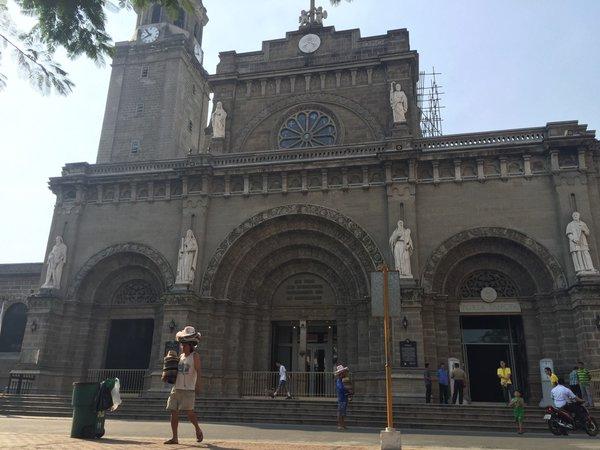
As a non-Catholic, I have only been inside the see of the Archbishop of Manila once, during a Good Friday a few years back, and was turned off by the huge crowd doing their Visita Iglesia.
It was a good thing that there were only a few visitors and pilgrims when I visited; one could easily read the instructions and conveniently visit each stop inside the Manila Cathedral.
Channeling my inner Robert Langdon and imagining the movie set of the film Angels and Demons, I entered the right-most front door of the cathedral, the Holy Door (Porta Sancta) itself.
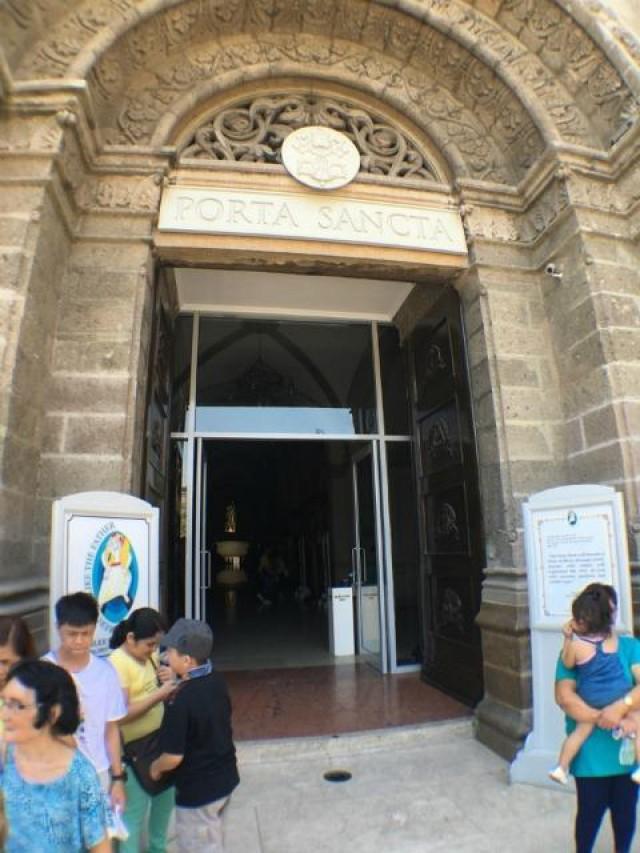
According to the placard: “Anyone who passes through the Door of Mercy will experience the love of God who consoles, pardons, and instills hope.”
The pilgrimage starts once visitors pass through the Holy Door and recite the Prayer of Pope Francis for the Jubilee Year of Mercy in front of the Jubilee Cross.
The intricately carved wooden cross was also used in the Jubilee Year 2000 and contains a holy relic of the True Cross of Christ.
The next stop is a few meters away, in front of the bronze statue of St. Peter the Apostle, the first Pope. After offering one Our Father, Hail Mary, and Glory be for the intentions of Pope Francis and his future successors, pilgrims may venerate and kiss the foot of St. Peter, as practiced in Rome.
I had to admit that I did not notice the third marker with instructions to go inside the Blessed Souls Chapel and just went back later. Inside the chapel is a marble relief showing the souls in purgatory, assisted by the holy angles, raising their prayer to Mary, the refuge of sinners.
The fourth stop is the St. Peter Adoration Chapel, that unlike the first three stops, cannot be photographed but is open to the public.
The Adoration Chapel is bigger than most of the chapels that I have been to, and is a good place for pilgrims and visitors to meditate and reflect in silence.
The fifth stop, the Crypt, is located at the basement of the cathedral and contains the mortal remains of the past four archbishops of Manila: Michael J. O’Doherty (last American), Gabriel M. Reyes (first Filipino), Rufino J. Cardinal Santos (first Filipino Cardinal), and the beloved Jaime L. Cardinal Sin.
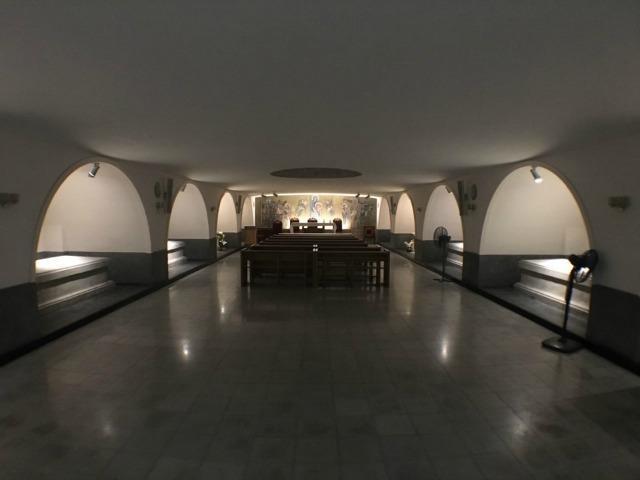
Mounted on the wall fronting the Crypt’s entrance is Psalm 116:15 in Latin: Pretiosa in conspectu Domini mors sanctorum ejus (Precious in the sight of the Lord is the death of his saints).
The air is noticeably thinner and stale inside the Crypt, with an eerie, almost scary feeling. Despite being laid to rest for years and even decades, the four Archbishops’ presence and spirits can somehow still be felt.
After climbing a flight of stairs back to the ground level, I was surprised that the sixth marker and stop were hidden and locked from the public.
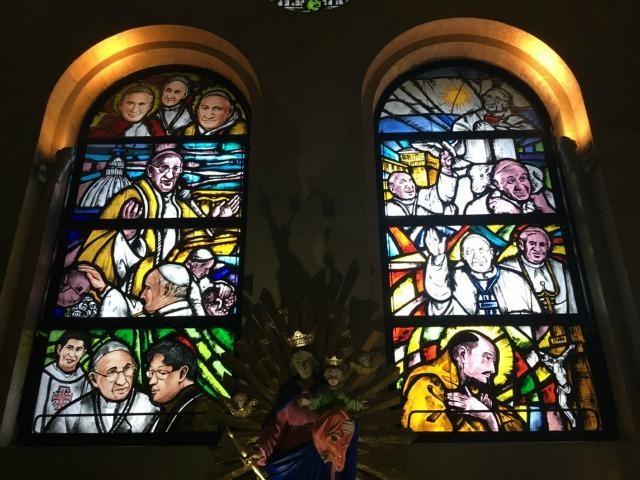
Skipping to the 7th leg, the Baptistry dedicated to St. John Baptist, pilgrims are required to recite the Apostle’s Creed and renew their baptismal promises. Weirdly, even as a non-Catholic, I am familiar and know how to recite the Apostle’s Creed in both English and Chinese (Fookien) versions.
The penultimate stop is the Chapel of St. Joseph. Aside from a marble relief of St. Joseph with a young Jesus and Mary, there’s also a replica of the Pietá by Michaelangelo found in St. Peter’s Basilica in Rome.
To end the pilgrimage, pilgrims pray in front of the main altar of the Manila Cathedral, facing the beautiful image of Our Lady of the Immaculate Conception.
The perfect time to visit the jubilee churches is this summer, preferably a weekday, with the weather conducive for outdoor activities, and moving and walking around.
Aside from the Manila Cathedral in Intramuros, pilgrims can also visit the Archdiocesan Shrine of the Divine Mercy in Mandaluyong; Santuario de Santo Cristo Parish in San Juan; Our Lady of Sorrows Parish in Pasay; and the National Shrine of the Sacred Heart in Makati.
The visit to the Crypt, open to the public only during the Jubilee Year, alone was worth my sudden detour through the Holy Door and into the main altar and chapels of the Manila Cathedral.
Reliving some of the adventures of professor Robert Langdon made the “pilgrimage” even more interesting and somewhat entertaining for a hot summer day in the middle of the week.
Local and foreign pilgrims have more than half a year left to visit the five churches before the Jubilee Year officially ends on November 20, 2016. —KG, GMA News

