

 GMA Brandtalk
 Tracking
 Archives

Scottish island pays fiery tribute to Viking past
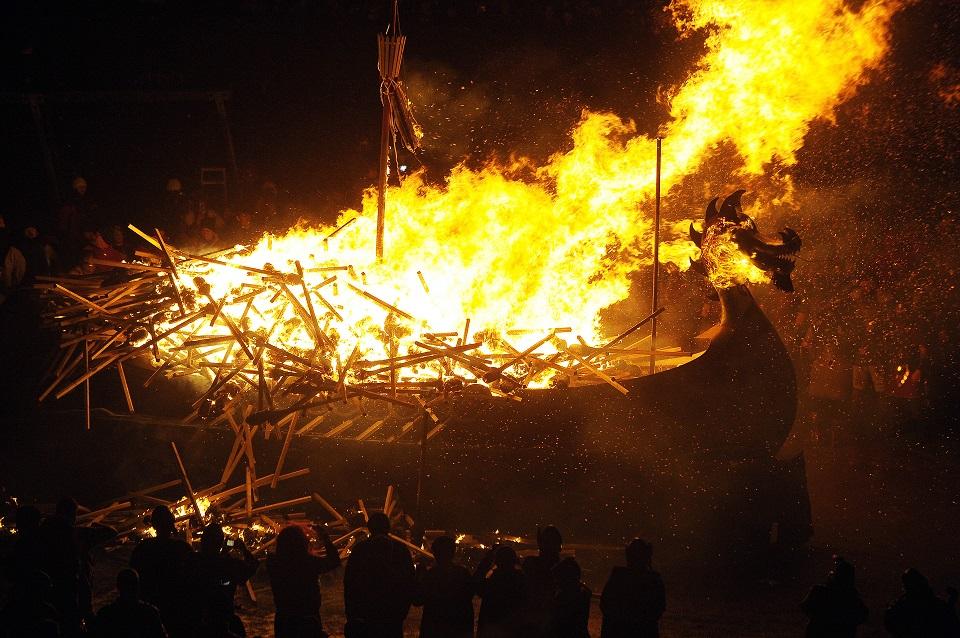
LERWICK, Shetland Islands, Scotland - A flaming Viking longship has been dispatched from a remote Scottish island to Valhalla in the grand finale of one of the most dramatic fire festivals in the world.
Up Helly Aa takes place every January in Lerwick on the Shetland Islands, which lie in the middle of the North Sea around 400 miles (640 kilometers) from Edinburgh.
The Shetlands are closer to Norway than mainland Scotland and their residents are fiercely proud of their Norse heritage.
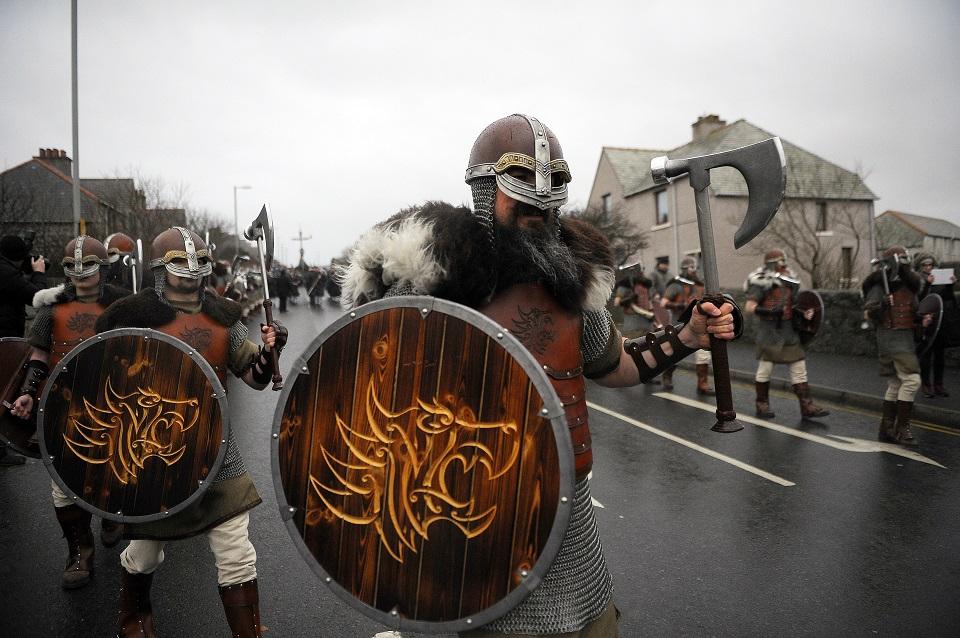
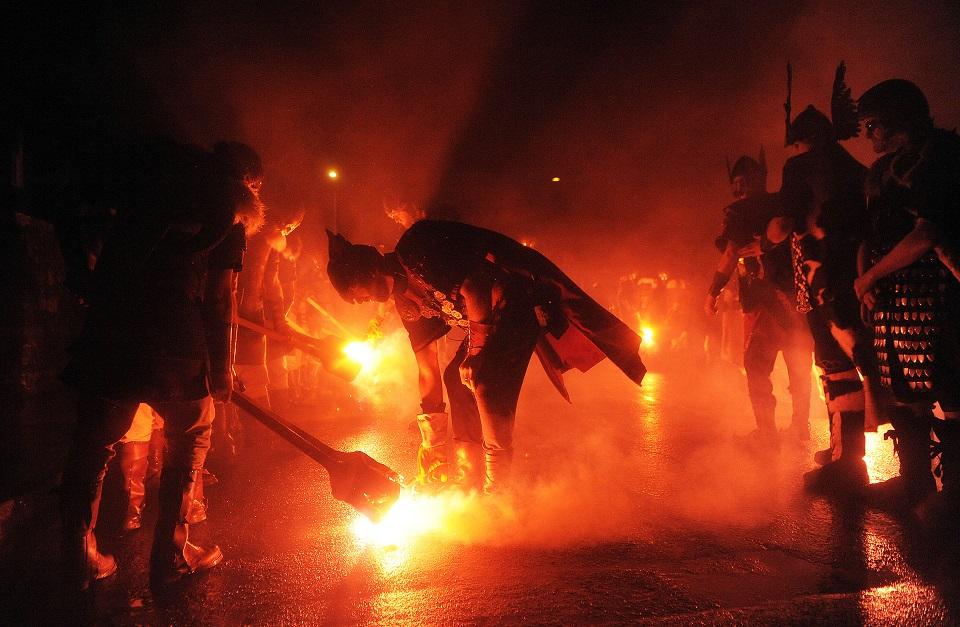
Some 60 "Vikings" paraded on Tuesday through Lerwick, Shetland's biggest settlement, trailed by around 1,000 torchbearers known as "guizers"—dressed in eclectic costumes, from superheroes to pop bands.
The procession ended with Vikings throwing their torches into the replica longship.
Vikings, guizers and spectators braved torrential rain and high winds to witness the spectacle—but the residents are used to the harsh conditions in one of the most remote and exposed places in Europe.
Every year, an experienced Viking is appointed to lead the parade and becomes known as Guizer Jarl, from the old norse word for "chief."
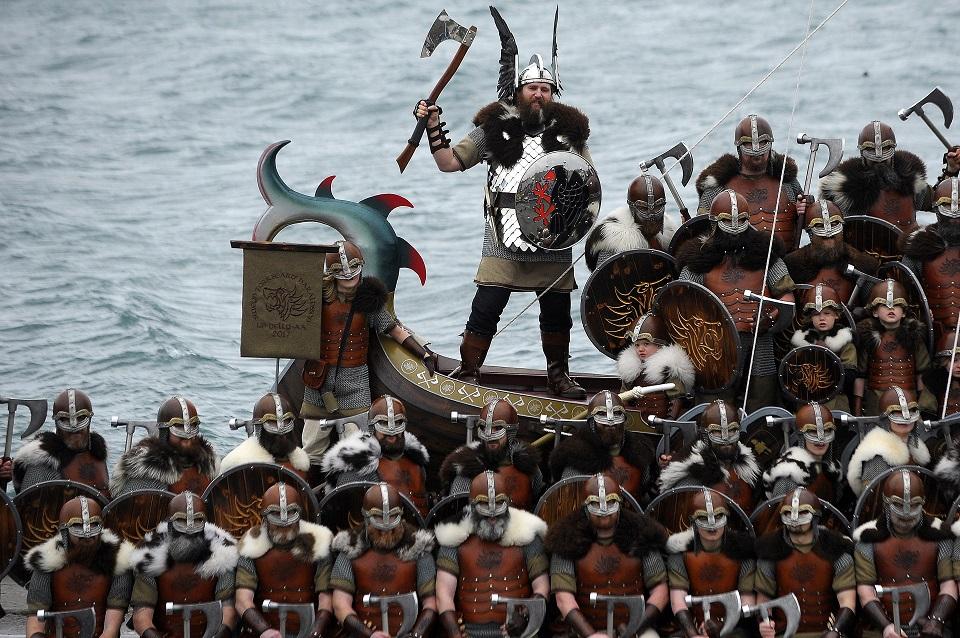
Lyall Gair, 37, from the nearby town of Quarff, has been preparing to become this year's Guizer Jarl for 15 years.
"Everything is pretty personal, from the suit design to the way you want your galley finished," he told AFP.
"It all ties into a saga and the history of the Vikings," he said.
'End of a journey'
A team of volunteers has been working on the construction of the wooden, dragon-shaped longship since October.
"We work two nights a week, averaging about four hours a week, and on Up Helly Aa it is sent to Valhalla," Gair said in reference to the vast hall ruled by the god Odin, where slain fighters were said in Norse mythology to travel upon their death.
"Obviously it's a little bit emotional, but it's the end of a journey."
Gary Shewan, 39, a fisherman from Scalloway to the west of Lerwick and a member of this year's Jarl's Squad, said: "In Viking times, when the Jarl died they would set the boat on fire and he went off to Valhalla and this is what the burning signifies."
"It's just a huge, huge deal to be involved with this. The people come home from New Zealand, Canada, Norway, just to be in our squad tonight and it's very humbling to be part of it," he told AFP.
'Outside our norm'
The tradition of Up Helly Aa is only around a century old, but its roots stretch back much further.

Ian Tait, curator of the Shetland Museum, told AFP: "Around the year 800 outgoing Scandinavians, who we now call the Vikings, left in search of land, treasure and adventure.
"The first place they reached was Shetland and the island became an entirely Scandinavian society.
"In 1469 Shetland was pawned by the Kingdom of Denmark to Scotland in lieu of payment for a dowry for a dynastic marriage, but when Denmark finally raised the money Scotland reneged on the deal," Tait explained.
"After a few centuries Denmark gave up its claim and Shetland became part of Britain."
Following the Napoleonic wars, rowdy veterans returned to Shetland and began holding all-night parties around bonfires of burning tar barrels.
In the late 19th century Shetland authorities formalized the event, taking inspiration from the Scandinavian mythology and sagas which were popular throughout northern Europe at the time.
Tait added: "Here in Lerwick it was the perfect amalgamation of forces—the growth of an urban center, young men with spare time and disposable income, and the Scandinavian imagery."
Daniel Kim, 34, a physician, travelled 4,500 miles from Houston, Texas, to witness Up Helly Aa.
Wearing a fake Viking beard and woolly horned helmet, he told AFP: "It's very unique, it's very remote—it's something that you don't see on TV a lot.
"It's just completely different and outside our norm."
Hannah Boden, from Nottingham in central England, said: "I just love the atmosphere, and the warmth of the torches, and singing, it just brings the family together." — AFP

