

 GMA Brandtalk
 Tracking
 Archives

ADVERTISEMENT
Filtered By: Money
Money
Power consumers to carry burden of P62B in settlement claims vs. PSALM?
Consumers may have to carry the burden of over P60 billion in settlement claims by disgruntled former employees of the Power Sector Assets and Liabilities Management Corporation (PSALM) to avoid aggravating the looming power crisis in 2015, the Energy secretary said.
Apart from having its assets garnished, a possible option is for PSALM to get at loan to cover the settlement claims so as not to hamper its operations, Energy Secretary Carlos Jericho Petilla told reporters on the sidelines of the Management Association of the Philippines (MAP) General Membership Meeting in Makati City Tuesday.
"DOE's biggest concern is still power. The DAMA's case, whatever liability NPC has, is part of the NPC debt," he said.
"The P62 billion, kung makakautang s'ya para hindi maapektuhan ang operation, i-cha-charge sa tao. How much, I don't know," he said.
Over the weekend, PSALM said it received a court order from the Regional Trial Court (RTC)-Quezon City (QC) garnishing its funds worth over P60 billion.
The RTC QC ordered PSALM to immediately pay P60.24 billion to over 8,000 beneficiaries of Napocor-Drivers and Mechanics Association (DAMA) and P1.81 billion for "lawful fees and costs for the execution of the Supreme Court's Resolution."
The Napocor-DAMA were employees terminated by PSALM when it was restructured in 2003 pursuant to the Electric Power Industry Reform Act (EPIRA).
Notice of garnishment
Notice of garnishment
The notice of garnishment are legally baseless and violate due process, PSALM president and CEO Emmanuel R. Ledesma said in a statement posted on its website Monday.
"If our funds are garnished, our long-term debts would become immediately due and demandable... This will result in operating cash deficit, which will lead to power shortage nationwide," he noted.
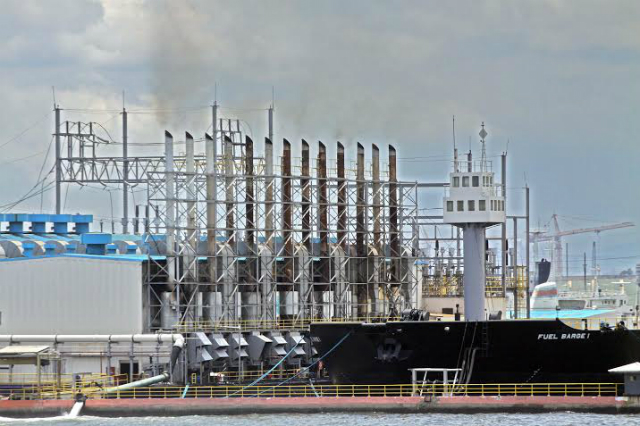
PSALM is responsible for the fuel supply and operations budget of state-owned power plants, namely the Malaya Thermal Power Plant in Luzon, Power Barges (PBs) 101 and 102 and Naga Coal-fired Thermal Power Plant in Visayas, and PB 104 in Mindanao. These facilities produce a combined total of 430 megawatts (MW) dependable capacity.
PSALM also provides for the fuel requirements of Independent Power Producer (IPP) plants, namely the Ilijan Natural Gas Power Plant in Luzon, the Zamboanga Diesel Power Plant and the General Santos Diesel Power Plant in Mindanao.
The agency also collects and administers the Universal Charge for Missionary Electrification, which is the source of funds of the National Power Corporation (NPC) off-grid operations.
There's still hope as the PSALM board filed a motion for reconsideration before the Supreme Court last Friday, Petilla said.
"[We'll have to] wait for SC... At the expense na puwede kami ma-contempt. Kapag sumangayon kami, baka tumigil ang planta," he said.
"Pero ang nakikita ko lang dito na way out [ay] dagdagan ang utang. Kung hindi magbabago si SC or i-re-reconsider ng SC na baka mas mababa sa P62 billion, dahil malaking pabigat 'yun sa PSALM," he noted.
Petilla said the biggest threat to the power situation is coming from the people who will garnish PSALM's funds.
"The interest of the public, I think, is more than the interest of employees. I respect that they also have the rights but, in this country, there's no absolute right. It's always what is good for the general public," he said.
Presidential powers
Presidential powers
During the MAP forum, Petilla reiterated the need to invoke the Section 71 of EPIRA that gives the President the power to address the shortage by contracting new power plants or renting modular generators.
Last July 21, Energy Secretary Jericho Petilla said he recommended that the President declare a state of national emergency on power to avoid rotating brownouts in Luzon due to a power supply shortage of between 300 to 500 megawatts (MW) starting next year.
With seven months remaining before the summer of 2015, the government still has time to contract new power to avert an energy crisis.
"I will take the cue of the President and those that want this or who don't want this," he said.
Business groups urged the government not to amend the EPIRA but to implement it properly and focus instead on implementing the law properly.
MAP recently said government should aggressively push the demand side to undertake energy efficiency measures, urgently implement a voluntary Interruptible Load Program and lift the secondary price cap in the Wholesale Electricity Spot Market. – VS, GMA News

