

 GMA Brandtalk
 Tracking
 Archives

Digicon OMNI 2020 takeaways: 6 ways businesses and companies can pivot to digital
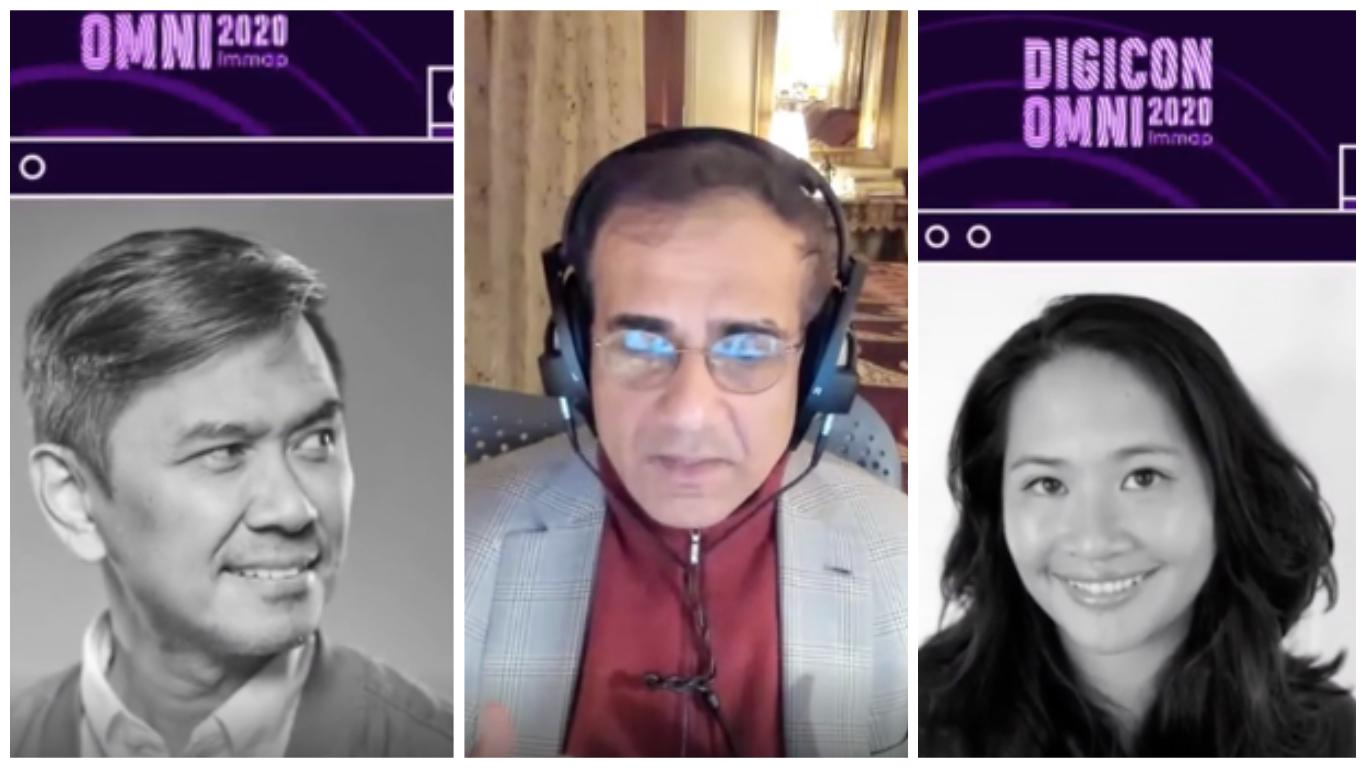
There was certainly a lot to unpack from Digicon OMNI 2020. For the first time ever, it took place online, over the course of five days in early October, with speakers calling in from their homes in various parts of the world at the dead of their night.
The theme for this year was OMNI, which is about bringing business strategy and customer experience full circle, from digital to the physical. A real relevant topic too, as COVID-19 forced the world to take seriously and quickly digital transformation.
Speakers like Angela Duckworth, Eric Ries, Seth Godin, and Rishad Tobaccowala all lent their expertise in business, marketing, digital, and even employee management to help businesses navigate and thrive in digital and through the pandemic. We mean:
1. Do it now. All through the five days, various speakers highlighted what we already know: COVID-19 has got everybody online! Mark Miller of Wunderman Thompson even presented a study that said e-commerce penetration in the US saw 10 years worth in just three months.
Akhat Jain, Facebook Philippines country lead for Business Growth harped in on that as well: In Southeast Asia, five years of digital consumer adoption happened in a single year.
"Online has become a way of life," Jain said, pointing out the fact that 40% of Filipino consumers have switched to online purchase in the last year. "One in three Filipinos prefer online. Online will be here to stay," he added.
2. Change and upgrade can only happen when people change and upgrade themselves. To drive home the point for you to get on digital pronto, Rishad Tobaccowala admitted that change really is hard.
"Change is difficult but irrelevance is worse. If you don't change, you become irrelevant," he warned.
So how do you get your business to change and shift? Through its people and its employees. "When a company upgrades itself, it can only happen when its people change and upgrade themselves," Tobaccowala said.
Train your people, have them attend workshops. Keep learning.
3. Start small and simple. You don't need all the bells and whistles, and a complete 180 overnight. According to Eric Ries, the author of the "Lean Startup," you should start small and just keep building on it.
"You start with an idea and then you validate that idea. You adjust what's not working and then so on," he said.
He suggested for businesses to "start small and simple and then measure whether customers will behave the way we expect them to. And then we learn if our assumptions are true or false."
When you find that there is an error in your thinking — in your assumptions and expectations — then you can pivot, which he defined as a change in strategy without a change in vision.
The idea being that you make the failure of the idea earlier than the failure of the company.
4. Don't get lost in data. Much has been said about data, about how important it is in digital, about how digital is so easily measurable, about how that is part of its beauty. But this year, various speakers finally voiced out one super important thing: Data is not enough.
"Humans cannot be simplified into data or algorithms," Dean Aragon of Shell said in the second day of the conference. "There is a lot of big data going around but not enough deep data, and deep data is humanised data."
According to Aragon, behind every piece of data is a human being that needs to be understood. "Don't obsess over platforms. Obsess over humans instead," he advised.
Miller echoed Aragon's sentiment and drove home the point: "90% of behaviours and decisions are driven by the emotions."
That's what need to be understood.
Likening data to electricity, Rishad Tobaccowala perhaps said it best: "No company can succeed without electricity, but very few can differentiate themselves with just the use of it."
5. One size fits all...fits none. In his talk, Miller emphasised the importance of personalisation. "There is a message overload on digital. Daily we receive 8,000 messages from digital and physical inputs. Of that number, we are only aware of 86. Of that number, we only remember 12," he said.
So that's why personalisation is important — not only because it will make your brand easier to recall and have your message float above the muck, but also, it will help drive your numbers and sales.
"According to a state of personalisation report, 49% of shoppers have purchased a product they did not intend to buy after receiving a personalised offer. That number goes up to 63% among millennials," he said.
So think in micro-moments. Look at what your customers are feeling, what they're thinking, what they're doing.
Start with your customer, not with your brand. Use the data that you have to serve your customers better.
As Jona More of award-winning design firm Frog said, "everything starts with people. Understand what your customer needs."
"Make it easy for them and understand and anticipate the needs of your customer," she added.
6. Be consistent. Seth Godin closed the five-day conference with a lot of wisdom but he highlighted one important thing that may as well be about how we conduct ourselves in life: "Consistency matters. Be consistent because that's what people care about."
Going digital will give companies and businesses a lot of room to grow, to manuever, and sometimes to even show off.
But whatever they do, nothing beats consistency — in your promises to your customers, in your processes among employees, in your mission and vision.
Godin almost went full circle with an idea that Badong Abesamis of Gigil Group put forward on the very first day of the conference.
Talking about creative agility, Abesamis shared a few memorable examples of brands pulling off crazy stunts on digital. But while those are cool, "creative endurance is better. Consistent is always better than crazy stunts." — GMA News

