

 GMA Brandtalk
 Tracking
 Archives

ADVERTISEMENT
Filtered By: Money
Money
Senators want port congestion in Manila probed, cites looming economic crisis
+
Make this your preferred source to get more updates from this publisher on Google.
Two senators on Wednesday asked the Senate to conduct an inquiry on the worsening congestion of cargo shipments in two major ports in Manila, which is hurting the flow of goods in and out of the Philippines, saying an economic catastrophe is waiting to happen unless the situation is resolved as soon as possible.
In Senate Resolution No. 808, Senator Francis Escudero urged the Senate Committees on Trade, Commerce and Entrepreneurship as well as the Economic Affairs and the Ways and Means to look into what's happening at the Manila International Container Port (MICP) and the Port of Manila in order to head off a potential crisis that can defeat the economic gains the Philippines has so far achieved.
While in Senate Resolution No. 809, neophyte Senator Paolo Benigno “Bam” Aquino IV is seeking a probe on cargo congestion at the Port of Manila as the situation has already influenced the prices of commodities and the operations of local businesses, importers and exporters.
The senators noted that Philippine exports have become highly incompetent because of the sluggish movement of goods that can no longer be delivered in time to meet the demands of foreign buyers.
Escudero, Senate Finance Committee chairman, said port congestion is such a nagging issue that – if left unresolved – would undermine the economy.
“It will hurt us bad since there is already that glaring truth triggering an economic crisis," he said.
He said Manila decreed a daytime truck ban to decongest the monstrous traffic jams in the city. Following the truck ban, empty container vans owned by shipping lines occupied 50 percent of the container yards, which caused a gridlock in and around the ports.
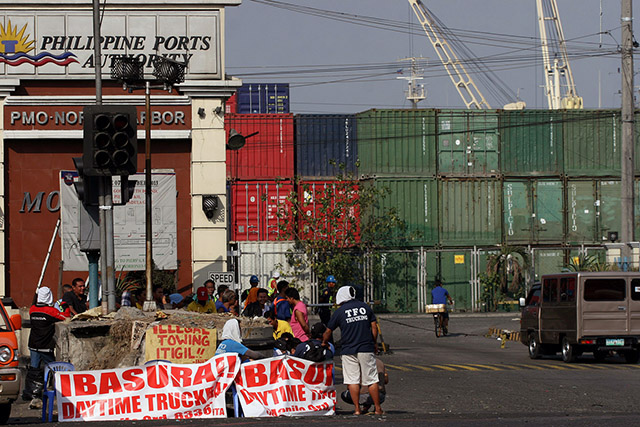
City ports boycotted
He said many local and international vessels are unable to dock and unload cargoes at both MICP and Port of Manila, prompting major shipping lines to boycott the city ports due to lack of berthing spaces.
“It is time for the Senate to step in to abate this looming crisis. It is already causing us economic backlash at costs we cannot afford," Escudero said.
"Look at the spoilage of perishable goods, the unavailability of raw materials, business loses in the import and export industries, and idled factories. These are more than enough to clog the wheels of our economic engine," the senator added.
The Philippines is an import-dependent nation, and cannot afford the backlash of long periods of shortages of supplies and consumer goods, Escudero noted.
Even exporters from Cebu are complaining about the same problem of port congestion at the Cebu International Port (CIP) that costs traders around $15,000 per shipment delay.
“We would like the Senate to take the appropriate action to find an institutionalized solution to prevent this continuing economic crisis," Escudero said.
Aquino, chairman of the Senate Committee on Trade, Commerce and Entrepreneurship, said the delays in cargo deliveries have already impacted on prices of agriculture products.
“We will prolong the agony of the public if we will not help government agencies find ways to address the gridlock in the ports that led to untimely delays in shipment of goods,” the senator said.
The problem must be addressed quickly, because prices of goods carried by importers and exporters will continue to rise, Aquino noted.
Uncompetitive exports
Even manufacturers of fresh produce couldn’t fully ship out their goods so as not to expose the products to spoilage as a result of the long queues at the ports. “Because of this, the country’s exports have become highly uncompetitive,” he said.
Aquino cited Bureau of Export Trade Promotion forecast that a 5.8 percent to 7.2 percent in export growth may not longer be feasible because of the problem.
“The decrease in trade volume affected the law on supply and demand, which resulted in abrupt price increases,” Aquino said.
Inefficient port operations adversely effected free enterprise and the competitiveness of Philippine goods, he added.
The senator earlier suggested that authorities look into the possibility of using the Ports of Batangas and Subic Bay as alternative drop-off points for cargo vessels.
He said Vietnam had the same problem, but was solved after cargo vessels were diverted to the alternate ports of Ben Nghe and Phu Huu, aside from upgrading the Cat Lai port.
“With the upcoming ASEAN integration in 2015, there is a need to have immediate and long-term solutions to the problems of port congestion since the flow of goods had been restricted by the issuance of policy orders of different government agencies,” Aquino said. – VS, GMA News

