

 GMA Brandtalk
 Tracking
 Archives

NEDA: Increase in pork imports won't kill local hog industry
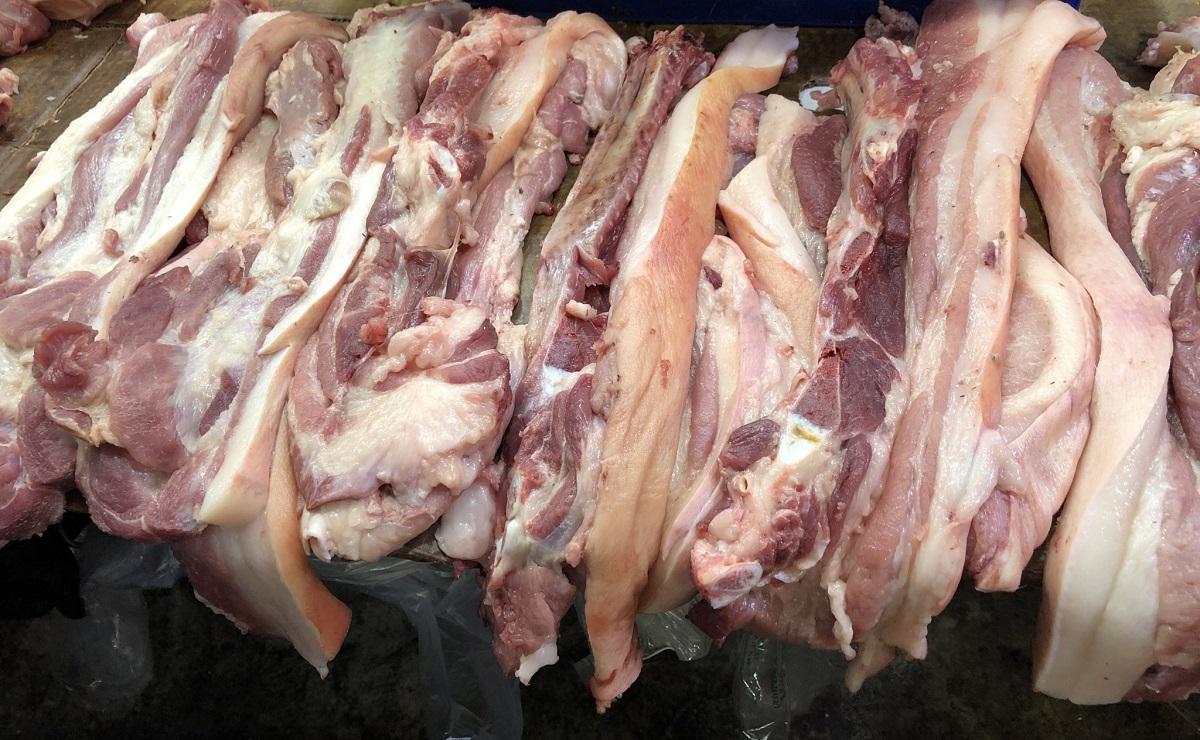
The National Economic and Development Authority on Thursday maintained that the proposed increase in pork imports into the country will not "kill" the local hog industry.
Acting Socioeconomic Planning Secretary Karl Kendrick Chua made the remark during the hearing of the Senate Committee of the Whole as he reiterated NEDA's support to temporarily increasing the minimum access volume (MAV) on pork imports coupled with lower tariff rates.
"The proposal to increase the MAV (minimum access volume) for pork from 54,000 MT to 404,000 MT by the Department of Agriculture is consistent with the supply deficit estimated by NEDA," he said.
"The temporary increase in pork will not kill the local hog industry as imports would potentially account for up to 22.8% of total consumption," he added.
According to Chua, pork imports will not flood the Philippine market as other countries are also affected by African swine fever (ASF).
He added that the limited cold chain facilities in the country also prevents huge pork importation into the Philippines.
"Hence we think the 404,000 MT proposed for importation will only gradually enter the country as needed instead of being imported at the same time contrary to industry concerns," he said.
At the same time, Chua stressed the need for the tariff rate on pork imports to be low enough "to help reduce and stabilize retail prices."
He pointed out that in order to bring the pork retail price back to P224 per kilo, lower tariff rates and increasing MAV for a temporary period need to complement each other.
"At 30 to 40%, the landed cost of imported pork based on the prevailing price by the FAO is estimated to range between P252 to P267 per kilo. This is way above the normal price of P224 per kilo. Importing at this cost would not lead to lower retail price which the people badly need now," he said.
"If we lower the tariff rate temporarily to 5 to 10%, that would lead to lower landed cost of around P215 to P220 per kilo, closer to the pork retail price," he added.
President Rodrigo Duterte last week issued EO 128 on the reduction of the tariff rates on pork imports.
Under EO 128, the tariff rate for imported pork meat within quota or MAV—whether fresh, chilled or frozen—will be pegged at 5% for the first three months upon the EO’s effectivity and 10% for the fourth to 12 months.
The tariff rate for imported meat outside of the MAV, however, has been set to 15% for the first three months upon the EO’s effectivity and 20% for the fourth to the 12th months.
The existing 30% to 40% tariff rate for imported pork will be restored after the 12th month.
Senators, however, wanted the executive order revoked as it would only hurt the local hog industry.
Chua recognized the need to help local producers to recover from ASF, but so are pork consumers.
"We also need to help 95 million consumers of pork by reducing tariff and increasing the MAV temporarily to help feel the deficit, reduce food prices and ensure our food supply is adequate and affordable so we can prevent higher malnutrition and poverty," he said. —LBG, GMA News

