

 GMA Brandtalk
 Tracking
 Archives

PSEI down, peso up on last trading day of 2023
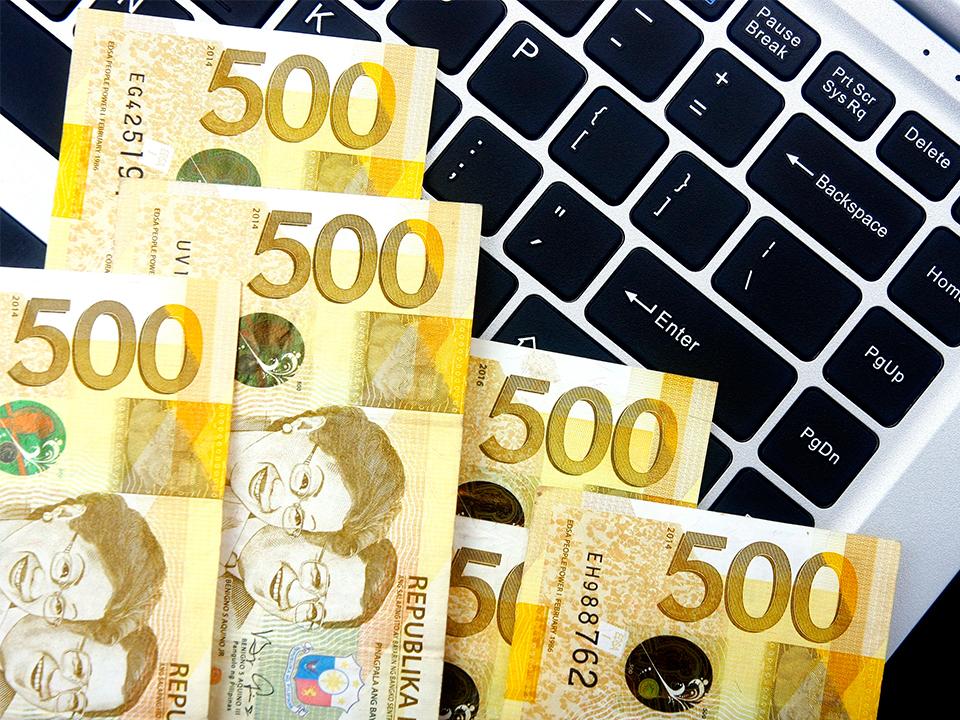
Philippine markets were mixed on Friday, the last trading day of the year, as market players chose to pocket gains in the stock market while the peso appreciated against its US counterpart.
The Philippine Stock Exchange index (PSEi) lost 69.07 points or 1.06% to close at 6,450.04 while the wider All Shares index declined by 16.00 points or 0.47% to 3,424.59.
Year-to-date, the barometer fell by 116.35 points or 1.77% to 6450.04 on Dec. 29, 2022, the last trading day of the past year.
“Philippine shares were sold down as funds took profit to close out 2024,” Regina Capital Development Corp. head of sales Luis Limlingan said in a mobile message, noting that the main index saw a 3.64% gain in December.
Sectoral indices were likewise mixed — mining and oil up by 2.03% to 10,000.43, industrials up by 0.75% to 9,075.91, services up by 0.73% to 1,604.99, financials up by 0.12% to 1,738.88, holding firms down by 3.41% to 6,106.00, and property down by 0.86% to 2,854.94.
More than 1.117 shares, valued at P4.876 billion, changed hands. Advancers led decliners, 118 to 78, while 49 shares were unchanged.
“We were projecting a higher close to the PSE, but higher-than-expected inflation and rising geopolitical tensions had investors in a risk-off mode,” Limlingan said.
The country’s inflation rate stood at 4.1% in November, bringing the year-to-date figure to 6.2%, higher than the government’s target range of 2.0% to 4.0%. December and full-year 2023 figures are scheduled to be released next Friday, Jan. 5, 2024.
“2023 has been a year of financial aberrations: record-level increases, global bank crises, (arguably) the best year of bonds, crypto resurgence, the renaissance of tech stocks, major disruption in AI, among others,” 2TradeAsia said in a separate commentary.
“Markets will likely welcome 2024 on a potentially volatile note, given the release of key macroeconomic data: US jobs data, purchasing managers’ index (PMI), and local inflation for December,” it added.
Meanwhile, the Philippine peso closed at P55.37:$1, appreciating by 11 centavos from the previous close of P55.48:$1. This is the best showing of the peso in three weeks since it closed at P55.30:$1 on December 7.
Year-to-date, the peso has appreciated by 38.5 centavos from P55.755:$1 on Dec. 29, 2022.
Rizal Commercial Banking Corp. chief economist Michael Ricafort attributed Friday’s performance to the seasonal increase in spending ahead of the New Year holidays, partly financed by some conversion of remittances from overseas Filipinos.
He also cited the greenback's weakness against major global currencies after the release of softer economic data such on employment and pending home sales, which could justify a possible rate cut in the United States in the coming year.
“The healthy downward correction of the US dollar/peso exchange rate over the past three weeks remains intact for as long as it remains below the P55.70-P55.80 levels in the near future,” he said in an email.
According to Security Bank Corp. chief economist Robert Dan Roces, the peso’s performance for the year was influenced by global monetary tightening, rising inflation, the strength of remittances and the business process outsourcing (BPO) sector, and geopolitical uncertainties.
“Overall, the peso’s performance in 2023 and the outlook for 2024 require a cautious stance. While there are encouraging signs of resilience and potential appreciation, external factors and domestic uncertainties remain,” he said in a separate email. —NB, GMA Integrated News

