

 GMA Brandtalk
 Tracking
 Archives

PH can take advantage of RCEP amid Trump tariffs —ADB
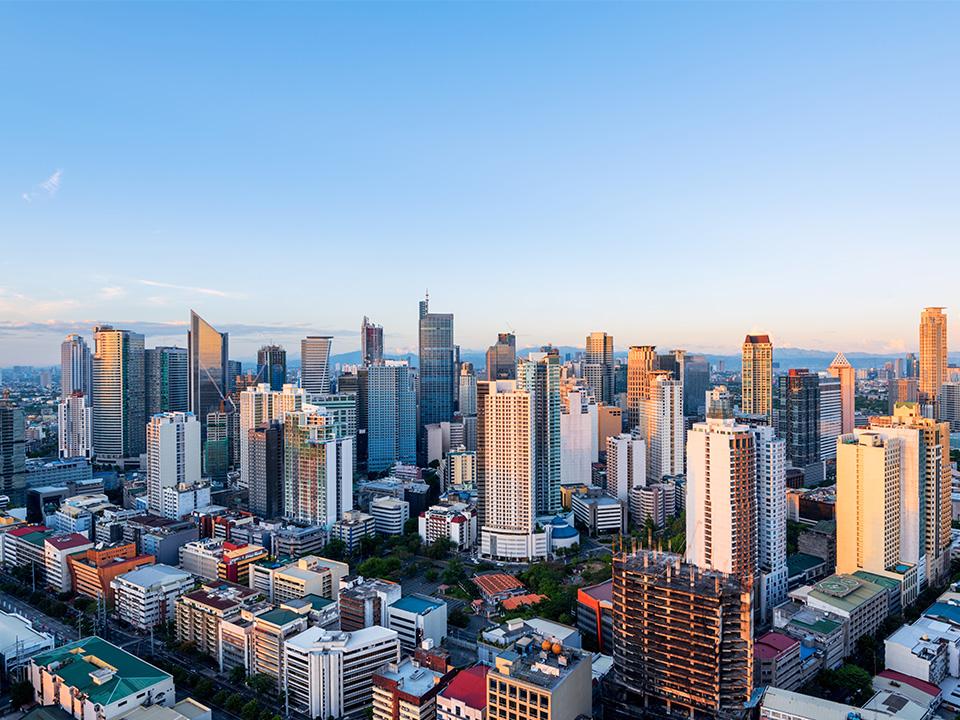
The Philippines can capitalize on its trade ties with its peers in the Asia-Pacific region to mitigate the impact of US President Donald Trump’s reciprocal tariffs, Manila-based multilateral lender Asian Development Bank (ADB) said Wednesday.
“I think the situation now will reinforce the case for regional integration, especially for Asian economies. The Philippines is part of the RCEP. It’s already active…The Philippines can take advantage of that,” ADB Philippines Office acting country operations head Cristina Lozano said at a press conference in Mandaluyong City.
The RCEP, or the Regional Comprehensive Economic Partnership, is a mega free trade deal that removes at least 90% of tariffs on imports within signatory countries, which include the 10 members of the Association of Southeast Asian Nations (ASEAN) and its partners Australia, China, Japan, South Korea, and New Zealand.
The Philippines’ participation in the RCEP began in June 2023.
Lozano added that Manila can also renew its negotiations for a free trade agreement with the European Union as well as join the 12-nation Trans-Pacific Partnership.
Last week, Trump announced a 17% reciprocal tariff on Philippine goods, still “discounted” compared to the 34% tariff that Manila charges against American goods.
Compared to its regional peers, the levy slapped on Manila was relatively lower —Cambodia at 49%, Laos at 48%, Vietnam at 46%, Thailand at 47%, China at 34%, India at 27%, South Korea at 26%, and Malaysia at 24%.
Abdul Abiad, ADB Economic Research and Development Impact Department director, said the Philippines needs to “pursue many policy options to the extent you can negotiate and bring the tariffs down.”
Abiad likewise said the country should start “having discussions on who to strengthen trade ties with… how we should reshape supply chains.”
ADB senior economics officer Teresa Mendoza said that the Philippine economy could be protected as the country is not reliant on exports.
“We’re basically domestic demand driven,” Mendoza said.
Abiad added that 97% of the country’s gross domestic demand is not dependent on US final demand.
“A lot of it is dependent on domestic demand,” he said.
Lozano said that the Philippines’ macroeconomic fundamentals are strong.
“The services sector remains unaffected for the moment by these US tariffs… semiconductors are exempted for the moment. The Philippine economy is protected at the moment,” Lozano said.
Abiad explained that adjusting exemptions, the 17% tariff imposed on Philippine goods entering the US could be at an average of 14% to 15%.
“Roughly speaking, if you take [about] 15% as the effective tariff for the Philippines, that would imply a decline in US demand for Philippine goods of [around] 7.5% to 15%. That would be a decline of what part of Philippine GDP? The value-added exposure of the Philippines to US final demand is 3.4%… so you will lose seven-and-a-half to 15% of that 3.4% of your GDP. If you do the math, that comes out to a few tenths of a percentage point,” he said.
Similar to what the government’s economic managers have stated, the ADB sees a potential production relocation to the Philippines due to its relatively lower US tariff rate compared to its neighbors in the region.
New ADB forecast
Meanwhile, in the April 2025 edition of its flagship publication, Asian Development Outlook (ADO), the ADB revised downward its growth forecast for the Philippines’ GDP for this year to 6% from its earlier projection of 6.2%.
Mendoza said the lower GDP growth projection for 2025 resulted from the “lower than expected turnout in Q4 2024… as household spending was lower than expected” as well as “impacts of tight monetary policy.”
The Philippine economy grew slower at 5.2% in the last quarter of 2024, down from 5.5% in the same period in 2023.
This brought the full-year economic expansion to 5.6%, faster than the 5.5% for the full year 2023, but fell short of the government’s target range of 6.0% to 6.5%.
This is also the second straight year that the Philippines missed its economic target after hitting 5.5% in 2023, which was below the 6.0% to 7.0% target for the year. Growth surpassed the target ceiling in 2022 at 7.6%.
Nonetheless, the ADB said that strong domestic demand, sustained investments in social services and vital public infrastructure, and modest inflation will underpin Philippine economic growth this year and the next.
“The Philippines remains a bright spot in the Southeast Asian region, with robust private consumption and sustained investments, particularly in infrastructure, continuing to fuel growth,” said ADB Country Director Pavit Ramachandran.
The multilateral lender said that the Philippines' exit from the intergovernmental Financial Action Task Force's grey list enhances the country's bid as an investment destination.
In February 2025, the FATF announced the removal of the Philippines from its grey list of countries under monitoring for deficiencies in anti-money laundering and counter-terrorism financing efforts.
The Philippines was included in the FATF grey list in June 2021.
“This should facilitate lower-cost cross-border transactions, reduce compliance barriers, and enhance financial transparency. It will boost market sentiment, support business, foreign direct investment, and ease remittances from abroad,” according to the ADB. —VBL, GMA Integrated News

