

 GMA Brandtalk
 Tracking
 Archives

New customs chief Nepomuceno vows continuity
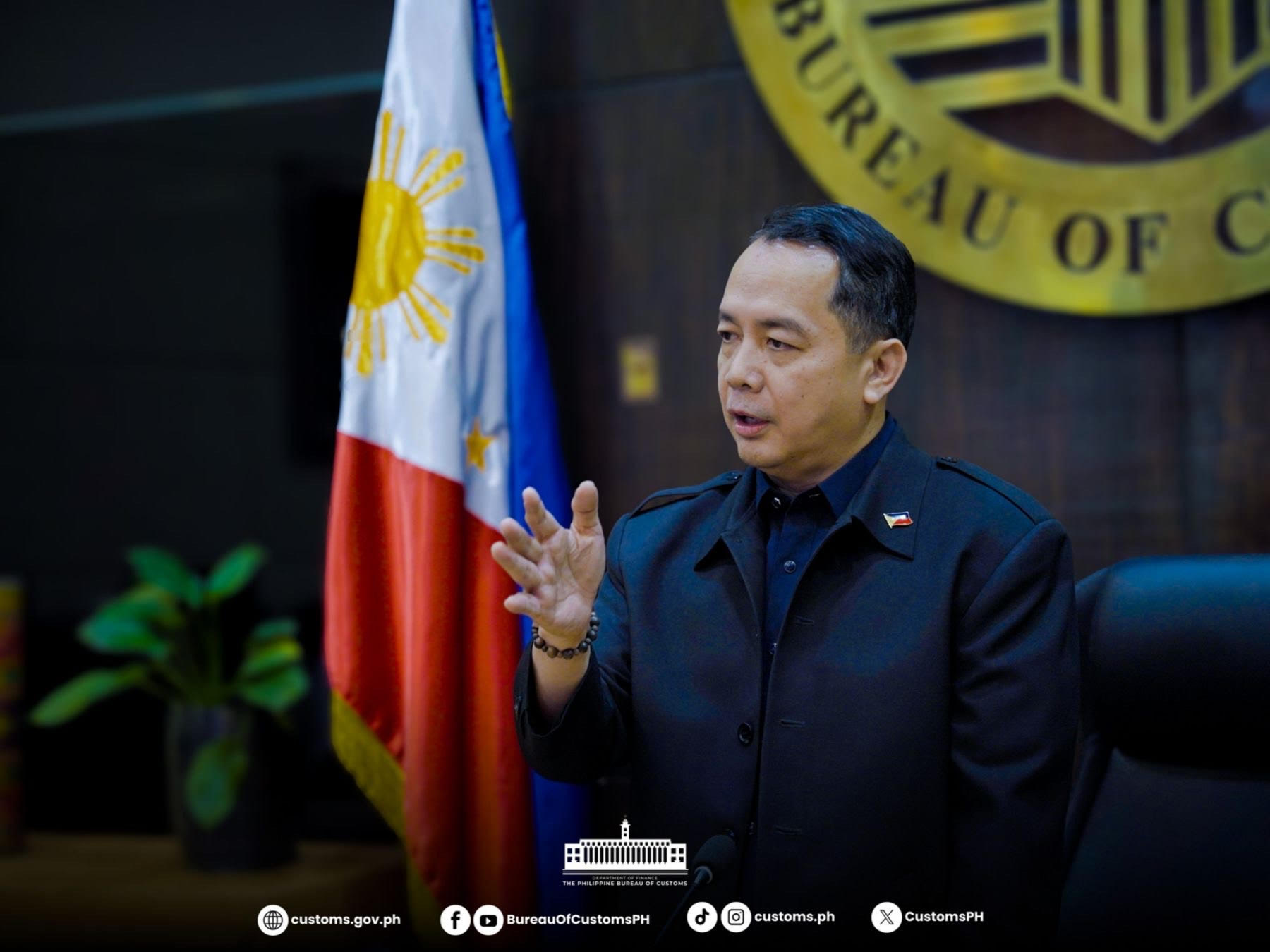
Newly appointed Customs Commissioner Ariel Nepomuceno has officially assumed the helm of the Bureau of Customs (BOC), vowing to continue the gains achieved under the agency’s previous leadership.
In a statement on Wednesday, Nepomuceno stressed the importance of continuity and collaboration, pledging to build on the gains achieved by the BOC under previous leadership while introducing strategic innovations in digitalization, enforcement, and stakeholder engagement.
The new Customs chief also reaffirmed his full commitment to President Ferdinand Marcos Jr.’s directives to focus on the agency’s core mandates—boosting revenue collection, facilitating legitimate trade, combating smuggling, and fostering a professional and integrity-driven workforce.
Outgoing BOC Commissioner Bienvenido Rubio, who led the bureau from February 2023 to June 2025, for his part, expressed his full support for Nepomuceno and the agency’s ongoing transformation.
During Rubio’s tenure, the BOC recorded revenue collections of P883 billion in 2023 and about P916 billion in 2024, “consistently surpassing annual targets.”
Enforcement operations also saw seizures jump from P43.29 billion worth of illicit goods in 2023 to P85.16 billion in 2024 through more than 2,100 operations, demonstrating a markedly stronger anti-smuggling posture.
The BOC, under the outgoing leadership, pushed for digital reforms as 161 of 166 core customs processes were automated, achieving a 96.99% digitalization rate and sharply reducing face-to-face transactions.
The Customs launched key trade facilitation tools during this period, including the Enhanced e-Travel Customs System, the Overstaying Cargo Tracking System, the ATA Carnet Monitoring System, and the National Customs Intelligence System—platforms that collectively streamline declarations, track cargo in real time, and integrate data sharing across agencies for faster, more transparent border clearance.
Transition
In a Super Radyo dzBB interview, Nepomuceno admitted he did not anticipate how quickly he would assume the post.
“Talagang biglaang-biglaan pero hindi ko inaasahan ganoon kabilis ang pangyayari,” Nepomuceno said.
(It all happened so suddenly, and I didn’t expect things to move this fast.)
Nepomuceno, however, said that he is ready to act immediately on long-overdue reforms — starting with technology.
“Lahat naman po yan pwede na i-digitalize 100%. Hindi po pwedeng partial,” he added.
(All customs processes can be fully digitalized. It cannot be done partially.)
Nepomuceno emphasized that digitalization is the only way to eliminate human discretion in critical steps like importer assessments and payment processing — areas often vulnerable to manipulation.
He pointed to practices in neighboring countries like Thailand and emphasized the need to follow existing global models rather than reinventing the wheel.
Among his priorities is the pre-loading survey system (PLSR), which would require full declaration of cargo even before it leaves the country of origin.
“Pagdating sa Pilipinas, hindi na po yan magiging P5M kung dati ay P10M sa dokumento,” said the new BOC chief.
(When it arrives in the Philippines, it can’t magically become worth ?5 million if it was declared as ?10 million.)
He also raised concerns over the existence of so-called “ghost companies” using fake addresses to import goods. Nepomuceno said the use of artificial intelligence can help screen importers from the start.
"Simula accreditation pa lang, dapat mahuli na ang mga peke,” he said.
(Fake companies should be caught as early as the accreditation stage.)
Prior to his appointment, Nepomuceno was a former Office of Civil Defense undersecretary. He also served the BOC as deputy commissioner of the Enforcement Group from 2013 to 2017 and as assistant commissioner from 2017 to 2018.
“His extensive experience in enforcement and leadership, coupled with his background in public administration, is anticipated to support the BOC’s continued evolution into modern and credible customs administration, while reinforcing its institutional reform and enforcement priorities,” the Customs said. —with reports from Sherylin Untalan/ VAL, GMA Integrated News

